Showing posts with label short stories. Show all posts

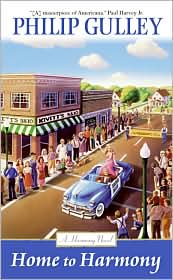
Home to Harmony

Home to Harmony. Philip Gulley. 2002. HarperCollins. 225 pages.

When I was in the second grade, my teacher, Miss Maxwell, read from The Harmony Herald that one in every four children lived in China. I remember looking over the room, guessing which children they might be. I wasn't sure where China was, but suspected it was on bus route three. 

One of the best, best, best books I've read lately. One of those books that had me at hello. It may not appeal to every one. I suppose you might say it is a little sentimental now and then. But. It is truly one of those cozy books that make you feel oh-so-happy. Or, I should say it made me feel oh-so-happy. There were chapters that had me laughing--really laughing hard. There were chapters that had me close to tears. And almost every chapter had something worth quoting. I realized this right away and didn't even try to mark them all. (Some books are like that.)

So the premise of this one is simple. Sam Gardner lives in the small town of Harmony. He went away--to school, to seminary--but now he's back. And unlike some in the town, he's very happy to be back, very happy to be living in Harmony. He understands--better than some--why it may not be a town for everyone, but to him it's right where he wants to be.

The book is a collection of stories. Some set in the past, some set in the present. The stories are arranged by season--spring, summer, fall, winter. And the stories are about the community, the people who live there or who have lived there. We meet Bob Miles Sr. and Dale Hinshaw. The narrator is a Quaker minister.

My favorite stories were: Miss Rudy, Wilbur, and Friday Nights; Burma-Shave; The Birds and the Bees; This Callous Pride; Mutiny; The Twins; Miriam and Ellis; and The Spelling Bee. 

"He had been inoculated with a small dose of Christianity, which had kept him from catching the real thing." (51)

"When love takes you by the hand and leaves you better, that is home." (63)

"The Dale Hinshaw Effect is simply this: If there is a bad idea to be thought, Dale Hinshaw will think it." (67)

© 2011 Becky Laney of Becky's Book Reviews


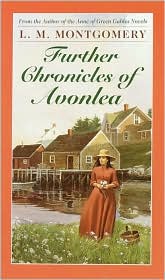
Further Chronicles of Avonlea

Further Chronicles of Avonlea. L.M. Montgomery. 1920/1989. Bantam Classics. 200 pages.

I love L.M. Montgomery. I do. I just love, love, love her books--her novels and her short stories. Chronicles of Avonlea and Further Chronicles of Avonlea are short story collections set on Prince Edward Island during Anne's time. (I get the impression that these stories are set around the time of Anne of Avonlea, Anne of the Island, etc. She has NOT married Gilbert yet.*)

There are fifteen short stories:

Aunt Cynthia's Persian Cat
The Materializing of Cecil
Her Father's Daughter
Jane's Baby
The Dream-Child
The Brother Who Failed
The Return of Hester
The Little Brown Book of Miss Emily
Sara's Way
The Son of His Mother
The Education of Betty
In Her Selfless Mood
The Conscience Case of David Bell
Only a Common Fellow
Tannis of the Flats

This collection features one of the best, best, best short stories, one that practically brings me to tears each and every time: The Brother Who Failed. There is a lot of variety in the stories. Comedy and tragedy and everything in between.

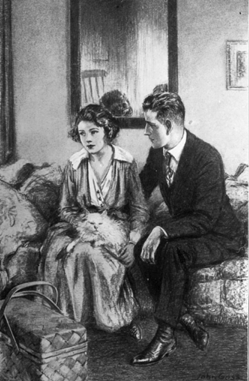
Aunt Cynthia's Persian Cat is the charming story of two sisters, Sue and Ismay, who absolutely hate their aunt's cat, Fatima. But the two are pressured into taking care of the cat while their aunt goes on holiday. One day the cat goes missing, and, well the two are at a loss to know what to do about it. They have to have a Persian cat--the real Fatima or not--to give to their aunt. But how will they find one that is a close enough match...and how will they pay for it?! Sue has been pursued by Max for many, many years. He's proposed over eleven times...he has a solution to the problem...but he wants a different answer to his twelfth proposal...

The Materializing of Cecil is another charming story--another romantic comedy. Charlotte Holmes, our heroine, is an old maid. And she wouldn't mind too terribly being an old maid if anyone had ever wanted her, courted her, etc. If she'd had an opportunity to marry but didn't. So one day--I believe on her fortieth birthday--she tells a little lie to one of the young women in the sewing circle. Before she knows it the whole room is her audience. She spins this tragic tale of a failed love affair. She invents the whole thing, of course, even gives him a name, Cecil Fenwick, and a profession, lawyer. A few months later, however, Charlotte is just shocked--and incredibly embarrassed--that a Cecil Fenwick, a lawyer, has come to town to visit his sister, Mrs. Maxwell. All the details seem to match--that's the odd part. Everyone just knows that this is Charlotte's Cecil. What will she do when she's confronted by Mr. Fenwick?!

Her Father's Daughter is a sadder story, perhaps, because of all the missed opportunities. It's the story of a broken family. Our heroine, Rachel Spencer, has never known her father, David, because her parents quarreled months before she was born. Her parents won't even talk to each other, won't even talk about one another. But Rachel feels the loss. One day she accidentally finds her father and the two share one perfect, perfect day together. She's stumbled across his home in the Cove, and he shows her his place and they talk and laugh, etc. She, of course, wants to come back again, wants to visit him now that she's found him. But he seems to know that her mother will find out about and forbid it. So he tells her not to feel guilty if she can't return, if she can't be a part of his life. Now that Rachel is grown up, now that she's getting married herself, she has a LOT to say about it. And she knows exactly what she wants for her wedding--a wedding with both parents there. Will anyone ever forget her wedding day?!

Jane's Baby isn't my favorite or best. It's about another feud--there are so many feuds it seems in Montgomery's fiction. In this case it is a fight between Miss Rosetta Ellis and Mrs. Charlotte Wheeler. I believe the two are sisters? Anyway, these two are fighting over a baby--an orphaned baby. And Miss Rosetta gets there first. She names the child Cordelia Jane. She takes her home. She loves her dearly and cares for her a few months at least. And then when no one quite expects it, Charlotte kidnaps the baby. She takes the baby home with her, renames it Barbara Jane. But she doesn't let the baby leave her sight for even a minute. She doesn't want Rosetta to have even a few seconds opportunity to get the baby back. But when the baby gets sick, Charlotte knows that Rosetta can help; she may be the only one who can help in time. Will these two women put aside their differences and let this baby have a happy home?

The Dream-Child is definitely a sadder story. It is about a couple who loses their child, David, when he is twenty months old. The two are devastated. But while the husband is deeply saddened by the loss, while he is genuinely in mourning for the child, the wife begins to lose touch with reality. Her loss--her grief, her depression--sends her to a dangerous place. She hears a 'dream-child' call to her by the sea every night. Each night she goes out searching for this child, desperate to reach him in time, fearing that her child doesn't know that his mother is searching--desperately searching--for him. So one night the two are out walking--much like every other night--but this time the crying is real. This time the couple discovers a real toddler. And he DESPERATELY needs a home--a good, safe, loving home. The wife believes that this boy is her boy, that obviously this child has been gifted to her. But the husband wants to find out the truth--where did this baby come from? who are his parents? There is a happy ending--but it is bittersweet, at least to me.

The Brother Who Failed is my favorite, favorite, favorite story of the bunch. It is about the Monroe family. The oldest brother, Robert Monroe, overhears his Aunt Isabel talking to one of his sisters, I believe, about how Robert is a failure, a disgrace to the family. Everyone else in the family has made a success of it, they are somebody. But Robert? What does Robert have going for him except the fact that he's not in debt? Robert doesn't want to believe that his whole family feels this way about him--but part of him fears it just the same. The sister "in conversation" with the mean aunt knows that Robert heard this nonsense. And so she arranges a surprise for Christmas. Readers hear from each member of the family--each brother, each sister--and their testimony speaks volumes!!!! This one is such an emotional story--a true feel-good story. I just LOVED it. You can read the entire story online.

The Return of Hester is a short story about how an older sister, Hester, keeps her younger sister from marrying. Having turned down the love of her life once, the sister agrees to never marry him. This promise being demanded of her while Hester is dying. A few months after Hester's death, this promise is put to the test. Will she ever get her happily ever after?

The Little Brown Book of Miss Emily is a short story narrated by Anne Shirley. There's even mention of Diana! The two young women have never really "liked" Miss Emily. She's old. She's red-faced. She's cranky. How could she have ever been young? How could she have ever been beautiful? So the two are surprised when Miss Emily leaves them something after her death. This chest holds some of Miss Emily's cherished memories--including a little brown book. And the two are forced to realize how much they don't know--can never know--about the people in their lives.

Sara's Way is about a stubborn young girl, Sara, who refuses to consider marriage with the oh-so-perfect Lige Baxter, but who is more than happy to consider marriage with the down-on-his-luck Lige Baxter.

The Son of His Mother is about a mother who will NOT LET GO of her son. Not even a little bit. This woman even hates her son's dog because she sees it as competition for his love, attention, affection. This unpleasant woman demands everything from her son. He must never, ever, ever, ever, ever court a woman--must agree to never even consider marriage. It would be impossible for her to live at all if her son were to think of such a thing... This story is not my favorite or best.

The Education of Betty is an odd story. At least Betty is named Betty and not Renesmee. It's narrated by a man disappointed in love. He sees his best friend, Jack, marry his best girl, Sara. When the story opens, he just knows that Sara is the love of his life. Ten years later, Jack dies leaving Sara a single mom. He proposes again--and is refused again. But he takes an interest in Betty. He tells Sara--let me educate your daughter, let me make all the important decisions about her life, her future, let me shape her. The years go by. She grows up. She becomes a beautiful woman--very smart. Her mother is SHOCKED and a bit disappointed that her daughter has a mind and is capable of actually thinking. And her mom worries that no man will ever want her now that she's been "ruined" by thinking deep thoughts. But someone does want her, of course, do you know who?!

In Her Selfless Mood is about a selfless sister who will do anything to take care of her brother.

The Conscience Case of David Bell is the story of what happens when a revival comes to Avonlea.

Only a Common Fellow is about a not-so-common fellow who lets the woman he loves break her promise to marry him so that she can marry her one true love whom she thought was dead.

Tannis of the Flats is without a doubt the WORST story of the bunch. I thought it a horrible, horrible story. It's rich in phrases like, "There is no worse enemy in all the world than a half-breed. Your true Indian is bad enough, but his diluted descendant is ten times worse."

*L.M. Montgomery wrote and published the Anne books in this order:

Anne of Green Gables (1908)
Anne of Avonlea (1909)
Chronicles of Avonlea (1912) -- not that you have to count it as part of the Anne series, but she is a character in some of the stories
Anne of the Island (1915)
Anne's House of Dreams (1917)
Rainbow Valley (1919)
Further Chronicles of Avonlea (1920) -- again not that you have to count it, but Anne is in a few of the stories
Rilla of Ingleside (1921)
Anne of Windy Poplars (1936)
Anne of Ingleside (1939)

© 2011 Becky Laney of Becky's Book Reviews


The Book of Dragons (MG)

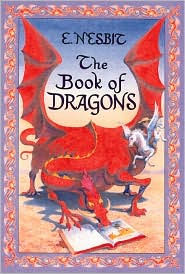
The Book of Dragons. E. Nesbit. 1900. 180 pages.

The Book of Dragons is a collection of eight short stories by E. Nesbit. While I enjoy fantasy--especially when I'm in the right mood for it, especially when it is written by someone as talented as E. Nesbit--I am not always a big fan of short stories--no matter the genre.

I did enjoy this collection. I didn't love every story within the book, but I enjoyed many of them. The writing was just so delightful, so right, so satisfying. The eight stories are: The Book of Beasts, Uncle James or the Purple Stranger, The Deliverers of Their Country, The Ice Dragon Or Do As You Are Told, The Island of the Nine Whirlpools, The Dragon Tamers, The Fiery Dragon Or the Heart of Stone and the Heart of Gold, and Kind Little Edmund Or The Caves and the Cockatrice.

My favorite stories were The Island of The Nine Whirlpools and The Book of Beasts.

© 2011 Becky Laney of Becky's Book Reviews


The Rumpelstiltskin Problem (MG)

The Rumpelstiltskin Problem. Vivian Vande Velde. 2000. Houghton Mifflin. 116 pages.

The Rumpelstiltskin Problem is a collection of short stories. Each short story puts a twist on the fairy tale Rumpelstiltskin. In the author's note, Vivian Vande Velde picks apart all the problems with the original story, alerts readers of all the holes in logic, argues that the story is obviously incomplete! She plays around with this in her stories, proving that there are many sides to a story, many ways to interpret a story. Some are clever. Some are amusing. All are well-crafted, in my opinion.

If I had to choose just one as a favorite, it would be Straw into Gold.

The six short stories are:

A Fairy Tale in Bad Taste
Once upon a time, before pizzerias or Taco Bells, there was a troll named Rumpelstiltskin who began to wonder what a human baby would taste like.
Straw Into Gold
Once upon a time, in the days before Social Security or insurance companies, there lived a miller and his daughter, Della, who were fairly well-off and reasonably happy until the day their mill burned down.
The Domovoi
Once upon a time, before home security systems and trained guard dogs, if you lived in Russia the way to keep your home safe and happy was to have a domovoi living beneath your basement. 
Papa Rumpelstiltskin
Once upon a time, before bread was plastic-wrapped and sold in supermarkets, there lived a miller named Otto and his daughter, Christina.
Ms. Rumpelstiltskin
Once upon a time, before eyelash curlers and lip liner, there lived a very plain girl by the name of Rumpelstiltskin.
As Good As Gold
Once upon a time, before movie stars or rock singers or professional athletes, the people everybody most wanted to meet were kings and queens.

© 2011 Becky Laney of Becky's Book Reviews


A Pleasure To Burn

A Pleasure To Burn: Fahrenheit 451 Stories. Ray Bradbury. 2010. Subterranean Press. 300 pages.

Have you read Fahrenheit 451 by Ray Bradbury? If you haven't, you should. It is one of those must-read novels, in my opinion. I've reviewed it several times now. If you have, you should consider picking up A Pleasure To Burn. It is a collection of Ray Bradbury's works--mainly short stories with a couple of novellas--that show the thematic evolution of the novel.

It includes
  • The Reincarnate (After awhile you will get over the inferiority complex. Maybe. There's nothing you can do about it. Just be careful to walk around at night. The hot sun is certainly difficult on you.)
  • Pillar of Fire (He came out of the earth, hating. Hate was his father; hate was his mother. It was good to walk again. It was good to leap up out of the earth, off of your back, and stretch your cramped arms violently and try to take a deep breath. He tried. He cried out. He couldn't breathe. He flung his arms over his face and tried to breathe. It was impossible. He walked on the earth, he came out of the earth. But he was dead.)
  • The Library (The people poured into the room. Health officials reeking of disinfectant, sprinklers in their hands. Police officials, fierce with blazing badges.)
  • Bright Phoenix (One day in April 2022, the great library door slammed flat shut. Thunder. Hello, I thought. At the bottom step glowering up at my desk, in a United Legion uniform which no longer hung as neatly upon him as it had twenty years before, stood Jonathan Barnes.)
  • The Mad Wizards of Mars (Their eyes were fire and the breath flamed from out the witches' mouths as they bent to probe the cauldron with greasy stick and bony finger.)
  • Carnival of Madness ("During the whole of a dull, dark and soundless day in the autumn of the year, when the clouds hung oppressively low in the heavens, I had been passing alone on horseback, through a singularly dreary tract of country, and at length found myself, as the shades of evening drew on, within view of the melancholy House of Usher..." Mr. William Stendahl paused in his quotation. There, upon a low black hill, stood the house, its cornerstone bearing the inscription: 2249 A.D.)
  • Bonfire (The thing that bothered William Peterson most was Shakespeare and Plato, and Aristotle, and Jonathan Swift and William Faulkner and the poems of Weller, Robert Frost perhaps and John Donne and Robert Herrick. All of these, mind you, tossed into the Bonfire.)
  • The Cricket on the Hearth (The door slammed and John Martin was out of his hat and coat and past his wife as fluently as a magician en route to a better illusion.)
  • The Pedestrian (To enter out into that silence that was the city at eight o'clock of a misty evening in November, to put your feet upon that buckling concrete walk, to step over grassy seams and make your way, hands in pockets, through the silences, that was what Mr. Leonard Mead most dearly loved to do.)
  • The Garbage Collector (This is how his work was: He got up at five in the cold dark morning and washed his face with warm water if the heater was working and cold water if it the heater was not working.)
  • The Smile (In the town square the queue had formed at five in the morning, while cocks were crowing far out in the rimed country and there were no fires. All about, among the ruined buildings, bits of mist had clung at first, but now with the new light of seven o'clock it was beginning to disperse. Down the road, in twos and threes, more people were gathering in for the day of marketing, the day of festival.)
  • Long After Midnight (Mr. Montag dreamed. He was an old man hidden with six million dusty books. His hands crawled, trembling, over yellow pages, and his face was a smashed mirror of wrinkles by candlelight. Then, an eye at the keyhole! In his dream, Mr. Montag yanked the door. A boy fell in.)
  • The Fireman (The four men sat silently playing blackjack under a green droplight in the dark morning. Only a voice whispered from the ceiling: "One thirty-five a.m. Thursday morning, October 4th, 2052 A.D. One forty a.m....one fifty..." Mr. Montag sat stiffly among the other firemen in the fire house, heard the voice-clock mourn out the cold hour and the cold year, and shivered.)
It also includes three bonus stories: The Dragon Who Ate His Tail, Sometime Before Dawn, and To The Future.

The two pieces most intimately connected with Fahrenheit 451 are "Long After Midnight" and "The Fireman." I found it fascinating to read these two. To see the progress of this novel-in-the-making. To see the creative process at work. To learn what was the same--stayed the same--and how Bradbury was refining and reshaping his story. (For example, these two have Montag "becoming" the book of Job!) It was also interesting to see who was the biggest influence on Montag--Faber or Clarisse.

I enjoyed this one. I liked reading all the stories. Yes, the two longer pieces--"Long After Midnight" and "The Fireman" were the most fascinating--but the other stories are interesting as well. All the stories are worth reading. Then again, all of Ray Bradbury is worth reading!

© Becky Laney of Becky's Book Reviews


3 (More) Bradbury Stories; My Thoughts On A Movie

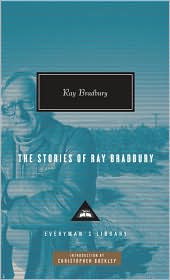
The Stories of Ray Bradbury. Introduction by Christopher Buckley. 2010. April 2010. Knopf, Doubleday. 1112 pages. [I've read 407/1112] 

I haven't read many short stories this week. But. What I have read, I've really enjoyed! See my first two posts on this short story collection: first twelve and next twenty-six.

The Great Wide World Over There
It was a day to be out of bed, to pull curtains and fling open windows.
My thoughts: Cora, the heroine, is fixated on the trivial matter of receiving mail--"real" letters in a "real" mailbox. Since she can't read or write, and since she doesn't know anyone--near or far--who can read or write, this dream seems out of touch with reality. (Not that you could convince her of that, mind you!) One summer, she has a nephew, Benjy, visit her and her husband. He can read and write. Is this the opportunity that she's been waiting for all these years?
This story is sad because Cora never realizes the true purpose of letters, of mail, to communicate. Cora misses out on connecting with those around her--her husband, her nephew, her neighbors--because she is too busy dreaming these silly dreams.

The Playground
A thousand times before and after his wife's death Mr. Charles Underhill ignored the Playground on his way to and from his commuters' limited train. He neither liked nor disliked the Playground; he hardly knew it existed.
My thoughts: Childhood is anything idyllic in Ray Bradbury's The Playground. This is a haunting story of a man who will do anything to save his young son from enduring the horrors, the hardships, common to childhood. In this case, the scrapes, bruises, and taunts which abound on the local playground.
Is our hero, Charles Underhill, imagining these horrors? Judge for yourself!

Skeleton
It was past time for him to see the doctor again.
My thoughts: Has Mr. Harris lost it? Or has Mr. Munigant played a foul trick on him? As Mr. Harris imagines his skeleton is out to get him, his life spirals out of control. Very creepy!

Have you read any of these? What did you think? Do you have a favorite Ray Bradbury story?

This past week I watched the 1966 film Fahrenheit 451. It is different from the book--very different. As a movie--all on its own--I think it worked fairly well. However, it is not timeless like the book. The movie is obviously dated. And some scenes don't work well--like the "jet pack" chase scene. But it wasn't painful--for me--to watch.

One of the ways the movie differs from the book is in the importance of Clarisse. In the book, she is a catalyst for Montag. She makes him question his life--his happiness. But their acquaintance is brief. Just a conversation or two. And then she dies. An accident?! Maybe, maybe not. In the movie, they make her several years older. They make her more of a rebel, a threat. They have her as a teacher whose job is threatened. Because of this change, viewers get a glimpse into the educational philosophy of such a society. She takes the additional role of Faber. It is Clarisse who tells Montag about the community of "books" living outside the city. It is where she is planning on going now that she is "wanted" by authorities. The fact that she lives and is able to be reunited with Montag didn't quite work for me.

I would have loved to see Faber in the film. I thought the conversations these two had in the book were so well done. Their dialogue was so important--so crucial--to the heart of the book. And it's something that can't be easily replaced by Montag's lighter-hearted conversations with a beautiful young woman.

In the book, Montag saves a Bible. He "becomes" the book of Ecclesiastes. In the movie, that changes. You'd almost expect it to change, wouldn't you? I think it is unfortunate. In the movie, he becomes a book that he had never even read before: Tales of Mystery and Imagination by Edgar Allan Poe. I would have preferred him to become David Copperfield. Because at least he read and loved that book. It is featured in at least two earlier scenes of the movie.

I liked seeing the "book" community. Like the brothers "Pride" and "Prejudice." But because the war--or the threat of war--was eliminated from the movie--for the most part. It doesn't have quite the same feel as the book. Yes, the society was bad. But it didn't seem so dark and hopeless. Mindless, yes, of course, given over to pleasure and happiness instead of thinking and learning. But hopeless? Not really. So I preferred the book to the movie.

© Becky Laney of Becky's Book Reviews


The Next Twenty-Six: More Ray Bradbury Stories

The Stories of Ray Bradbury. Introduction by Christopher Buckley. 2010. April 2010. Knopf, Doubleday. 1112 pages. [I've read 366/1112]

This past week I've read some great short stories by Ray Bradbury! I thought I would take some time to share my thoughts on the ones I read this week. [See also my post last weekend on the first twelve stories that I've read.]

The Earth Men
Whoever was knocking at the door didn't want to stop.
Mrs. Ttt threw the door open. "Well?"
"You speak English!" The man standing there was astounded.
"I speak what I speak," she said.
"It's wonderful English!" The man was in uniform. There were three men with him, in a great hurry, all smiling, all dirty.
The Off Season
Sam Parkhill motioned with the broom, sweeping away the blue Martian sand. "Here we are," he said. "Yes, sir, look at that!" He pointed. "Look at that sign. Sam's Hot Dogs! Ain't that beautiful, Elma?"
The Million Year Picnic
Somehow the idea was brought up by Mom that perhaps the whole family would enjoy a fishing trip. But they weren't Mom's words; Timothy knew that. They were Dad's words, and Mom used them for him somehow.
The Fox and the Forest
There were fireworks the very first night, things that you should be afraid of perhaps, for they might remind you of other more horrible things, but these were beautiful, rockets that ascended into the ancient soft air of Mexico and shook the stars apart in blue and white fragments.
Kaleidoscope
The first concussion cut the rocket up the side with a giant can opener. The men were thrown into space like a dozen wriggling silverfish. They were scattered into a dark sea; and the ship, in a million pieces, went on, a meteor swarm seeking a lost sun.
The Rocket Man
The electrical fireflies were hovering above Mother's dark hair to light her path. She stood in her bedroom door looking out at me as I passed in the silent hall. "You will help me keep him here this time, won't you?" she asked.
"I guess so," I said.
Marionettes, Inc.
They walked slowly down the street at about ten in the evening, talking calmly. They were both about thirty-five, both eminently sober.
No Particular Night or Morning
He had smoked a packet of cigarettes in two hours. "How far out in space are we?" "A billion miles."
The City
The City waited twenty thousand years.
The Fire Balloons
Fire exploded over summer night lawns.
The Last Night of the World
"What would you do if you knew that this was the last night of the world?"
"What would I do? You mean seriously?"
"Yes, seriously."
"I don't know. I hadn't thought."
The Veldt
"George, I wish you'd look at the nursery."
"What's wrong with it?"
"I don't know."
"Well, then."
"I just want you to look at it, is all, or call a psychologist in to look at it."
The Long Rain
The rain continued. It was a hard rain, a perpetual rain, a sweating and streaming rain; it was a mizzle, a downpour, a fountain, a whipping at the eyes, an undertow at the ankles; it was a rain to drown all rains and the memory of rains.
The Great Fire
The morning the great fire started, nobody in the house could put it out. It was Mother's niece, Marianne, living with us while her parents were in Europe, who was all aflame.
The Wildnerness
It was twilight, and Janice and Leonora packed steadily in their summer house, singing songs, eating little, and holding to each other when necessary. But they never glanced at the window where the night gathered deep and the stars came out bright and cold.
A Sound of Thunder
The sign on the wall seemed to quaver under a film of sliding warm water.
The Murderer
Music moved with him in the white halls. He passed an office door: "The Merry Widow Waltz." Another door: Afternoon of a Faun. A third: "Kiss Me Again." He turned into a cross corridor: "The Sword Dance" buried him in cymbals, drums, pots, pans, knives, forks, thunder, and tin lightning. All washed away as he hurried through an anteroom where a secretary sat nicely stunned by Beethoven's Fifth. He moved himself before her eyes like a hand; she didn't see him.
The April Witch
Into the air, over the valleys, under the stars, above a river, a pond, a road, flew Cecy.
Invisible Boy
She took the great iron spoon and the mummified frog and gave it a bash and made dust of it, and talked to the dust while she ground it in her stony fists quickly.
The Golden Kite, The Silver Wind
"In the shape of a pig?" cried the Mandarin.
The Fog Horn
Out there in the cold water, far from land, we waited every night for the coming of the fog, and it came, and we oiled the brass machinery and lit the fog light up in the stone tower.
The Big Black and White Game
The people filled the stands behind the wire screen, waiting.
Embroidery
The dark porch air in the late afternoon was full of needle flashes, like a movement of gathered silver insects in the light.
The Golden Apples of the Sun
"South," said the captain.
"But," said his crew, "there simply aren't any directions out here in space."
The Powerhouse
The horses moved gently to a stop, and the man and his wife gazed down into a dry, sandy valley. 
Hail and Farewell
But of course he was going away, there was nothing else to do, the time was up, the clock had run out, and he was going very far away indeed.
My favorite this week? Definitely "The Murderer". Have you read it? You should! It was written in 1953. Albert Brock's first victim? The telephone? His second victim? The television. Our hero in this short story has had it with technology. Has had enough of being connected--always connected--with everybody, with everything.  He's on a mission to deliver man from modern 'conveniences'.

I've got two favorite quotes to share. One is from "No Particular Night or Morning"
"We're all fools," said Clemens, "all the time. It's just we're a different kind each day. We think, I'm not a fool today. I've learned my lesson. I was a fool yesterday but not this morning. Then tomorrow we find out that, yes, we were a fool today too. I think the only way we can grow and get on in this world is to accept the fact that we're not perfect and live accordingly." (206)
The second is from "The Fire Balloons"
"Father Peregrine, won't you ever be serious?"
"Not until the good Lord is. Oh, don't look so terribly shocked, please. The Lord is not serious. In fact, it is a little hard to know just what else He is except loving. And love has to do with humor, doesn't it? For you cannot love someone unless you put up with him, can you? And you cannot put up with someone constantly unless you can laugh at him. Isn't that true? And certainly we are ridiculous little animals wallowing in the fudge bowl, and God must love us all the more because we appeal to His humor." (223)
I enjoyed what I read this week. For the most part. Some stories are more memorable--to me--than others. A few of these I had completely forgotten--even though it's only been a few days! But others I still remembered. Some I think will be with me a while!

Have you read any of these? What did you think? Do you have a favorite Ray Bradbury story?

© Becky Laney of Becky's Book Reviews


Twitter Delicious Facebook Digg Favorites More