Showing posts with label J Realistic Fiction. Show all posts

Darth Paper Strikes Back (MG)

Darth Paper Strikes Back. Tom Angleberger. 2011. Harry N. Abrams. 176 pages.

It is a dark time at McQuarrie Middle School...when did it start? I can tell you exactly when it started.
The first day of school. The very first day of seventh grade. We didn't even get one good day. We got, like, five minutes.

Darth Paper Strikes Back is the sequel to The Strange Case of Origami Yoda. Sixth grade is over, seventh grade is just beginning. And it seems the wisdom of everyone's favorite origami Yoda isn't as revered or respected as in previous days. Teachers and administrators aren't so fond of the "disruptions" made by Dwight and his paper puppet. And there are some in the class who are oh-so-tired of it all. Or at least tired of Dwight getting all the attention. Harvey a student who can be a little mean at times--but isn't quite a complete bully at heart--comes to school with Darth Paper. And thus a NEW saga begins.

So the novel begins with bad news. Dwight has been kicked out of school. He may or may not be allowed to return after a few weeks. His case has to come before the school board. His friends want to help him, of course. And so they set about writing this casebook as to why Dwight and his origami Yoda are positive influences on the school, on the class. They're defending their friend.

So the book has multiple narrators. And there are many stories to tell. If you liked the first book, then you'll definitely want to read this one! It's an entertaining read!

© 2011 Becky Laney of Becky's Book Reviews


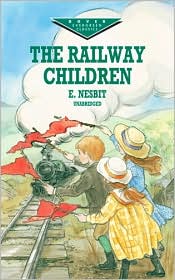
The Railway Children (MG)

The Railway Children. E. Nesbit. 1906/2011. Penguin. 304 pages. 

They were not railway children to begin with.

I loved this one. I did. I don't know how I'd ever choose a favorite, favorite E. Nesbit because all of her books are oh-so-good. The Railway Children stars three siblings: Roberta (Bobbie), Peter, and Phyllis. This one features a strong mother figure, an involved parent. (Or at least the most involved parent I've encountered in Nesbit's fiction.)

This family is under stress. The father disappears quite suddenly from his children's lives. The mother won't explain just why their father has to go away, and why the family has to move to a little place in the country. The children just know that everything is changing--little things and big things. For example, they now must choose between jam or butter for their toast--they can't afford to have both.

But while many things are changing, not all of the changes are bad. For the children discover a new way of living life. And they become involved in their new community! For better or worse! Not every person is instantly charmed by these three children, but, it's hard to resist them for long.

There were many things I enjoyed about this one. I enjoyed the children. I enjoyed their mother. I loved that she was a writer, that she was supporting her family by writing stories. I enjoyed their community, I loved meeting the different characters. It was just a satisfying story with a lot of heart.

© 2011 Becky Laney of Becky's Book Reviews


The Story of the Treasure Seekers (MG)

The Story of the Treasure Seekers. E. Nesbit. 1899. Puffin. 250 pages.

This is the story of the different ways we looked for treasure, and I think when you have read it you will see that we were not lazy about the looking. 

I just loved The Story of the Treasure Seekers. I loved the Bastables. There are six children: Dora, Oswald, Dicky, Noel and Alice, and H.O. (Horace Octavius). The children have a father, but no mother. But the father, for the most part, is absent from their day to day lives. This one has a simple plot. The children know that the family is in desperate need of money, and, well, they decide to look for treasure. Each child has an opportunity (or two) to come up with a plan for 'finding' treasure (getting money). Some of the plans are silly and over the top. (Like Noel's plan to marry a princess when he grew up.) But many of their plans lead to a FUN adventure!

I definitely enjoyed this one and would recommend it! It's a great adventure story with many satisfying moments. IF you've only read Nesbit's fantasy, you should give this one a try.

© 2011 Becky Laney of Becky's Book Reviews


From the Mixed-Up Files of Mrs. Basil E. Frankweiler

From the Mixed-Up Files of Mrs. Basil E. Frankweiler. E. L. Konigsburg. 1967. Simon & Schuster. 162 pages.


Claudia knew that she could never pull off the old-fashioned kind of running away. That is, running away in the heat of anger with a knapsack on her back. She didn't like discomfort; even picnics were untidy and inconvenient: all those insects and the sun melting the icing on the cupcakes. Therefore, she decided that her leaving home would not be just running from somewhere but would be running to somewhere. To a large place, a comfortable place, an indoor place, and preferably a beautiful place. And that's why she decided upon the Metropolitan Museum of Art in New York City.

Claudia Kincaid, our heroine, wants to run away, but she knows she can't do it alone so she recruits her younger brother, Jamie, to go with her. He may just be her favorite brother, and he's definitely her richest brother. Their plan is successful...and they do manage to have quite the adventure.

I really, really liked this one. I thought it was great fun. I loved Claudia. I loved Jamie. I loved the writing of this one. I loved the way we got to know the characters. This brother-sister relationship is done so well. I love that I can relate to both Claudia and Jamie. While we don't get to know anything really about the rest of the Kincaid family--about the parents, about the other kids, we do get to know these two very, very well! Which was enough for me!

Here is one of my favorite scenes between the two:
Upon their return to the museum, Claudia informed Jamie that they should take advantage of the wonderful opportunity they had to learn and to study. No other children in all the world since the world began had had such an opportunity. So she set forth for herself and for her brother the task of learning everything about the museum. One thing at a time. (Claudia probably didn't realize that the museum has over 365,000 works of art. Even if she had, she could not have been convinced that learning everything about everything was not possible; her ambitions were as enormous and as multi-directional as the museum itself.) Every day they would pick a different gallery about which they would learn everything. He could pick first. She would pick second; he third; and so on. Just like the television schedule at home. Jamie considered learning something every day outrageous. It was not only outrageous; it was unnecessary. Claudia simply did not know how to escape. He thought he would put a quick end to this part of their runaway career. He chose the galleries of the Italian Renaissance. He didn't even know what the Renaissance was except that it sounded important and there seemed to be an awful lot of it. He figured that Claudia would soon give up in despair.
When she gave Jamie first pick, Claudia had been certain that he would choose Arms and Armor. She herself found these interesting. There was probably two days' worth of learning there. Perhaps, she might even choose the same on the second day. (47)
Jamie's choice of the Italian Renaissance leads them on their biggest adventure yet. It leads them to a statue. A statue that may have been done by Michelangelo. A small statue of an angel that they learn was donated by a Mrs. Basil E. Frankweiler. Once they become curious about this statue, once they decide they want to "solve" the mystery, well, that's when their adventure finds a purpose, a dream.

I really loved this one. It was such a great read--very satisfying. I would definitely recommend it.

Happiness is excitement that has found a settling down place, but there is always a little corner that keeps flapping around. (151)

© 2011 Becky Laney of Becky's Book Reviews


The Boxcar Children

The Boxcar Children. Gertrude Chandler Warner. 1942. 155 pages.

One warm night four children stood in front of a bakery. No one knew them. No one knew where they had come from. The baker's wife saw them first, as they stood looking in at the window of her store. The little boy was looking at the cakes, the big boy was looking at the loaves of bread, and the two girls were looking at the cookies.

Henry, Jessie, Violet, and Benny are orphans. Scared of a grandfather they never met, these children are running away. When the novel opens, they are seeking refuge for the night, asking permission to sleep on the benches of the bakery shop. (They bought bread). After hearing the couple discuss them--on how they should "keep" the three oldest because they would be useful to have around as workers, but how the youngest one would need to go to a Children's Home--Henry and Jessie decide to wake everyone and leave while they still have a chance. They walk most of the night, sleep most of the day. Their journey takes them into the woods, and during a storm, they seek shelter in an abandoned boxcar. It doesn't take the children very long to realize that if a boxcar is good shelter from a storm, it would be a good home for always. There is a town within walking distance so that Henry can find work and buy food. And the rest of the children can do what they can to make it a real home. And that is just what they do...day by day creating a home for themselves.

I liked  The Boxcar Children. I did. I had read it more than a few times growing up, but it had been at least fifteen or twenty years since I'd last read it. It was such a treat to read it again. It's a simple book, in many ways, yet it's got its charms. I liked how these children do make a home for themselves. How they work together as a family. While I wouldn't say that I ever loved this one as much as Mandy or Anne of Green Gables or The Secret Garden, I have definitely always liked it.

© 2011 Becky Laney of Becky's Book Reviews


Heidi Grows Up

Heidi Grows Up. Charles Tritten. 1938. 190 pages. 

At nine o'clock one evening a very shy-appearing little girl stepped off the train at the big station in Lausanne.

Heidi Grows Up is the sequel to Heidi by Johanna Spyri written by Spyri's translator, Charles Tritten. The novel covers Heidi's teen years, for the most part. Readers briefly see a fourteen-year-old Heidi attend a French school. She meets other girls her own age and makes a few good friends. Her best friend being a girl named Jamy. The focus is on her first semester at school and her first summer vacation back home. The novel then speeds ahead to when Heidi has finished her schooling and is ready to teach school in the local village school. There readers are treated to learning about her first year as a teacher. We see her successes and failures as a teacher. We see her stand up to the school warden, and battle some of the bigger problems in the education department.

But Heidi Grows Up is still very much a sweet family story. We see a tender, loving Heidi who always knows what is most important in life. We see Heidi devoted and loyal as ever to her grandfather, to the doctor, to Peter, and even to the goats. One cute scene--early on in the novel--is when Heidi is praying. She's lifting her concerns for God and praying for those she loves best. And...at the end...she mentions each of the village goats by name. Yes, there's something very simple--and very pleasant--about this story.

I did like this one. I am still liking the characters very much. I am liking Heidi. And Peter seems to have grown out of some of his issues. Enough that by the ending, I was pleased with the development!


© 2011 Becky Laney of Becky's Book Reviews


Heidi (MG)

Heidi. Johanna Spyri. 1880/2009. Puffin Classics/Penguin.  320 pages.

The pretty little Swiss town of Mayenfeld lies at the foot of a mountain range, whose grim rugged peaks tower high above the valley below.

If the cover to Heidi had looked this pretty, this inviting, this appealing, when I was a kid, there's a good chance I wouldn't have spent most of my life avoiding it. (It didn't help that the cover of the Heidi we had was AWFUL.) What I discovered was that Heidi is a nice, satisfying read. One that may just improve upon a reread. I can easily see why Eva Ibbotson, who wrote the introduction to this edition, described reading this one as feeling like you're coming home. There's just something cozy-and-comfortable about it.

So Heidi is an orphan, she's been one since the age of one. She has spent the next four years with her Aunt Detie. But at the start of the novel, at age five, she's being "given" to her grandfather. Detie has decided that enough is enough. She's not the only relative this kid has, and, well, she wants to live her own life without being a mother to her dead sister's kid. If my description is blunt and ugly, it's because Detie is. The way she speaks of the child--of Heidi--well it made me take an instant disliking to her. (And nothing in the book makes me change my opinion of her.) So Heidi and Detie are on their way up the mountain. The grandfather has a moment or two of doubt, but, Heidi erases his fears early on. He takes an instant liking to his granddaughter. And he notices how bright and wonderful she really is. Readers see this bond grow and grow as the two spend time together. No one could love grandfather more than Heidi, and no one could love Heidi more than her grandfather. Heidi has found her a home at last. And all seems right with the world. Heidi loves her grandfather, loves her new home, loves the mountains, loves the flowers, loves the goats, loves the goat herder, Peter, loves Peter's Grannie. Here is a girl that has a love of life, who doesn't want for anything.

But. All that changes with (boo, hiss) the arrival of Aunt Detie who seems to think that Heidi will be better off away from her grandfather. It has been arranged for Heidi to become the companion of a sickly little girl, Clara. Heidi has no choice in the matter. And is told that she can't have an opinion about it--essentially. Now, Heidi does like Clara well enough. It's not like she HATES Clara. I'm not sure it's in Heidi's nature to HATE anybody. But Heidi is definitely upset that she's been taken from everybody she loves, the home she loves, etc. And city life just isn't the same. Heidi doesn't feel like she belongs there.

The highlight of her time in the city may just be when Clara's grandmother comes to visit. This grandmother takes the time to get to know Heidi. She comes to love Heidi and care deeply about her. She encourages Heidi and gives her attention. She says you can learn to read and write. You are smart, you are capable, you can do it. Which is just the message this little girl needs to hear! When Heidi does learn to read, she is given a lovely picture book by this grandmother. But perhaps even more important than that gift is the gift of faith. For this grandmother--Mrs. Sesemann--talks to Heidi of God and prayer. She encourages the young girl to pray to God, to seek Him. She teaches Heidi that when God doesn't answer prayers right away--in the way we expect, in the time period we expect--that doesn't mean God hasn't heard. It's just that God knows what is best for us, he knows what we need, and when we need it. God may seem to be delaying his promises, or slow to working his promises, but God is a God who makes all things beautiful in HIS time.

So does Heidi get to return to her grandfather? What do you think?! Would it be so satisfying and happy-making if she didn't?

While I'm not quite sure that Heidi herself is flawed--she seems to represent everything pure and innocent and good in the world--the rest of the characters within the novel are flawed. And many--though not all--are lovable. Two of my favorites are Heidi's Grandfather (Uncle Alp) and Dr. Classen.

One of my favorite scenes with Dr. Classen:
"When you can do no more yourself," said Heidi confidently, "tell God."
"Those are good words, my dear," said the doctor, "but suppose it was God Himself who sent the sorrow."
Heidi sat pondering for a while. She was sure God could always help, but was trying to find the answer out of her own experiences. "I think you have to wait," she said at last, "and keep on thinking that God has something good which He's going to give you out of the sad thing, but you have to be patient. You see, when something's awfully bad, you don't know about the good bit coming, and you think it's going on for ever."
"I hope you will always feel like that, Heidi," he said, and fell silent, drinking in the scene before him.  (202)
And my favorite scene with the Grandfather--well, there are many, many scenes that I love between these two--is when she reads him the story of the prodigal son from her picture story book. The quote comes from an online edition of Heidi, not the exact same translation as the Puffin classic. (And I liked the Puffin classic better. In the book this comes from pages 172-175.)
"If God had let me come at once, as I prayed, then everything would have been different, I should only have had a little bread to bring to grandmother, and I should not have been able to read, which is such a comfort to her; but God has arranged it all so much better than I knew how to; everything has happened just as the other grandmother said it would. Oh, how glad I am that God did not let me have at once all I prayed and wept for! And now I shall always pray to God as she told me, and always thank Him, and when He does not do anything I ask for I shall think to myself, It's just like it was in Frankfurt: God, I am sure, is going to do something better still. So we will pray every day, won't we, grandfather, and never forget Him again, or else He may forget us."
"And supposing one does forget Him?" said the grandfather in a low voice.
"Then everything goes wrong, for God lets us then go where we like, and when we get poor and miserable and begin to cry about it no one pities us, but they say, You ran away from God, and so God, who could have helped you, left you to yourself."
"That is true, Heidi; where did you learn that?"
"From grandmamma; she explained it all to me."
The grandfather walked on for a little while without speaking, then he said, as if following his own train of thought: "And if it once is so, it is so always; no one can go back, and he whom God has forgotten, is forgotten for ever."
"Oh, no, grandfather, we can go back, for grandmamma told me so, and so it was in the beautiful tale in my book--but you have not heard that yet; but we shall be home directly now, and then I will read it you, and you will see how beautiful it is." And in her eagerness Heidi struggled faster and faster up the steep ascent, and they were no sooner at the top than she let go her grandfather's hand and ran into the hut. The grandfather slung the basket off his shoulders in which he had brought up a part of the contents of the trunk which was too heavy to carry up as it was. Then he sat down on his seat and began thinking.
Heidi soon came running out with her book under her arm. "That's right, grandfather," she exclaimed as she saw he had already taken his seat, and in a second she was beside him and had her book open at the particular tale, for she had read it so often that the leaves fell open at it of their own accord. And now in a sympathetic voice Heidi began to read of the son when he was happily at home, and went out into the fields with his father's flocks, and was dressed in a fine cloak, and stood leaning on his shepherd's staff watching as the sun went down, just as he was to be seen in the picture. But then all at once he wanted to have his own goods and money and to be his own master, and so he asked his father to give him his portion, and he left his home and went and wasted all his substance. And when he had nothing left he hired himself out to a master who had no flocks and fields like his father, but only swine to keep; and so he was obliged to watch these, and he only had rags to wear and a few husks to eat such as the swine fed upon. And then he thought of his old happy life at home and of how kindly his father had treated him and how ungrateful he had been, and he wept for sorrow and longing. And he thought to himself, "I will arise and go to my father, and will say to him, 'Father, I am not worthy to be called thy son; make me as one of thy hired servants.'" And when he was yet a great way off his father saw him . . . Here Heidi paused in her reading. "What do you think happens now, grandfather?" she said. "Do you think the father is still angry and will say to him, 'I told you so!' Well, listen now to what comes next." His father saw him, and had compassion, and ran, and fell on his neck and kissed him. And the son said to him, "Father, I have sinned against heaven and in thy sight, and am no more worthy to be called thy son." But the father said to his servants, "Bring forth the best robe, and put it on him; and put a ring on his hand and shoes on his feet: and bring hither the fatted calf and kill it; and let us eat and be merry, for this my son was dead and is alive again; he was lost and is found." And they began to be merry.
"Isn't that a beautiful tale, grandfather," said Heidi, as the latter continued to sit without speaking, for she had expected him to express pleasure and astonishment.
"You are right, Heidi; it is a beautiful tale," he replied, but he looked so grave as he said it that Heidi grew silent herself and sat looking quietly at her pictures. Presently she pushed her book gently in front of him and said, "See how happy he is there," and she pointed with her finger to the figure of the returned prodigal, who was standing by his father clad in fresh raiment as one of his own sons again.
A few hours later, as Heidi lay fast asleep in her bed, the grandfather went up the ladder and put his lamp down near her bed so that the light fell on the sleeping child. Her hands were still folded as if she had fallen asleep saying her prayers, an expression of peace and trust lay on the little face, and something in it seemed to appeal to the grandfather, for he stood a long time gazing down at her without speaking. At last he too folded his hands, and with bowed head said in a low voice, "Father, I have sinned against heaven and before thee and am not worthy to be called thy son." And two large tears rolled down the old man's cheeks.
Early the next morning he stood in front of his hut and gazed quietly around him. The fresh bright morning sun lay on mountain and valley. The sound of a few early bells rang up from the valley, and the birds were singing their morning song in the fir trees. He stepped back into the hut and called up, "Come along, Heidi! the sun is up! Put on your best frock, for we are going to church together!"
Not that Heidi is free from some oddities! I read somewhere that Johanna Spyri didn't really "like" school. And perhaps that shows in Heidi and Peter's reluctance to go to school and learn to read. Peter especially seems angry about it. Heidi, well, initially hers was thinking that she was too stupid to ever learn anything. So when Heidi does return to the mountain, to her grandfather, to Peter, she wants to help him learn to read. But as a modern reader, I can't really say I *like* her method of teaching the alphabet! Was this little rhyme something she learned from Clara's tutor? Perhaps. But maybe she should have recalled how it was the kind, encouraging, you-can-do-it words of Clara's grandmother that inspired her the most in her own learning.
If A B C you do not know
Before the judge you'll have to go

If D E F you cannot say
Bad luck is sure to come your way

If you forget your H J K
You'll have misfortune all the day

If L and M you can't say clear
You'll have to pay a fine, I fear.

Trouble will be in store for you
If you can't say N O P Q

If you get stuck at R S T
A dunce's cap your lot will be

If you confuse a V with U,
You'll find yourself in Timbuctoo

If over W you fall,
Beware the rod upon the wall

If letter X you can't recall,
You'll get no food today at all

If you find Y is hard to say,
They'll laugh at you at school today.

If Z should tie you up in knots
They'll send you to the Hottentots.
Heidi seems to be an optimistic hope-filled novel about brokenness. There were some very touching moments--very human moments--and then there were the purely satisfying sweet moments. And I definitely enjoyed it!!! 

© 2011 Becky Laney of Becky's Book Reviews


Trauma Queen (MG)

Trauma Queen. Barbara Dee. 2011. Simon & Schuster. 272 pages.

I am standing outside homeroom in yellow flannel monkey pajamas.
Everyone else is dressed normally: jeans, track pants, sweaters, whatever.
Apparently because today, Monday, February 3, is not Pajama Day at Crampton Middle School. Also apparently I am the only one who is celebrating Pajama Day, because I am the only one whose mother told her it was Pajama Day. 

Marigold doesn't always love her mom. You see, Marigold's mom is a performance artist. She does crazy, crazy, embarrassing things in front of people...on purpose. Sometimes Marigold wishes her Mom could really stick to one performance: normal, sane, ordinary mother of two. But that's a role she rarely does.

Trauma Queen is about new beginnings. Marigold's family is starting over--again. The last town, well, it didn't end so well. On the positive side, Marigold made a friend--a really good friend--a girl named Emma. And things seemed to be going well until Emma's mom met Marigold's mom. Then it got UGLY, UGLY, SUPER-UGLY. Now Emma isn't allowed to speak with her...at all. So it's just as well, I suppose, that they did start over in a new town. But some things Marigold can't really forget.

One of the things that I LOVED about Trauma Queen were the characters. I thought they were well-developed. I loved how we get to know Marigold's family: her mom, her sister, Kennedy, her Gram. I especially loved to see the conversations between Mari and her Gram. I did. I loved how we get to know Marigold's classmates. Those that like Marigold (Layla, Ethan, Brody, etc.). And those that don't (Jada). WE get to see the tensions in her class. And it's so well done! It felt very authentic. I thought the author did a great job with showing not telling.

It was easy to love Marigold. It was easy to sympathize with her. But it was also easy--at least for me--to see the Mom's strengths. I couldn't not like the Mom. I couldn't. And when she started working with some of Marigold's classmates in an after school program, well, I admired her all the more. Was she perfect? No. Of course not. But she was not "the enemy" out to ruin her daughter's life. Seeing Gram, Mom, and Marigold together, well, it felt right. This novel has substance and depth.

I would definitely recommend Trauma Queen. I've also read This is Me From Now On.

My favorite quote:

But how do you know you're seeing things through your own eyes? Maybe you think you are, but really, you're just collecting other people's points of view. Maybe you're seeing the world through their eyes, and you don't even know it. (211)


© 2011 Becky Laney of Becky's Book Reviews


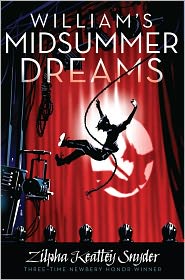
William's Midsummer Dreams (MG)

William's Midsummer Dreams. Zilpha Keatley Snyder. 2011. Simon & Schuster. 224 pages. 

It was on a Saturday near the end of September when the doorbell at 971 Eleanor Street rang long and loud, and then rang again. 

In William S. and The Great Escape, William and three of his siblings (Jancy, Buddy, and Trixie) escaped their abusive home and traveled on their own--with a little "help" from a friend, Clarice--to see their Aunt Fiona. They were hoping, of course, that she would be willing to open her home to them. She was. And for the first time in a long time--since the death of his mother--William was able to feel good about his life, his situation.

The first thirty-two pages of William's Midsummer Dreams rushes the reader through nine months of their lives in their new home. (Chapter four, for example, takes us from mid-October to mid-June.) The focus--if you can call anything that abbreviated focused--is on William counting down the days until summer. He is oh-so-excited about the opportunity to audition for a role in Mannsville's summer production of A Midsummer Night's Dream that it is all he can think about, dream about, or talk about. His sister, Jancy, is understandably annoyed. (I thought it was understandable anyway!) He's memorized every one of Puck's lines, every one of his cues. He's READY. He's more than ready. But he can't help being nervous too.

He'll be spending most of his summer vacation in Mannsville with Clarice, Miss Scott, and the rest of the cast and crew. He'll be living his dream, acting in a real production with real actors.

So the novel is ALL about William's adventures in the theatre. The drama that happens on stage and off stage.

If you like Shakespeare OR the theatre OR historical fiction set in the 1930s OR family stories about brothers and sisters, then William S. and The Great Escape and William's Midsummer Dreams may be books you'd enjoy.

Did I like it? Yes. I definitely liked it. I am not sure that I absolutely loved it. (I was a little hesitant about the beginning, it didn't get off to the best of starts.) But. For the most part, I did enjoy this second book about William. I didn't realize until I finished this one how much I missed Jancy and Buddy and Trixie. The novel didn't have quite the same charm as the first one. But what it lacks in family drama, it makes up for in the theatre. 

© 2011 Becky Laney of Becky's Book Reviews


Inside Grandad (MG)

Inside Grandad. Peter Dickinson. 2004. Random House. 128 pages.

Gavin and Grandad were fishing for mackerel from the harbor wall when the seal popped its head out of the water. 

Gavin loved his Grandad very much. Grandad is the one who takes care of him; Gran works; his mom works; his dad is gone most of the time. The two are very close. They enjoy doing many things together. They like to fish. They like to build model boats. One day the two are busy at work on a model boat, a boat that Gavin has just decided to name Selkie, when his Grandad has a stroke. The doctors say that Grandad has had a stroke. No one knows how much of a recovery he'll make. It's too soon to say. He's still in a coma.

The novel focuses on how this effects Gavin. He's scared. He's worried. He's anxious. He wants to be at the hospital by his Grandad's side, holding his hand; and yet, he doesn't. He wants to be the one to reach him. He wants to be the one to talk to him, to read to him, to hold his hand, to be there for him. Yet, it seems too much to handle.
At some point, Gavin becomes convinced that selkies may hold the answer. His grandad always said they could help you when you were in need. And that's where this novel becomes a little weird, a little magical.

I didn't care for the selkie twist in this one. Not really. I mean I think some readers will enjoy that aspect of it. But I could have done without it.

So do I like this one? Yes, for the most part. I didn't love it. But I don't need to love everything I read.

© 2011 Becky Laney of Becky's Book Reviews


Ways To Live Forever (MG)

Ways to Live Forever. Sally Nicholls. 2008. Scholastic. 224 pages.

List NO. 1 - Five Facts about Me


1. My name is Sam.
2. I am eleven years old.
3. I collect stories and fantastic facts.
4. I have leukemia.
5. By the time you read this, I will probably be dead. 

Sam is dying of leukemia. Sam is also writing a book; a book about himself, a book with stories, a book with lists. One of his lists, for example, is about all the things he'd like to do before he dies. Another lists ways to live forever. Which includes things like "Become a vampire. Hope you don't meet Buffy" and "Find a Greek goddess and make her fall in love with you. Have her get Zeus the king of the gods to make you immortal" (92-93)

Sam isn't facing this alone. He's got his mom and dad, parents who are supportive of him when they're not busy arguing. He's got his sister, Ella, who's nice to be with...some of the time, if only she didn't throw baby tantrums. He's got his best friend, Felix, too. Felix is also dying, though not of leukemia. The two can be oh-so-honest with each other. One of the things they discuss is how Sam's book should end. Since it would be impossible for Sam to write about his own death before it happened. But it's not like they're talking all death, all the time. They enjoy living life too. Like trying to sneak in a cigarette so they know what it's like to smoke. Like trying to watch an R rated movie without getting caught by their parents.

How do you live life knowing your dying? How do you write about it when you're eleven?

This novel is a quick read, but it's a heavy one. It deals with death and dying in a raw, honest way.


© 2011 Becky Laney of Becky's Book Reviews


Close to Famous (MG)

Close to Famous. Joan Bauer. 2011. Penguin. 240 pages.

The last place I thought I'd be when this day began is where I am, which is in a car. Mama's car to be exact, and she's driving headstrong through downtown Memphis with an Elvis impersonator on our tail. I know the Elvis; his name is Huck. 

Foster and her mom are on the run from an abusive boyfriend when the novel opens. They end up in Culpepper, West Virginia. At first Foster isn't sure of this new town, this new place. Small is small and the opportunities seem a bit limited. Foster has big dreams of being a baker, and in Memphis she'd had the opportunity to 'help' at a local bakery. And well, there are only three restaurants in town--an Arby's, a Pizza Hut, and a local place called Angry Wayne's. Her mom, a back-up singer, may manage to find a job at the local hardware store. But Culpepper doesn't seem to be a town with much promise. Then again, Foster doesn't appear to be a kid with much promise. Not until you know her, not until you've tasted one of her delicious cupcakes. Not until you find out about her incredible memory--she cooks everything by memory. And most of her recipes come from the Food Network.

Foster is dreaming of fame, dreaming of her own cooking show, while her neighbor Miss Charleena is recovering from fame. She's had it all. A big movie career in Hollywood, a marriage to a beautiful guy, but it left a sour taste in her mouth. Now she's hiding away in a small town at times dreaming of a big comeback and at other times too depressed to even want to leave her bedroom. Miss Charleena comes to care for Foster, discovers her secret, and is determined to help her young friend. Foster may just give Miss Charleena some unexpected help as well.

I liked this one. It was well written. The characters were wonderfully developed. The small town is given a chance to shine. It's a great little novel with a couple of great messages. It deals with economic struggles, abusive homes, and illiteracy, yet it does it in a natural way, for the most part. I'm not sure I completely believe the big showdown where cupcakes save the day. But there were so many things I liked about it, that it is easy for me to recommend.

"Waiting," he told me, "is a powerful thing. Most folks today just rush off to get something done. You learn to wait, my young friend. You learn to wait and listen and not be afraid of the quiet. Too much noise in this old world. On a battlefield when you're getting shot at, you don't have time to think things through. You've just got to do as you've been trained and follow your best instincts. It's here in the quiet waiting for a fish that you can fill up for when the tough times come."
I knew I'd heard something important. I wondered if he'd taken me fishing to tell me that. (181)


© 2011 Becky Laney of Becky's Book Reviews


My Forever Friends

My Forever Friends (Friends for Keeps #4) Julie Bowe. 2011. July 2011. Penguin. 224 pages.

I'm Ida May and I'm feeling a little squished. That's because I'm sitting on a piano bench between Jenna Drews and Brooke Morgan. I was saving half of the bench for my best friend, Stacey Merriweather, but Jenna budged in before Stacey could. Jenna is my sometimes friend. Then Brooke budged in on the other side of me. Brook is my sometimes-not friend.

The first three books in this series are: My Last Best Friend , My New Best Friend, and My Best Frenemy. Ida May is still one of seven girls in Mr. Crow's fourth grade class. Tension is still high among the girls--Jenna, Brooke, Stacey, Ida May, Randi, Meeka, and Jolene--since Brooke and Jenna's big, big fight. And poor Ida May is feeling the pressure most of all. For Brooke is clinging to Stacey more than ever. And Jenna, well, Jenna is always around. Jenna and Rachel have been coming over after school every day since their mom, Mrs. Drews, is having a very difficult pregnancy. And Ida May is becoming really good at getting along with both. She's comfortable with Jenna, and she's losing that with Stacey. It's not always easy for Ida May to accept the changes. There are still times when she thinks Jenna is WAY too bossy, too much of a know-it-all. But she's beginning to love her unconditionally which is super-sweet. How can I not love Ida May having a big heart? Ida May realizes that she may be the only one able to repair the broken friendships tearing her class apart.

I loved this one. I did. I am still loving Ida May and her friends and classmates. Bowe has brought this fourth-grade class to life. Each of the students has been developed--of course, some more than others. But even the boys have a little individuality, a little personality. I am loving Jenna too. I really felt for her in this one. I was so glad she found a champion in Ida May. Not that Jenna wants to admit she needs one. But still. You know I loved the characters. But I also LOVED the writing. Julie Bowe knows how to tell a good story. She definitely has a way with words. There was something special about this book.

There are things about Jenna I'd like to change. Her bossiness. The way she treats Rachel sometimes. Her grudge against Brooke. But there's one thing I wouldn't change. Jenna knows her talents and she isn't afraid to tell you. (37)

I think about Brooke. And Jenna. And how their talents fit together.
Jenna knows how to cook things up.
Brooke knows how to to add the sprinkles. (63)

"You can't unditch someone," I say to George. "All you can do is say you're sorry and hope they yank you back in." (128)


© 2011 Becky Laney of Becky's Book Reviews


The Butler Gets a Break (MG)

The Butler Gets A Break. A Bellweather Tale. Kristin Clark. Venuti. 2010. Egmont USA. 240 pages.

In the village of Eel-Smack-by-the-Bay there stands a lighthouse on a hill, known to the residents as the Lighthouse on the Hill. Inside that structure resides the most chaotic family ever to live. And their butler. And sometimes endangered animals that have the ability to poison, maim, or kill in a gruesome manner. And sometimes hobos. And sometimes famous works of art that have been Anonymously Borrowed.
As always, if one is brave enough to get close to the Lighthouse on the Hill, one can look up into the third-story window and see an upright man, at an upright desk, up writing in his diary.


The Butler Gets A Break is the sequel to last year's Leaving the Bellweathers. In my review of the first, I wrote "If ever a book surprised me--completely surprised me--it was this one. Looking at the title, the cover, even the first sentence, nothing whispered the promise of how much fun this book would be, how funny and how right this book would be." I wasn't surprised by the sequel. I expected it to be just as wonderful, just as right as the first. And I was NOT disappointed! It was a delight to read this one.


Tristan Benway, the mostly loyal butler, is still in service to the Bellweathers. But he's about to take an unexpected vacation. When he falls--literally--through the triplets latest art experiment. (Spike, Brick, and Sassy being fascinated with negative space.) His leg is broken bad enough to put him in the hospital. Thus begins this butler's latest countdown. (Cast Removal And Vanquishment Event--CRAVE).

Will Spider, Ninda, and the triplets be able to "survive" without their butler? How will Mr. and Mrs. Bellweather deal with his absence? Will he be missed? Can he be replaced? Will Benway ever relax? Will Benway ever admit that he's become addicted to TV?

I enjoyed this one. It was a great book. Very funny, very enjoyable. I would definitely recommend both books. (Though I think you could read this one all on its own.)

© Becky Laney of Becky's Book Reviews


Ballet Shoes (MG)

Ballet Shoes. Noel Streatfeild. 1937. Random House. 256 pages.

The Fossil sisters lived in the Cromwell Road. At that end of it which is farthest away from the Brompton Road, and yet sufficiently near it so one could be taken to look at the dolls' houses in the Victoria and Albert every wet day.

Pauline, Petrova, and Posy are three children adopted by Gum. Gum is Great Uncle Matthew. He "found" each one of them and brought them home. He didn't stay home to help with the raising of them, but he provided money enough to keep them for a handful of years. Nana and Miss Sylvia had hoped he'd return soon--very soon--before the money began to run out. But that isn't quite the case. The children--for better or worse--end up in a special performing arts school. Posy, who loves to dance, is thrilled. As is Pauline for whom acting comes naturally. Petrova, on the other hand, is less thrilled by the training. Her heart is just not in it.

Ballet Shoes is their story. A story of three sisters--they chose the last name "Fossil" themselves. A story of how they tried to make a name for themselves. We see them struggle; we see them succeed.

I liked this one very much. It was very enjoyable, very pleasant.


© Becky Laney of Becky's Book Reviews


One Crazy Summer (MG)

One Crazy Summer. Rita Williams-Garcia. 2010. [January 2010] HarperCollins. 218 pages.

Good thing the plane had seat belts and we'd been strapped in right before takeoff. Without them, that last jolt would have been enough to throw Vonetta into orbit and Fern across the aisle.

Historical fiction set in the summer of 1968. 

Three girls travel cross country to visit the mother that abandoned them in Rita Williams-Garcia's newest novel, One Crazy Summer. Delphine, the oldest of the three, narrates. Of the three, she is the one who remembers their mother best--which isn't saying all that much. What can they learn from their mother in 28 days?

In many ways, 28 days feels like forever. Especially since their mother continues to push them away. She makes it clear--time and time again--that she does not want them in her home, in her life, and especially in her kitchen. But. The girls continue to try, continue to cope. Like it or not, they're there for the month. And since their mother doesn't want to spend any of her time with them, well, they're on their own. The three end up spending their days in the community learning about the Black Panthers--from the Black Panthers.

One Crazy Summer is a novel about relationships--between mother and daughter, of course, but also between sisters. These three have their issues--with one another--but they love one another too. And Delphine struggles with being both a sister and a substitute mom. It's also a coming of age story.

I enjoyed One Crazy Summer. It's a great novel. Written very well. The narrative voice is incredible--moving, compelling, believable. I would definitely recommend this one.

© Becky Laney of Becky's Book Reviews


Touch Blue (MG)

Touch Blue. Cynthia Lord. 2010. August 2010. Scholastic. 192 pages.

"The ferry's coming!" High on the cliffs, my five-year-old sister, Libby, jumps foot to foot. "Come on, Tess! Mom says we can run down to meet it!"

To save their island school from closing, there is nothing the community of Bethsaida won't try--which is why five foster children are being welcomed into the neighborhood. Aaron is one of them. He'll be the big brother to Tess and Libby. If he stays. As much as Tess wants him to stay--so that she can stay, so that she won't have to move to the mainland, so she won't have to go to a new school--she's heard her father say time and time again that island life isn't for everyone. And Aaron--with his bright red hair and pale white skin--doesn't look like he'll be a good match. Tess wants to be friends with him. At least on friendly terms with him. But Aaron seems hesitant to reach out to anyone, to trust anyone. Can Tess and Aaron find common ground? What can these two learn from one another?

I loved this one. I loved it! Cynthia Lord has created such great characters! I enjoyed Tess very much. And Aaron. I liked the whole community really. I enjoyed spending time reading this one.

© Becky Laney of Becky's Book Reviews


Twitter Delicious Facebook Digg Favorites More