Showing posts with label Source Books. Show all posts

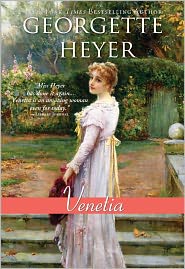
Venetia

Venetia. Georgette Heyer. 1955/2011. Sourcebooks. 368 pages.


'A fox got in amongst the hens last night, and ravished our best layer,' remarked Miss Lanyon. 'A great grand-grandmother, too! You'd think he would be ashamed!'

 I treated myself to a reread of Georgette Heyer's Venetia this week. And if you've read this one--or any Georgette Heyer's historical romances--you'll understand why it's a treat. For there is something oh-so-delightful, oh-so-satisfying about reading one of Heyer's romances. She has a way with her characters, and a way with dialogue.

If Heyer's romances have a flaw--and I don't really think of them as flawed--it would be that they require a bit of patience. You can't rush Heyer. Or, if you do try to rush Heyer, you end up missing the point. For it's all about the journey.

You can skim romances by contemporary authors. You can skim entire paragraphs or entire pages and not miss a thing. You can almost read an entire romance novel of several hundred pages without engaging any thought, any attention to the book in hand. That's why you can read several a day if you're an addict. But you can't skim Georgette Heyer. Not really. Not if you want to really enjoy it. And why bother if you don't want to enjoy yourself?

I've read almost all of Heyer's romances--all but seven, I believe. And Venetia is definitely one of my favorites, one of those in my top five. Now don't ask me to name my absolute favorite and best because I couldn't. I wouldn't even try.

Venetia, our heroine, has spent all of her life in the country having very little to do with society. She's known to two or three families in the neighborhood, perhaps, but for the most part her life has been secluded. She keeps company with her younger brother, Aubrey, whom she adores despite his flaws. He always, always, always has his nose in a book. But her lonely days are about to come to an end...

One day while taking a walk, she meets Lord Damerel. A man with an oh-so-dreadful reputation. He enters the novel in a spectacular way--for better or worse. For he sees the heroine strolling along on his land and impulsively grabs her and kisses her. Leaving her a bit shocked to say the least. They argue. They enjoy arguing. Readers know that Venetia won't be forgetting Damerel any time soon, and vice versa.

But the two really don't get to know one another--and I mean nothing improper by the word know--until her brother, Aubrey, is injured. Aubrey is taking to Damerel's home to recover, and Venetia, good sister that she is, must be near his side. Damerel and Venetia have plenty of time to talk--to really talk--and it's oh-so-obvious that these two are meant to be. That the two are soul mates. But his reputation, his past, is something he can't forget. She knows he's been a bad, bad boy, but she just knows that she loves him, that she accepts him as he is.

Of course, Lord Damerel isn't the only man in love with Venetia. She suffers through two suitors Oswald Denny and Edward Yardley. These two are laughable really. And if you take the time to appreciate them for what they are, for what they add to the novel, then you won't find their scenes boring.

Of course I haven't even mentioned the plot of this one, not really, but I'm not sure that matters so much. For it is the characters that are the heart and soul of this one. I loved, loved, loved the characters in this one. The dialogue of this one is so much fun!!!
"Who are you?" he demanded abruptly. "I took you for a village maiden--probably one of my tenants."
"Did you indeed? Well, if that is the way you mean to conduct yourself amongst the village maidens you won't win much liking here!"
"No, no, the danger is that I might win too much!" he retorted. "Who are you? Or should I first present myself to you? I'm Damerel, you know."
"Yes, so I supposed, at the outset of our delightful acquaintance. Later, of course, I was sure of it."
"Oh, oh--! My reputation, Iago, my reputation!" he exclaimed laughing again. "Fair Fatality, you are the most unusual female I have encountered in all my thirty-eight years!"
"You can't think how deeply flattered I am!" she assured him. "I daresay my head would be quite turned if I didn't suspect that amongst so many a dozen or so may have slipped from your memory."
"More like a hundred! Am I never to learn your name? I shall, you know, whether you tell me or no!" (33)
He released her hands, but only to pull her into his arms. "When you smile at me like that, it's all holiday with me! O God, I love you to the edge of madness, Venetia, but I'm not mad yet--not so mad that I don't know how disastrous it might be to you--to us both! You don't realize what an advantage I should be taking of your innocence!" He broke off suddenly, jerking up his head as the door opening on to the passage from the ante-room slammed. (235)


© 2011 Becky Laney of Becky's Book Reviews


The Private World of Georgette Heyer

The Private World of Georgette Heyer. Jane Aiken Hodge. 2011. Sourcebooks. 256 pages. 

Georgette Heyer was born on 16 August 1902, in the prosperous London suburb of Wimbledon. She was called after her father, George Heyer, who had been called after his. 

I am a big fan of Georgette Heyer, so I was pleased to read Jane Aiken Hodge's biography. Because Heyer was a private person, an author who did not seek much publicity--she let her books speak for themselves--this biography focuses on her writing career. Readers get a glimpse--a behind the scenes picture--of her life as a writer. They learn details about when each book was written, the how, the where, the why. Readers get to read Heyer's thoughts on her own books, her thoughts on other authors, her thoughts on the publishing industry.

The more familiar you are with Heyer's novels--her romances and mysteries--the more you'll enjoy this one. I remember picking this one up a year or two ago and losing interest because all it was--all it seemed to be--was talk about one book after another after another. Now that I've read most of her romances, I have a better appreciation for the biography as a whole. (It could also be a mood thing! For example, after recently reading Anya Seton's Katherine, it amused me to see Heyer call it 'unhistorical' fiction. And I really enjoyed reading Heyer's thoughts on Jane Eyre!!! And the book also includes Heyer's thoughts on some of her book covers!!!)

I would recommend this one to fans of Georgette Heyer. I found it very interesting!

© 2011 Becky Laney of Becky's Book Reviews


Are You Going To Kiss Me Now? (YA)

Are You Going To Kiss Me Now? Sloane Tanen. 2011. Sourcebooks. 368 pages.

I should start at the beginning, four months ago, on the night of the senior prom. I wasn't a senior, or a prom person, so the fact that I hadn't been invited wasn't bothering me...much. I mean, I didn't want to go, but it would have been nice to be invited.

I picked up Are You Going To Kiss Me Now? because I wanted to see how it compared with Libba Bray's Beauty Queens. Each book has strengths, of course, and each has its own weaknesses.

The premise of this one is simple. What if a private plane carrying five celebrities, one contest winner, and one semi-famous blogger went down in the ocean near a small African island. Could these people ever learn to get along and work as a team? Would anyone know what to do? What are their chances of surviving it all?

The heroine, Francesca, is the contest winner. She wrote a little essay all about loss for Seventeen magazine. Her sob story about losing her dad in a car accident? So not true! She's just REALLY, REALLY angry that he's getting remarried. She never expected to win--never expected it to be published--so now she may just have to face the consequences.

The good news is that after the plane goes down, well, the people in her life might be so happy to see her again that they'll forgive her for her lies...

The other people on the island are Joe Baronstein, a middle-aged actor who supposedly got his start starring in Small Secrets, a sitcom about a psychic family living in Texas, and it was a musical too; Jonah Baron, the illegitimate son of Joe, a famous singer in a Christian boy-band; Milan Amberson and Eve Larkin, two actresses that hate, hate, hate one another, of course, each has flaws; Cisco Parker, the oh-so-dreamy actor who isn't as perfect as he appears. And then there's Chaz the gay blogger who is obsessed with all things celebrity. His site is all about publishing gossip, gossip, more gossip.

The good news is that Sloane Tanen did a good job with her characters; they are all developed. Especially when comparing them to the more stereotypical characters found in Beauty Queens. I can't say that I particularly loved--or even liked--any of the characters. They are all--in their own way, perhaps--so deeply flawed. Their personal lives are so messy--hate, anger, bitterness, pain, confusion, doubt, frustration, shame, etc. What Francesca learns is that everyone has issues, that no one is perfect. That celebrities are no better or no worse than anyone else.

Francesca (and to a certain extent Chaz) are good at mocking people. And both, I think, take a little enjoyment out of seeing the world in this way. How can I make a joke out of this or that. How can I get my one line in. And even when the person being mocked doesn't really mind at all, it can grow annoying after a while.

The story isn't as over-the-top as Beauty Queens. Yes, there were places I found it a stretch--the person who discovered them, his using Francesca--or trying to use Francesca, all the big "reveals" as they laugh about having all their deepest darkest secrets out of the closet now because of their time together on the island. And the ending, well, it felt a little too happy. But it still wasn't as crazy, over-the-top as Beauty Queens.

I didn't love the story. I have to be honest. I didn't really like--at all--or appreciate may be the better word, the way that Christianity was presented, discussed, mocked, etc. It's not completely unexpected. This book won't be the first or last to present Christianity in a false way and to depict Christians as evil or crazy or liars. So I was disappointed with this one because of that, because of the lack of respect, because of the insults and jokes and such, it was hard to like the characters.

I think there are plenty of readers out there who will appreciate this one--humor and all. It just wasn't for me.

© 2011 Becky Laney of Becky's Book Reviews


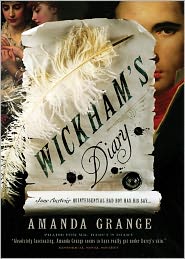
Wickham's Diary

Wickham's Diary. Amanda Grange. 2011. Sourcebooks. 208 pages.


11th July 1784, 
Fitzwilliam and I rode out early this morning. We raced down to the river and I won, beating him by a good two lengths, at which I laughed and called him a sluggard. He was annoyed and challenged me to a race back to the house. 

Amanda Grange's latest Austen-inspired novel gives voice to George Wickham. Wickham's Diary is a prequel to Jane Austen's Pride and Prejudice. Readers get a glimpse of Wickham as a boy and young man. As someone who is playfully mischievous and ambitious, as someone who is plotting and manipulative, and, of course, someone who is selfish! Grange presents a Wickham who knows just what to say to women to get what he wants, what he needs. A confident Wickham who loves being wicked. And oh how Wickham can justify himself!

Did I enjoy this one? Yes. Would it have been my first choice for her next book? Probably not! I've never seen the appeal of George Wickham. And I would love to see Amanda Grange do all the *real* heroes before tackling the so-called bad-boys of Austen! I would LOVE to see, for example, Mr. Tilney's Diary. Then, perhaps, she can continue her series. I would be thrilled to see Mr. Crawford's Diary!!! He is my *one* exception to Austen's "bad boys." For as I mentioned in my review of Mansfield Park, I think he's been misunderstood! And then there's Mr. Willoughby, of course.

See also my reviews of Mr. Knightley's Diary and Colonel Brandon's Diary.


© 2011 Becky Laney of Becky's Book Reviews


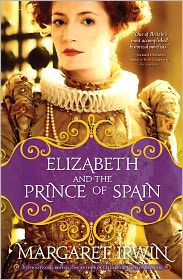
Elizabeth and the Prince of Spain

Elizabeth and the Prince of Spain. Margaret Irwin. 1953/2011. Sourcebooks. 336 pages.

'My father has fought bulls singlehanded in the arena,' said the boy. 'He is brave as a lion. He has never been defeated. He is the Conqueror of the World. How could he be conquered--by a pirate fleet of heathen Moors?'

Elizabeth and the Prince of Spain follows Young Bess and Elizabeth, Captive Princess in Margaret Irwin's historical trilogy. Overall, I enjoyed this trilogy. I enjoyed watching Elizabeth grow up. While the politics could--at times--be confusing, it was rarely--if ever--boring. At the heart of this trilogy, of course, is Elizabeth, the second daughter of Henry VIII. And Elizabeth's heart is ambitious and patient. Does Elizabeth want the throne? YES! Does she know that she has to be careful, calm, reserved, and patient in order to see that dream come true? Yes.

Elizabeth and the Prince of Spain was probably my favorite of the trilogy. I enjoyed the story from Philip's point of view and Elizabeth's point of view. I was actually surprised by how much I enjoyed Philip's side of the story. (After all, I knew that England was soon to do battle with Spain!) I would recommend this one to those that enjoy historical fiction, to those that enjoy reading about ambitious politicians.

© 2011 Becky Laney of Becky's Book Reviews


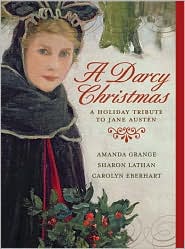
A Darcy Christmas

A Darcy Christmas: A Holiday Tribute to Jane Austen. By Amanda Grange, Carolyn Eberhart, and Sharon Lathan. Sourcebooks. 304 pages.

From Mr. Darcy's Christmas Carol by Carolyn Eberhart: Old Mr. Darcy was dead to begin with. There is no doubt whatsoever about that. The clergyman, the clerk, the undertaker, and the chief mourner had all signed the register of his burial. His son signed it. And Fitzwilliam Darcy's name was as good as his father's before him. Old Mr. Darcy was as dead as a doornail.

From Christmas Present by Amanda Grange: It is a truth universally acknowledged, that a married man in possession of a good fortune, must be in want of an heir, and Mr. Darcy of Pemberley was just such a man. Moreover, he was soon to have that want satisfied, for his wife, Elizabeth, was expecting their first child.

From A Darcy Christmas by Sharon Lathan: He set the painting onto the sofa, assuring it was well supported before stepping away. He gazed at the canvas, a smile spreading as he looked upon his family. His family. The family created by him and his wife, just as he had dreamt for so many lonely years. They stood on the portico of Pemberley flanked by their precious children on the steps. All of them were smiling at the artist. A sentimental man by nature, he silently examined the newest portrait of his family and lost himself in happy memories.

For the most part, I liked this one. I did. I really enjoyed two of these novellas! And while I wasn't impressed with "A Darcy Christmas" I would still recommend this collection.

"Mr. Darcy's Christmas Carol" was surprisingly fun. I had my doubts--as you might have your doubts about weaving these two stories together--but I thought it worked. It does a slight variation on the original. What if Jane and Charles Bingley got their happily ever after--after Lydia was "rescued" by Mr. Darcy's intervention--but Mr. Darcy's pride was still in the way of his declaring his love (the second time). This is what that first Christmas might have been like. If he'd been visited by the spirits of Christmas past, present, future.

"Christmas Present" was a great novella by Amanda Grange. I've enjoyed many of her Austen adaptations in the past. This one did not disappoint. She got the characters just right. It felt authentic like what a Darcy Christmas might have *really* been like. Elizabeth and Darcy are expecting their first child, and Charles and Jane just had their first child. So the families are coming together--the extended families--to celebrate. I really enjoyed this one!

"A Darcy Christmas" is a collection of holiday short stories following the Darcy family through twenty or so years of marriage. (I believe we see their twenty-third Christmas as a couple? Although I might have lost track of the last few stories.) Since we only catch glimpses of the family--on Christmas Eve/Christmas--it's hard to precisely follow these stories. We do know that (almost) every Christmas sees Elizabeth either with a new baby or pregnant. (Perhaps these stories do connect to Lathan's previous novels about Elizabeth and Darcy. If that is the case, then the stories might make more sense when it comes to keeping up with their family, friends, etc. Especially in the case of her children's love interests.)

© Becky Laney of Becky's Book Reviews


The Nonesuch

The Nonesuch. Georgette Heyer. 1962/2009. Sourcebooks. 352 pages.

There was a twinkle in the Nonesuch's eye as he scanned the countenances of his assembled relations, but his voice was perfectly grave, even a trifle apolegetic. 'I am afraid it is quite true, ma'am,' he said, addressing himself to his Aunt Sophia. 'I am the heir.'

Who is the Nonesuch? Waldo--or Sir Waldo perhaps--Hawkridge. A wealthy man in need of nothing (already owning several properties both in the country and in ton) who happens to inherit the estate of his cousin, Joseph Calver. The estate--a piece of property called Broom Hall--is in the country and is in need of much repair. Waldo takes one of his best friends, one of his relations (cousin? nephew?) with him: Julian Lindeth. Yet another relation (cousin? nephew?) will join the story later on, only this one not being one of his best friends--no he's more of the begging persuasion: Laurence ("Laurie") Calver. They come to this country estate--this country neighborhood. And while there, they interact with the locals.

The story focuses around a small group. Mrs. Underhill, her daughter, Charlotte, her son, Courtenay, her niece, Tiffany Wield, and the governess/companion Miss Trent. There are a few others in the circle--most notably a Patience Chartley. But those are the main players in the book.

The neighborhood is all excited by the entry of these two gentlemen. Both the mamas and the daughters. Tiffany is perhaps the most beautiful lady in their small country circle of acquaintances, but other girls--ladies I should say--eclipse her in matters of the heart and mind. Still, it's Tiffany's game to win or lose--at least as she sees it--as she sets out to capture the hearts of these two gentleman soon after they've arrived.

The novel is all about wooing and being wooed. And it was an enjoyable one for the most part. There were many characters developed. Many relationships developed. There isn't much "action" to speak of as far as plot is concerned until the very end--the last seventy-five pages or so--but for me I never found it boring. Then again, I'm a patient reader and I know the pay off can be big for Heyer novels. So others might not be so forgiving. 

© Becky Laney of Becky's Book Reviews


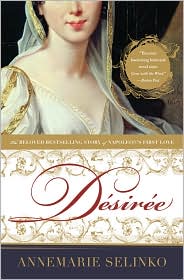
Desiree

Desiree: The Bestselling Story of Napoleon's First Love. Annemarie Selinko. 1953/2010. Sourcebooks. 608 pages.

A woman can usually get what she wants from a man if she has a well-developed figure. So I've decided to stuff four handkerchiefs into the front of my dress tomorrow; then I shall look really grown up. Actually I am grown up already, but nobody else knows that, and I don't altogether look it.

For the right reader, Desiree may satisfy. But at over six hundred pages, it didn't quite work for me. I found it to be a bit uneven. There were places where it held my interest, but, unfortunately, there were more places where it didn't.

It follows the life of a young girl, Eugenie Desiree Clary, who happened to be the "first love" of Napoleon Bonaparte. Their engagement was broken--not her choice, by the way--when he married Josephine. Awkwardly enough--at least at times--the two remained connected through the years for her sister, Julie, had married his brother, Joseph. 

She may not have married her first love. But. She did marry--and marry well. Jean Baptiste Jules Bernadotte. Though at the start no one knew how well. For her husband was adopted by the Swedish monarchy. He was chosen to be the heir to the throne. Years after the two marry, they become royalty. His royal name? Charles XIV John.

I found Desiree to be tedious in many places. As it follows the rise and fall of Napoleon. As it follows her marriage--many of which she was separated from her husband either by choice or necessity--through the decades. There were places where it worked. Places where it seemed personal, genuine. But, for the most part, I felt disconnected from Desiree as a narrator. The novel is "her diary." That is how it is presented at any rate. But. After her first disappointment with love, after her marriage, the "diary" becomes more a brief and uneven record of political and social struggles she faced as her husband fell in and out of favor with Napoleon.

Desiree was not a romance--at least not a traditional romance. Yes, the first part of the novel sees a young woman in love with love, in love with an ambitious nobody with a strange name. But the rest of the novel? Not a romance. Instead, it's a detailed account of turbulent years in France. I did not find that account particularly compelling. But maybe I'm not the right reader for this one!

© Becky Laney of Becky's Book Reviews


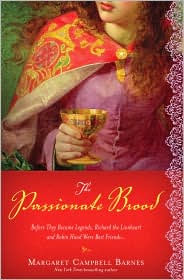
Passionate Brood


Passionate Brood: A Novel of Richard the Lionheart and the Man Who Became Robin Hood. Margaret Campbell Barnes. 1944/2010. Sourcebooks. 368 pages.

Blondel de Cahignes was fifteen and homesick.

Passionate Brood might not be for every reader, but it is an enjoyable historical novel all the same. It focuses on Richard the Lionheart, the king of England who cared more about his crusades than the welfare of his own country. It focuses on the spirited (and quite dysfunctional) Plantagenet family. We get glimpses of Richard, John, and Johanna--three of the children of Henry II and Eleanor of Aquitaine. (Others are mentioned here and there, but we get more from these three--particularly Richard and Johanna.)

Did I like it? Yes and no. On the one hand, it's an interesting story. It follows Richard's adult life--his 'exile', his crowning, his crusades, his battles, his marriage, his private life. We get a glimpse of a man raised as Richard's foster brother who "becomes" the Robin Hood of legend. Though this isn't his story. While Robin is "being" Robin Hood--readers are stuck with Richard and his wife, Berengaria, in the crusades. We see this husband and wife quarrel. Again and again.(Where Robin does come into the story is his raising the money to ransom Richard.) If you're looking for a happy story with a happy ending--a historical romance--this is not the one for you. I'm not sure I liked Richard. I'm not sure he made the best decisions for himself, for his wife, for his country. I found his obsession a bit tiring. I definitely found myself agreeing more with Robin who refused to go on the Crusades because he thought it was a waste--of time, of energy, of money, of lives. 

While I've enjoyed other Margaret Campbell Barnes titles more, I would still recommend this one to those that like reading historical fiction.

© Becky Laney of Becky's Book Reviews


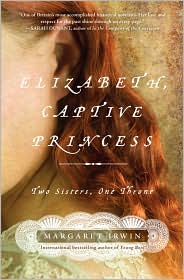
Elizabeth Captive Princess: Two Sisters, One Throne

Elizabeth, Captive Princess: Two Sisters, One Throne. Margaret Irwin. 2010. Sourcebooks. 352 pages.

The fields were deep and ruddy with uncut corn, the orchards heavy with ripening fruit.

Elizabeth, Captive Princess is the sequel to Young Bess. It covers Elizabeth's life from the death of her brother, King Edward VI, Jane Grey's nine day reign, and the uncertain years of Mary's reign. The novel concludes with Elizabeth meeting her future brother-in-law, King Phillip II of Spain.

The focus is on politics and survival. How difficult it is for men and women to keep their heads, keep their lives, when rumors could prove deadly, when conspiracy theories abound.

The book focuses on the games people were forced to play with one another. How careful one had to be. How saying too much--or too little--could lead to imprisonment or even death. How did Elizabeth feel about her older sister Mary? Did she want the crown for herself? Did she support any of her supporters that would have preferred her to Mary? How much did she know and when did she know it? Was it more about keeping England out of Spain's hands?

It's a fictional novel that may appeal to history lovers. It held my interest--which is all that I ask.

© Becky Laney of Becky's Book Reviews


Twitter Delicious Facebook Digg Favorites More