Showing posts with label dystopia. Show all posts

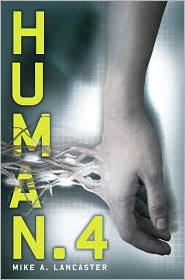
Human.4 (YA)

Human.4 Mike A. Lancaster. 2011. Egmont USA. 240 pages.

When Danny Birnie told us that he had hypnotized his sister we all though he was mad. Or lying. Or both.

Our narrator, Kyle Straker, is living in a strange, strange world where he and three others have suddenly become irrelevant. It started when he volunteered at a local talent show to be hypnotized. It wasn't that he wanted to volunteer, just that in a moment of weakness he had pity on Danny while he was doing his act. His former girlfriend, Lilly, also happened to volunteer just about the same time he did. Two adults, Mrs. O'Donnell and Mr. Peterson, also volunteered. All were hypnotized. All woke up in this strange, strange new reality.

This book is part science fiction, part horror, and part mystery. It was a quick read! I liked it. I wouldn't say I loved it. But for a quick premise-driven read, it was a good choice.

© 2011 Becky Laney of Becky's Book Reviews


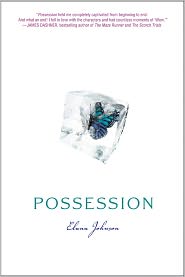
Possession (YA)

Possession. Elana Johnson. 2011. Simon & Schuster. 416 pages.

Good girls don't walk with boys. Even if they're good boys--and Zenn is the best. 

Possession seems like the kind of book a dystopian-lover would love. But this one proved disappointing to me. The more I read, the more that disappointment grew. I'll try to explain.

It's one thing for a dystopian novel to throw the readers into a foreign world where they're unsure of the rules of the society and culture. But to leave readers confused for over 400 pages? To leave readers struggling to even make sense of the basic story structure? That's a big disappointment. As I said, it's one thing if there are a few missing pieces of the puzzle. The author could have done that on purpose, after all. The reader's confusion could be intentional. But I don't know if I believe that an author would intentionally confuse readers for hundreds of pages. (Well, yes, there's James Joyce and T.S. Eliot. But that's a different story.)

I believe that when you read a book, you should be able to turn the pages and know whose head your inside--who is doing the narrating, whose perspective you're seeing. Call me silly, but, that's just the way I am.

Violet, our heroine, has not been quite as obedient as she should have been. She has a way of unplugging from the messages the authorities send--to everybody--messages that tell them how to live, behave, conform, etc. The voices that 'manage' them. But even if she's not brainwashed--she's still capable of thinking for herself, for the most part, she's not extremely rebellious. She's not out to start a revolution, she's not out to break down the powers that be. She just wants to take a little walk with her match and best friend, Zenn. She just wants to have a little alone time now and then. Of course, that breaks the rules. But it hardly seems fair that such offenses would lead to prison either. But that is just what happens to Vi. In prison she meets another boy, Jag, and if labels are to be believed, he is "bad." But this 'bad boy' has a certain appeal and these two seem to share a common destiny, a common enemy. Once these two team up....well, that's when things get started.

The novel has an interesting premise: a mind-controlling government. And the novel has romance potential. Readers know from the start that Vi will at one point or another be called to choose between the boy from her past (Zenn) and the boy of the moment (Jag). Readers--for better or worse--know more about Jag than Zenn. But that isn't necessarily a horrible thing. Zenn is present for the novel, just not in a romantic, heroic way. And Jag, well, even though he's got hero potential. Well, he's not going to go out of his way to act like a ROMANTIC hero when bigger things are at stake. (I actually like that).

While I didn't fall for Jag myself, that is, I didn't find him swoon-worthy, I can see that Vi and Jag belong together. I think they deserve each other. Jag can get under Vi's skin and drive her crazy. And she can get under his skin and drive him crazy. The things she accuses Jag of, she's guilty of doing herself. And the things Jag accuses Vi of, well, he's just as guilty. If either were with a more honest person, there could be trouble. When these two fight--and they do fight--it's impossible to take sides. Because they're the pot and the kettle.

The ending. What can I say? Am I really more disappointed by the ending than I was the middle? It's not fair to say. I do think it's a bit open, a bit of a cliffhanger. If it is truly 'the end.' It is a LOT more open than most YA novels I read. (Which wouldn't be a bad thing.) If it's just trying to build up suspense for a book two, it's a bit annoying, but what else is to be expected these days? 

I didn't hate Vi. I didn't hate Jag. I didn't hate Zenn. I didn't hate the world Elana Johnson created. I really didn't feel strongly enough about it to hate it. Hate requires passion and energy. It's just that I didn't connect with them enough to "like" the novel. Readers are different. Some people love plot-driven or premise-driven novels. I tend to care more about the characters, to want a story to be character-driven. So there's a chance you might appreciate Possession more than I did.

© 2011 Becky Laney of Becky's Book Reviews


Legend (YA)

Legend by Marie Lu. 2011. November 2011. Penguin. 336 pages.

My mother thinks I'm dead. Obviously I'm not dead, but it's safer for her to think so. At least twice a month, I see my Wanted poster flashed on the JumboTrons scattered throughout downtown Los Angeles. It looks out of place up there. Most of the pictures on the screens are of happy things: smiling children standing under a bright blue sky, tourists posting before the Golden Gate Ruins, Republic commercials in neon colors. There's also anti-Colonies propaganda. "The colonies want our land," the ads declare. "They want what they don't have. Don't let them conquer your homes! Support the cause!"

Legend is YA dystopia. Perhaps not YA dystopia at the very, very best. But it is definitely one of the better dystopias I've read this year.  Legend is compelling; it is exciting; it is just a great read.

The novel has two narrators: a guy named Day (Daniel) and a girl named June. Both underwent the "trials" at age 10. June received a perfect, perfect score earning her not only the right to higher education (high school and college) but the right to the best education possible, the kind of education that will prepare her for serving the Republic. Day, well, he didn't pass his trials. And like all other low-scoring 10 year olds, he was sent away to labor camp. Once a 10 year old is sent to labor camp, they're never ever heard from again.

When the novel opens, both teens are about 15. Day is a wanted criminal, an outlaw. He doesn't legally exist in the Republic database, in the Republic records. The authorities don't even know what he looks like--what race or ethnicity he may be. So their wanted posters change quite often allowing for every possibility. (It's the occasional finger print on the crime scene that links Day to particular crimes.) Day is in Los Angeles spying on his family. His older brother, John, is the only one in the neighborhood who still knows he's alive. And it is to John he delivers gifts--food, clothes, medicine, money, etc.  Day becomes worried when his family's home is marked with a red X--a symbol that someone within the home has the plague. This is very bad news indeed.

June, on the other hand, is at the top of her class. Though she's just fifteen, she's almost finished with her training, her education. June is anxious to start working for the Republic, to start serving in the military, to start tracking down criminals like Day. Her wish comes true--but not in the way she expected. She wanted to start working with her older brother, Metias. Instead, she takes his place after he is murdered. And it appears that Day is the one responsible for his stabbing. Metias was trying to stop Day from escaping from the hospital after a break in. (Day was hoping to find plague cures for his family.) June is on a mission, and it is personal. She'll track down Day and bring him to justice no matter what.

The chapters alternate in narrators, and for once I think this is a great idea. Usually, I'm not a big fan of this in novels, but in this case, it not only works, it works well! I was able to care about Day and June--almost from the start!

Legend is action-packed. It's an intense read. But an enjoyable one! I'd definitely recommend it!!!


*My review is based on an ARC.
**Have you seen this list of YA dystopias?!


© 2011 Becky Laney of Becky's Book Reviews


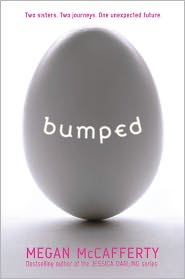
Bumped (YA/Adult) (Some spoilers)

Bumped by Megan McCafferty. 2011. HarperCollins. 336 pages.

The United States of America once ranked above all industrialized nations in the realm of teen pregnancy. We were the undisputed queens of precocious procreation! We were number one before, and we can be number one again! -- President's State of the Union Address

Jondoe, one of the lust interests in Bumped, thinks he's God's gift to women. In fact, this professional 'breeder' calls himself a missionary. But I'm rushing things, perhaps?

Bumped is a dystopian novel (that I hated). The 'what if' of this one is quite simple. A virus has left almost all women over the age of 18 or 19 infertile. Since couples are unable to have their own children, those that want a family are desperate to adopt. Some couples become very involved in the process. They choose the surrogate mother, they choose the father, they have a contract written up. And of course, a price is agreed upon. The teens that sign a contract are 'professionals.' Of course, there are still plenty of 'amateur' teens--young women getting pregnant with their boyfriends or with random guys they hook up with at wild procreation-themed parties.

Melody Mayflower, our sixteen year old heroine, has been hired by a couple to have a baby. But the couple hasn't decided on the father yet. Melody is still waiting to hear the final details from her agent. And Melody has recently had another surprise. An identical twin sister showing up at her house, a sister who is anxious to get to know her, to bond with her.

Harmony has been raised in a Christian community. Or should I say a "Christian" community? Quite honestly, I'm not sure if Harmony is the best representative of her community. And I'm not sure Harmony's thoughts on her community are true and trustworthy. In other words, I don't trust Harmony even on the tiniest things. She may claim to "have God." But. I reject Harmony as a reliable narrator. I reject Harmony as a witness for anything remotely resembling Christianity. (I've read that some find her too preachy, too fundamental, too judgmental. I have the opposite complaint. I don't find her "faith" to be genuine enough to go beyond mere words. I don't find her faith to be deep enough, real enough. I wanted her to be CLOSER to God. Instead of just claiming to "have God" and vaguely going through the motions. She mentions she has doubts and questions about the faith--about what she's been taught. But. I found her "seeking" to be more about her than God.)

Zen and Jondoe are our 'lust' interests for lack of a better word. Though I must say that what Melody comes to feel for Zen and what Zen feels for Melody goes beyond just lust. I do think that they are falling in love with one another. Even though Melody's contract comes into great conflict with her own potential love life. How do I feel about Zen? Well, it's hard to judge him without comparing him to Jondoe. Compared to Jondoe, Zen is definitely a much better guy, a much better character. This doesn't mean he's perfect or flawless. Or even that he helps redeem the novel. (I don't think he and Melody can. I think Harmony and Jondoe definitely ruin what chance there is to even slightly like this one.)

S
p
o
i
l
e
r
s

So who is Jondoe? He's a professional. He's arrogant. He's "the chosen one" hired to impregnate Melody Mayflower. But it isn't Melody who's at risk. No, it's Harmony, the supposed "good girl," who has the most to lose when she accidentally-on-purpose meets him in her sister's place.

Who do I hate more? Jondoe or Harmony?! Harmony who claims to "have God" yet twists Scripture to suit her own lusty desires while fantasizing that Jondoe is the Alpha and Omega and "the Jesus of my dreams" (76, 84). Harmony who sings a "worship" song for Jondoe on the guitar and gets herself all hot and bothered (131). A song supposedly about loving Jesus. (Though I must admit it would make a poor excuse for a worship song. I mean there is nothing of substance in it, it is very generic and meaningless. The kind of song that would get frowned upon in some circles.) But still for Harmony to be FANTASIZING about Jesus like that?! It is beyond offensive and inappropriate; it's just plain wrong. I mean how could you genuinely have faith in Jesus as your Lord and Savior--and--see him in your fantasies like that? I don't think you can.

And then there is Jondoe. Where to start?! Maybe when he claims to be a missionary for God? Or maybe when he starts making these claims as he's getting ready to "witness" to Harmony:

"My partners see the Truth with a capital T. Maybe not before or after, but definitely during." (255)
"I make them see God. Or rather, God, working through me, helps them see God. He gets all the credit. Only our Creator has the power to stir such feelings of ecstasy. Each and every one of my preggs has been touched by His divine hand." (255)
"The more I give to God, the more blessings I'll receive in turn. I'll never be able to outgive Him, but I'm having fun trying." (255)

I found sections of Bumped to be tasteless, offensive, outrageous, twisted, and wrong in oh so many ways. It goes beyond being insensitive. It goes beyond being irritating and annoying. It goes beyond mocking. It goes beyond insulting.

Conclusion:

Bumped had an interesting premise. And there were places where it almost, almost reminded me of Win a Date With Tad Hamilton. Except that Win a Date With Tad Hamilton was cute and charming and had its redeemable moments.

If you're expecting Jondoe OR Zen to be another Marcus Flutie, you'll probably be very disappointed.

I think I almost would have preferred there just to be the one girl, to have this one be (yet) another dystopian novel with a love triangle at the center. If this book had been about Melody trying to decide between following her heart and her own desire (for Zen, her best friend) and honoring her agreement, her contract with the Jaydens. An agreement that involves lots of money! That would have still made for an interesting read. Or if the author really truly thought that Harmony was the stronger character, why not set her story in Goodside and show Harmony's struggle there. Of her trying to decide if she wants an arranged marriage or if she wants to "escape" to the real world and fall in love.

Reading is subjective and while I absolutely hated Bumped, you might feel differently.

© 2011 Becky Laney of Becky's Book Reviews


Sharp North (YA)

Sharp North. Patrick Cave. 2004/2006. Simon & Schuster. 528 pages.

The girl nearly didn't find out who she was. What she was.

Sharp North is a perplexing YA novel. Part mystery. Part thriller. Part dystopian. It's set in a future world forever altered by global warming. A future world with a corrupt government. (How many fictional future worlds don't have a corrupt government?) A future world threatened by an underground movement, a revolution in the making. Our heroine, Mira, has a role to play in this world--for better or worse. And it's a role that mystifies Mira. For Mira's future is just as uncertain as her past.

Sharp North begins with a murder. Mira witnesses this murder, this hushed up murder, and it forever changes the way she sees the world, the way she sees her community. In part because she finds out that she is connected to the victim. She finds a piece of paper, a mere scrap, with a list of names. Her name is on the list. And so is the name of one of her friends, Gil Moore. He's listed as "her watcher." But why is he watching her? Is he her friend or her enemy? Is he out to see that she survives? Or is he in place to eliminate her? That's what Mira can't forget, can't erase. Are the people who murdered this mysterious woman, this mysterious stranger, out to get her? What led to this crime? For even if the whole world chooses to ignore it, Mira can't. Was it the woman's curiosity? Well, Mira can't help being curious now!

So Mira sets out on a journey to discover the truth, the truth about who she is, what she is. In a way she's running away from danger just as much as she's running straight into it. For Mira hasn't a real clue who her enemies are and who her friends may be. Is there a safe place for Mira? Or is she destined to upset the balance of those around her?

We meet a few interesting characters in Patrick Cave's Sharp North. Including several members of the Saint family, one of the "Great Families" that govern in this new world.

Maybe other readers can piece together this mystery. Maybe other readers can read it without being confused by the ending--as for me, well, I'm puzzled by how it ended. I still don't know what really happened.

So did I like it? Yes and no. I liked the idea of it. But. It felt like two or three stories pieced together. And it didn't always work for me.

© 2011 Becky Laney of Becky's Book Reviews


Outside In (YA)

Outside In. Maria V. Snyder. 2011. Harlequin. 336 pages.

My world changed in a heartbeat, that's how it felt to me. As if one second ago, I was Trella the lower level scrub, cleaning the air and water ducts of Inside, and now I am Trella the victorious leader of the Force of Sheep rebellion.

After the rebellion, after the Lowers proved to themselves and the Uppers that their voice was worth being heard, Trella thought life would start to improve. But a series of terrorist actions threaten everything--soon Trella doesn't know who to trust. For the truth is, no one is quite sure who the enemy is. Is the enemy an old threat or a new foe?

This one is the sequel to Maria V. Snyder's Inside Out. Both books are science fiction. Both are set in space--on space ships. Both have plenty of action and adventure. There's definitely a romantic story to both books. As our heroine, Trella, struggles with matters of the heart under extreme stress. Her world is in danger, yet, she's falling in love.

I enjoyed both books. I found both to be quick reads.

© 2011 Becky Laney of Becky's Book Reviews


Matched (YA)

Matched. Ally Condie. 2010. Penguin. 369 pages.

Now that I've found the way to fly, which direction should I go into the night? My wings aren't white or feathered; they're green, made of green silk, which shudders in the wind and bends when I move--first in a circle, then in a line, finally in a shape of my own invention. The black behind me doesn't worry me; neither do the stars ahead.

Cassia, the heroine of this dystopian YA novel, is on her way to her Match banquet. This is THE night where she will learn the identity of the man she'll spend the rest of her life with. It's also the day Cassia turns seventeen. Just one of many coincidences, perhaps, of Ally Condie's Matched.

For it is revealed that her match is her best friend, Xander. Usually, one's match is a complete stranger. The fact that she knows him--that she knows and loves him--well, it's a strange coincidence. But that's just the beginning. For when she looks on her microcard, a microcard that should be full of pictures and background information on her match--she catches a glimpse of another friend, Ky. For a moment, only a moment, it appears that Cassia has two matches. This kind of mistake should NEVER happen. And it's corrected by a visiting Official who tries her best to convince Cassia that it was a mistake, nothing more. Ky could never, ever, ever be her real match. Because he's not good enough to be anyone's match.

Any guesses which young man Cassia starts to fall in love with?

I enjoyed Matched. I wouldn't say that I loved it absolutely. But I enjoyed it. I found it entertaining and satisfying. I liked Cassia. I liked Ky. I liked Xander. I liked Cassia's family. Her brother, Bram, her father and mother, her grandfather. I was interested in the world Condie created. I liked the role poetry played in this one. How forbidden poems were used to help reveal some of the mysteries. It just worked for me.

Favorite quotes:
The almost-snow reminds me of a line from a poem we studied this year in Language and Literacy: "Stopping by Woods on a Snowy Evening." It is one of my favorites of all the Hundred Poems, the ones our Society chose to keep, back when they decided our culture was too cluttered. They created commissions to choose the hundred best of everything: Hundred Songs, Hundred Paintings, Hundred Stories, Hundred Poems. The rest were eliminated. Gone forever. For the best, the Society said, and everyone believed because it made sense. How can we appreciate anything fully when overwhelmed with too much? (29)
Every minute you spend with someone gives them a part of your life and takes part of theirs. (65)


© 2011 Becky Laney of Becky's Book Reviews


XVI (YA)

XVI. Julia Karr. 2011. Penguin. 272 pages.

"Nina, look." Sandy jabbed me in the ribs.

XVI is a new dystopian novel. I love dystopian novels, usually. But I wasn't loving this one. I didn't connect to the characters. I didn't believe the romance. I failed to connect with the story, with this new world Karr created.

Nina Oberon is the star of this one. Her best friend, Sandy, is unbelievably annoying--though still a few weeks from her sixteenth birthday, she's acting like a sex-teen already. In other words, she's stopped thinking and has bought into the media's belief system completely. Why is Nina best friends with Sandy? Well, it's hard for readers to know for sure. I can only assume that a few years ago, Sandy, had to be less annoying and more likable.

Nina also has a younger sister, Dee. Since their mother is murdered fairly early in the novel, it becomes Nina's responsibility to protect Dee from her father, Ed. So Nina's life is getting crazier by the day, and trying to make sense of her life, her world, what everything means, well, it could be a full time job. Nina does make a few new friends, friends that are actually capable of thinking, to help her in this difficult time, this dangerous time.

One of these new friends is a guy named Sal. Though Nina is convinced she is not ready for a boyfriend, she can't help wanting Sal in her life. She can't stop thinking about him, wanting him, needing him. Will Sal help her solve some of the big mysteries in her life? Will Sal help keep her safe?

So why didn't I love this one? Why didn't I like it? Why didn't I like Nina and Sal? I'm not sure. It just felt a little lacking. I just felt disappointed with it. It could be just bad timing. You may love this one. (I hope you do enjoy it more than I did.)

© 2011 Becky Laney of Becky's Book Reviews


Wither (YA)

Wither. Laura DeStefano. 2011. Simon & Schuster. 368 pages.

I wait. They keep us in the dark for so long that we lose sense of our eyelids. We sleep huddled together like rats, staring out, and dream of our bodies swaying. I know when one of the girls reaches a wall. She begins to pound and scream--there's metal in the sound--but none of us help her. We've gone too long without speaking, and all we do is bury ourselves more into the dark. The doors open. The light is frightening. It's the light of the world through the birth canal, and at once the blinding tunnel that comes with death. I recoil into the blankets with the other girls in horror, not wanting to begin or end.

Did I like Wither? Yes! I really LOVED it! One of the best 2011 books that I've read so far. Rhine Ellery knows almost exactly when she'll die--and why she'll die. Mad scientists, so called geniuses, from previous generations have manipulated human genes too much. Having created the "oh-so-perfect" generation of children, they've cursed the human race. Every woman dies from a deadly virus at age 20. Every man dies from that virus at age 25.Will there be a cure found in Rhine's lifetime? Maybe, maybe not. She's just sixteen. But she's not that hopeful. Rhine knows one thing for sure. She does NOT want to spend her remaining years in a forced marriage with two other sister wives. Even if her husband, Linden, is ignorant of how his three wives really came to be his. Even if he doesn't know the truth about his father's schemes and manipulations. No, Rhine wants to be free, needs to be free. She wants to find her twin brother, Rowan, and live the rest of her days free. But will she find a way to escape?

I enjoyed Wither! I enjoyed spending time with Rhine and her sister wives, Cecily, the youngest, Jenna, the oldest. I also enjoyed spending time with Gabriel, one of the servants who works at the estate. Their developing friendship adds a great deal of excitement to the novel! I didn't hate Linden. While Rhine may not have fallen for him, may not have found that lifestyle tolerable under any circumstances, I can't help pitying him.

Overall, I found the novel fascinating and compelling. The world Lauren DeStefano created was haunting and horrible and so wonderfully developed. I'd definitely recommend this one.

She wanders down one of the aisles, and I follow her as she runs her finger along the spines of books, taps one of them, eases it out of its place. The book is dusty, the cover eaten away, the pages yellow and brittle as she flips through them. All of these books are from the twenty-first century or earlier, which isn't very strange. The television also airs old movies, and most shows are set in the past. It has become a form of escapism to visit a world in which people live a long time. What was once real and natural has become a fantasy. "There are lots of love stories here," she says. "They either end happily, or everyone dies." She laughs, but it sounds more like a sob. "What else is there, right?" (86)

A few minutes later we're huddled under a blanket on a couch in the sitting room, sharing a gallon of vanilla ice cream she ordered from the kitchen, and we're watching an early-morning rerun of yesterday's soap opera. Along with the romance novels, these are another of her guilty pleasures. The actors are all teenagers made up to look much older. Jenna tells me they're constantly changing the actors, since of course the show has been on for more than a decade and the original actors have died by now. The only consistent actors are first generations. And as she's explaining to me who's in a coma and who unknowingly married an evil twin, both of us bathed in the television's glow, I do start to relax a little. (243)
You might also be interested in reading: Divergent by Veronica Roth, Delirium by Lauren Oliver, Across the Universe by Beth Revis, The Hunger Games by Suzanne Collins, and The Maze Runner by James Dashner.


© 2011 Becky Laney of Becky's Book Reviews


Surviving Antarctica: Reality TV 2083 (MG/YA)

Surviving Antarctica: Reality TV 2083. Andrea White. 2005. HarperCollins. 336 pages.

From the prologue: What chance did Stephen Michael have of winning his Toss? In the year 2080 there were so many fourteen-year-old kids and so few scholarships. And if he lost--he hated to think about his choices then.

From chapter one: THREE YEARS LATER. Andrew Morton was lounging in the soft spot in the tattered couch where he always watched television.

What do Andrew Morton, Polly Pritchard, Robert Johnson, Billy Kanalski, and Grace Untoka have in common with each other? They're all fourteen, and they're all contestants of Historical Survivor, a reality show that 'teaches' by reenactment. This edition of Historical Survivor chronicles the tragic journey of Robert F. Scott and his team. The year? 1912. Their mission? To be the first to reach the South Pole. The Department of Education (DOE) led by Dolly Jabasco (Hot Sauce) will recreate the circumstances faithfully. They will have the tools and resources and supplies that Scott had with him. Can five children succeed where five grown men (experienced explorers) failed? The children, at first, are fearless. They believe that TV is TV. True, there have been a few deaths in past seasons of the show--but those were adults; they're kids. They believe that in a true emergency, the camera crew would be there to save them. Problem is, the camera crew seems to be invisible?! Where are they? How is this show being filmed?!


Told from each teen's perspective and the perspective of one of the editors who chooses to break all the rules, the book is an exciting adventure exploring the ethics and morality of the entertainment industry, society, and the government itself.

Andrea White's novel envisions the world--particularly America in the latter part of the twenty-first century as a shadow of its former self. Having cut all scientific research for economic reasons AND having stopped all public education systems for the same reason. Every household is required to have their children until the age of fourteen watch a certain number of 'educational' programs on TV per week--thirty hours. At the age of 14, each child is given a chance to win a chance at further education (high school, college, etc.) in a roll of the dice type situation. Money is scarce, and society is literally divided into the haves and have-nots.

I loved this one. I would definitely recommend it for fans of The Hunger Games, Divergent, The Maze Runner, and Rash.

Wishes were for people of the twentieth century, not the twenty-first. (10)

She couldn't believe how wrong modern people were. They didn't know that a person's mood came from the inside. (42)

Polly noticed a stack of books on her bedside table. She had read thousands of books on her electronic book card, which she refilled at the computary. But only once had she read a book with an actual cover and pages that turned. It was The Fellowship of the Ring by J.R.R. Tolkien. She could still remember the pleasant hours she had spent with that book one summer on the steps outside her hut, fanning herself because of the heat. (59)

"Did you know that less than ten percent of the public votes in elections?" Chad said.
"No." Steve wasn't old enough to vote yet. But he knew his mom and dad had never bothered to register.
"Well, the more TV people watch, the less likely they are to vote," Chad said. "Do you understand yet?"
Steve shook his head.
"We're still called a democracy," Jacob broke in. "But only the politicians vote. They control who's in office."
"There's a lot of pressure on the Secretary to keep the ratings up," Chad said.
"The stakes are high. She's got to be always on the lookout for a new gimmick," Jacob added.
The series made more sense now. (83)


© 2011 Becky Laney of Becky's Book Reviews


This World We Live In (YA)

This World We Live In. Susan Beth Pfeffer. 2010. Houghton Mifflin Harcourt. 239 pages.

I'm shivering, and I can't tell if it's because something strange is going on or because of the dream I had or just because I'm in the kitchen, away from the warmth of the woodstove. It's 1:15AM, the electricity is on, and I'm writing in my diary for the first time in weeks. 

This World We Live In is the sequel to Susan Beth Pfeffer's Life As We Knew It and the dead & the gone. The novel opens at the end of April, it has almost been a full year since the asteroid collided with the moon and life forever changed. In the second novel starring Miranda Evans (and her family), life beyond the sunroom is explored more fully. In Life As We Knew It, there was a routine dullness. Since Miranda, Matt, Jon, and their mom, Laura, rarely ventured out of their two-or-three room sanctuary, there was a sameness to the end of the world. That isn't quite the case with This World We Live In. For this book is ALL about change. Everything is changing--and these changes are coming quite quickly, surprising just about everyone! Soon Miranda's world will include more people--expanding from four to eleven! Among the new people in Miranda's life are Alex and Julie Morales first introduced to readers in the dead & the gone. How will her world change? Will these changes bring hope and love to her bleak life?

This is the second time I've read the novel--the third time if you count listening to the audio book. The first time left me shocked. I couldn't feel satisfied. I couldn't feel hopeful. I couldn't feel much of anything. I needed time and space. I needed to reread the whole trilogy. I needed to see the big picture--to see if there was a big picture.

This World We Live In is a challenging read. It requires readers to care deeply and passionately about these characters, to become a part of their lives, and a part of Pfeffer's strange, cruel world. There is much to contemplate, much to discuss. Particularly when it comes to this ending. I won't go there for this review. I won't. I don't think it's fair to those who have not read the book.

While this one isn't my favorite of the trilogy, I do recommend it.

A year ago I was sixteen years old, a sophomore in high school. Matt was in his freshman year at Cornell and Jon was in middle school. Dad and Lisa had asked me to be godmother to their new baby. Mom was between book projects. I know I've gained a lot in the past year, but I woke up this morning and all I could think about was everything I've lost. No, that's not right. Not everything, everybody. Everything doesn't matter, not really. After a while you get used to being cold, and hungry, and living in the dark. But you can't get used to losing people. Or if you can, I don't want to. So many people in the past year, people I've loved, have vanished from my life. Some have died; others have moved on. It almost doesn't matter. Gone is gone. (61)

If you'd asked me a week ago what it would take for me to feel better, I would've said knowing how Dad and Lisa and the baby were, meeting a boy my own age, and running water.
Now I have all three. I guess I must feel better. (101)

"You don't have to beg here," I said. "We're happy to share."
"No one is happy to share," he said.
Alex looked down then or I looked up. I don't know how it happened, but we made eye contact, and for a moment I was drawn into his soul. I could see everything, the depth of his sorrow, his anger, his despair.
I feel sorrow and anger and despair. I don't think there's a person alive who doesn't. I sometimes feel like my sorrow and anger and despair burn inside me the way the sun used to burn on a hot July day.
But that was nothing compared to what I sensed in Alex. His sorrow, his despair was like a thousand suns, like a galaxy of suns. It physically hurt me to look into his eyes, but I couldn't break away. He turned his head first, and then he apologized, or maybe he thanked me. For Alex I think they're the same thing. (107-8)

© 2011 Becky Laney of Becky's Book Reviews


The Giver

The Giver. Lois Lowry. 1993. Houghton Mifflin. 180 pages.

It was almost December, and Jonas was beginning to be frightened. No. Wrong word, Jonas thought. Frightened meant that deep, sickening feeling of something terrible about to happen. Frightened was the way he had felt a year ago when an unidentified aircraft had overflown the community twice. He had seen it both times. Squinting toward the sky, he had seen the sleek jet, almost a blur at its high speed, go past, and a second later heard the blast of sound that followed. Then one more time, a moment later, from the opposite direction, the same plane.

The Giver is one of my FAVORITE books, and one of my favorite books to reread. I love spending time with Jonas. I love reading about his world, his family. I love the strangeness of it. How this community has made an idol of sameness and sought to control just about everything. The community chooses not only your life's profession, but your spouse and children too. (If you're lucky enough to be granted either. Not everyone is. Some are common laborers, after all.)  But I don't want to say too much. Because I do think this makes for a better read if you don't know too much ahead of time. 

When the novel opens, Jonas, is preparing for The Ceremony of Twelve. He's apprehensive, yet curious. What occupation will he be assigned? Will he like his training and enjoy his new responsibilities? Will it really take him away from his closest friends? His parents warn him that it will, that this really is the start of his new life, his adulthood. Jonas's assignment is life-changing--no doubt about it! It's also quite unique. It has been several generations since a new Receiver has been announced....

But just what is it he'll be receiving? Can he handle the stress and anguish? Can he handle the truth it will bring to light?!

"We don't dare to let people make choices of their own."
"Not safe?" The Giver suggested.
"Definitely not safe," Jonas said with certainty. "What if they were allowed to choose their own mate? And chose wrong? Or what if," he went on, almost laughing at the absurdity, "they chose their own jobs?'
"Frightening, isn't it? The Giver said.
Jonas chuckled. "Very frightening. I can't even imagine it. We really have to protect people from wrong choices."
"It's safer."
"Yes," Jonas agreed. "Much safer." (98-9)

"Do you love me?"
There was an awkward silence for a moment. Then Father gave a little chuckle. "Jonas, You, of all people. Precision of language, please!"
"What do you mean?" Jonas asked. Amusement was not at all what he had anticipated.
"Your father means that you used a very generalized word, so meaningless that it's become almost obsolete," his mother explained carefully.
Jonas stared at them. Meaningless? He had never before felt anything as meaningful as the memory.
"And of course our community can't function smoothly if people don't use precise language. You could ask, 'Do you enjoy me?' The answer is 'Yes,'" his mother said. "Or," his father suggested, "Do you take pride in my accomplishments?' And the answer is wholeheartedly 'Yes.'"
"Do you understand why it's inappropriate to use a word like 'love'?" Mother asked.
Jonas nodded. "Yes, thank you, I do," he replied slowly.
It was his first lie to his parents. (127)


© 2011 Becky Laney of Becky's Book Reviews


Across the Universe (YA)

Across the Universe. Beth Revis. 2011. January 2011. Penguin. 416 pages.

Daddy said, "Let mom go first."

I found Across the Universe a compelling read. It's narrated by Amy, a teen girl who was awakened fifty years too soon from her frozen sleep, and Elder, a teen guy, who was born to be a leader to an as-yet unborn generation of colonists on the Godspeed. He's being trained by Eldest, the leader of the space ship. The ship manages itself, but it is his job, his responsibility, to manage the people on the ship.

The novel opens with Amy. She's in a difficult position. Her parents are determined to be part of this colony ship. They're both "essential" to the mission. They've got the necessary skills, the needed skills, to plant a colony on an alien planet. True, they won't arrive for three hundred years, if everything goes according to plan. But then they'll have a new life. Amy has been given a choice, by her father, she can remain on Earth, stay with the rest of her family, stay with her boyfriend, and have a comfortable life--not a perfect life, not a problem-free life. But a chance to continue living life as she knows it. Or. She can be frozen like her parents. She can choose to take a chance on a new life, a challenging life, an uncertain life. She's scared, no doubt about it. Because there is no easy answer.

When readers first meet Elder, he's stumbled upon something that he's not quite ready for. This accident proves beneficial--for Eldest realizes that he's been failing at his job. He's not been taking his responsibilities seriously enough. He's ignored Elder for too long. And it's time for Elder to start learning many, many things. But he's not ready to tell his secrets--the ship's secrets--all at once. No, Elder will have to continue proving himself. But Elder has shown great potential.

One of the things Elder discovers is the storage room with all the frozen people. He NEVER knew that the ship carried these passengers. He always assumed that the feeders were the future colonists. (They are the workers on the ship.) His curiosity leads him to this room where he stumbles across a frozen Amy. But she won't be frozen for long...

Amy is just the first in a handful of attempts to tamper with the frozen passengers. Some they find in time, they're able to plug them back in before any damage is done. Others they don't find in time. Others die. It's all unsettling. Especially for Amy. For this "new" society is unreal, bizarre. She's surprised that this new world is mono-ethnic, animalistic, mindless. 

Together, Amy and Elder try to solve some of the great mysteries of the Godspeed.

There are no easy answers in this one. And I liked that. Decisions matter in this one. I found this book fascinating and compelling. It had danger and mystery. It had a little romance too. It's a complex world Beth Revis has created. And I enjoyed spending time in it. I found some elements quite clever. (Like the scene with the Gettysburg Address.)

Favorite lines:

I miss, more than the sound of my own beating heart, the sound of a ticking clock. Time passes, it must pass, but I have no more assurance of moving through time than I have that I am moving through space. In a way, I'm glad: this means perhaps 300 years and 364 days have passed, and tomorrow I will wake up. Sometimes after a cross-country meet or a long day at school, I'd fall into bed with all my clothes on and be out before I knew it. When I'd finally open my eyes, it would feel like I'd just shut them for a minute, but really, the whole rest of the day and half the night was gone. But. There were other times when I'd collapse onto my mattress, and shut my eyes, and dream, and it felt like I'd lived a whole lifetime in that dream, but when I woke up, it had only been a few minutes.
What if only a year has gone by? What if we haven't even left yet? That is my greatest fear. (67)

Everything is wrong here. Shattered. Broken.
Like the light.
Like me.
I never thought about how important the sky was until I didn't have one.
I am surrounded by walls.
I have just replaced one box for another. (125)


© 2011 Becky Laney of Becky's Book Reviews


Divergent (YA)

Divergent. Veronica Roth. 2011. May 2011. HarperCollins. 496 pages.

There is one mirror in my house. Our faction allows me to stand in front of it on the second day of every third month, the day my mother cuts my hair. It is behind a sliding panel in the hallway upstairs.


Beatrice Prior, our sixteen-year-old narrator, is about to make the most important decision of her life. For two big days are coming: the day of the aptitude test and the Choosing Ceremony. Soon Beatrice will have to decide which faction she'll belong to for the rest of her life. If she chooses outside her parents' faction, she may never see them again. For ties to one's faction must come first. The five factions are as follows: Abnegation (the selfless), Amity (the peaceful), Candor (the honest), Dauntless (the brave), and Erudite (the intelligent). Beatrice has been raised Abnegation, but it's always felt like a wrong fit. Selflessness does not come easy for her. She has spent the first sixteen years of her life practically invisible--blending into the background. But Beatrice has secretly been watching her Dauntless classmates. Dare she admit it aloud? She's thinking of choosing the most rebel faction of all!

But not all initiates make it into the Dauntless faction. Only the bravest. Only the strongest. Only the best. Readers follow Tris (Beatrice) on her new journey. We meet fellow initiates--those born Dauntless, and those transferring from other factions. We follow their training through three stages. They will be challenged physically, mentally, and emotionally. We become familiar with their two trainers--Eric and Four. We see the faction's strengths and weaknesses. As does Tris. On the one hand, Tris realizes she is fierce. She can be strong, determined, brave. She is learning to face her fears, learning to face life. But she's also realizing that compassion and love are part of courage. That selflessness has prepared her for her new life. On the other hand, she sees how heartless, how cruel some are. Yes, the Dauntless have their flaws.

Divergent is an action-packed dystopia. It's exciting. It's compelling. It's impossible to put down. The futuristic Chicago setting has been well-crafted. While only two factions are explored in this first novel in the trilogy, the glimpses we get of this world are fascinating. I loved the setting, the world-building. I loved the characters. Tris is such a great heroine. And Four. Well, I don't want to spoil it. But he's definitely a large part of why I loved this one! I would definitely recommend this one. I think I loved it even more than The Hunger Games trilogy.

© 2011 Becky Laney of Becky's Book Reviews


Delirium (YA)

Delirium. Lauren Oliver. 2011. February 2011. HarperCollins.  441 pages.
What the world needs now is love, sweet love
It's the only thing that there's just too little of
What the world needs now is love, sweet love,
No not just for some but for everyone. ~ Hal David, What The World Needs Now, 1965
First sentence: It has been sixty-four years since the president and the Consortium identified love as a disease, and forty-three since the scientists perfected a cure. Everyone else in my family has had the procedure already. My older sister, Rachel, has been disease free for nine years now. She's been safe from love for so long, she says she can't remember its symptoms. I'm scheduled to have my procedure in exactly ninety-five days, on September 3. My birthday. 

Lauren Oliver has created a world without love in her newest YA novel, Delirium. It stars a teen girl, Lena, who falls in love with a guy, Alex, in the last weeks of her freedom, for when Lena turns eighteen, she will receive "the cure" like everyone else. No longer will she be diseased by this thing called love, this destructive force that robs men and women of their reason and logic. When the novel opens, Lena, though susceptible, has not fallen prey to love. (It helps that contact between uncured guys and girls are extremely limited.) But on her Evaluation Day, something happens. Two things really. One, a herd of cows charges through the labs--the building--where the exams are being conducted. Two, someone--a cute boy--winks at her. Can you guess which one has the biggest impact?

Lena is afraid of love, no doubt about it. Her family's history has led her to fear the worst. When she was just six, Lena's mom committed suicide just days before her fourth attempt to be cured. For one reason, or another, the cure just didn't work on her mom. And her mom almost seemed happy about this. Though she had lost her husband, she cherished her memories of him. And above all else, she loved her two kids. She loved singing to them, playing with them, tickling them, laughing with them, hugging and kissing them. In everything she said and did, she showed she cared. But since love was a disease, since love was illegal, Lena is almost ashamed that her childhood had so many happy moments. All her happiest moments should not have happened. For if her mom was normal, chances are she'd still be alive. And Lena's cousin, Gracie, has also suffered from love. For her mom and dad were suspected of being sympathizers and arrested. Gracie will never know her mother. And since her home has been torn apart, Gracie hasn't said one single word. So, yes, Lena has her reasons for her fear.

Will Lena's seventeenth summer be her summer of love? Will she fall in love with the boy who winked at her? Will she fall in love with the boy who encouraged her to listen to music and dance? Will this summer be her happiest yet? Can she be happy knowing that it can never last? That no matter how much she protests, she'll be cured in September? That she'll be expected to live her life according to someone else's plan?

While Delirium is very much a teen romance, it is an interesting premise for a dystopian novel. Because this "cure" does more than prevent broken hearts and passion. For it treats not just romantic love, but all forms of love and desire. It impacts marriages, yes, but it also impact all family relationships. It removes the loving bond between parents and children, between siblings--at least after one of them has received the cure. These "new" families will have no loving parents, grandparents, aunts, or uncles. There will be no one to "model" love or affection to these children growing up in this strange, new world. (Unless a parent is "invalid" and can't be cured.) Friendships among adults are also impacted. As are hobbies, habits, and tastes. Imagine not being able to love anything. Of course, what you'd feel the most is the loss of love in human relationships. But I can't imagine not being able to love reading, listening to music, or the pleasure of savoring dark chocolate. Without love, there can be no joy in any aspect of your life.

The more you "love" Romeo and Juliet, the more you'll appreciate Delirium. I didn't love Delirium because it was a romance novel. It's not particularly better or worse than others I've read in the genre. (Some make me more giddy than others. Alex was no Marcus Flutie.)  But I did enjoy it as a dystopian novel. I enjoyed it because it was thought-provoking.

Favorite lines:

That's the real reason she doesn't speak. All the rest of her words are crowded out by that single, looming one, a word still echoing in the dark corners of her memory. Mommy. I know. I remember. (41)

I'm momentarily distracted by the way he says my name. In his mouth it sounds musical, not clunky and angular, the way my teachers have always made it sound. His eyes are a warm amber color, and as I look at him I have a sudden, flashing memory of my mother pouring syrup over a stack of pancakes. (61)

Snapshots, moments, mere seconds: as fragile and beautiful and hopeless as a single butterfly, flapping on against a gathering wind. (263)

Love: a single word, a wispy thing, a word no bigger or longer than an edge. That's what it is: an edge; a razor. It draws up through the center of your life, cutting everything in two. Before and after. The rest of the world falls away on either side. Before and after--and during, a moment no bigger or longer than an edge. (301)


© 2011 Becky Laney of Becky's Book Reviews


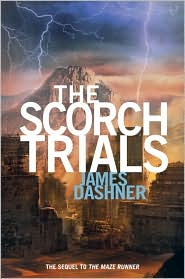
The Scorch Trials (YA)

The Scorch Trials. James Dashner. 2010. Random House. 368 pages.

She spoke to him before the world fell apart.

The Scorch Trials is the sequel to The Maze Runner. Thomas and the other Gladers thought the game was over. They thought they had beat the system. They thought they had been rescued. They certainly celebrated that victory. But the opening chapters of The Scorch Trials reveal that the games have just begun. Thomas and his friends will have to survive a second phase of testing in order to be "cured" of the disease that they've just recently learned they have. (Confused? Well, it's meant to be mysterious.)

What is Thomas' role in all of this? What clues to the present danger can be revealed in his dreams--his memories--of the past? And what about Teresa? The woman whom he can communicate with telepathically? Is she to be trusted? Or is she a betrayer?

The Scorch Trials was certainly an intense read. Very suspenseful. Very mysterious. It kept me guessing. I certainly didn't predict where this one was going.

I would recommend these to fans of The Hunger Games trilogy and the Chaos Walking Trilogy.

© Becky Laney of Becky's Book Reviews


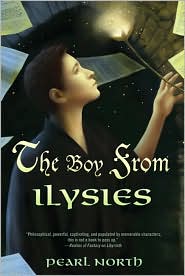
The Boy From Ilysies (YA)


The Boy From Ilysies. Pearl North. 2010. Tom Doherty Associates. 320 pages.

Po had offended the Princess of Ilysies. 

I didn't enjoy The Boy from Ilysies as much as I enjoyed the first novel, Libyrinth. Perhaps because this novel is told from a different perspective. I found Haly's "gift" of reading books to be charming. I loved reading all the bookish quotes. I particularly enjoyed how The Diary of A Young Girl was incorporated into the plot. It was just an interesting premise, an interesting world--a complex world peopled with many cultures.

The Boy From Ilysies occurs after "the redemption." Po, our narrator, isn't the only Ilysian who has chosen to remain in the new community of Libyrinth, but he is the only male. He struggles (to put it mildly) to find a place within the community. He has a way of easily offending others, and a way of being easily offended by others. Po is a sensitive guy who cries and cries and cries...but at the same time, a guy who can't resist a fight. There are many who just don't understand him. At all. How he can be weak and strong at the same time.

Part of this is culture clash. Readers are told about how Ilysian males are trained to be consorts. They're trained to serve women, to fulfill women's needs and desires. Women are to be respected, honored, admired, loved, served, etc. So Po sees many invitations--some intended, some not--in small things. (If a woman says she's tired and going to go take a bath, then that's an "invite" for company.) He's NOT in Ilysia anymore. And he's not learned enough about the world to really survive or function.

This novel is more about politics, gender roles, culture clashes, sexuality, etc., than the first novel. The community is still being threatened by various groups--including the Queen of Ilysia. Not all are happy about this so-called "Redemption." So there are still adventures to be had, and dangers to be faced.

© Becky Laney of Becky's Book Reviews


The Blending Time (YA)

The Blending Time. Michael Kinch. 2010. Flux. 254 pages.

Jaym stirred as morning light slanted across his cot. He squinted at the pumpkin sun pushing through layers of smudge. No hint of a sea breeze to clean out the Corridor. He'd need a level-4 breather to hit the pavement today. And now he needed to hit it hard. It was getting too close to Cutoff. 

S'teeners do not have it easy. Just ask Jaym, Reya, or D'Shay.

The Blending Time has a promising premise, "In the year 2069, turning seventeen means mandatory Global Alliance work assignments that range from backbreaking drudgery to deadly canal labor." Three teens with different backgrounds have chosen to join SUN's "blending" project in Africa. (How much choice did they have? Well, it was a matter of choosing the army, the canal, or the blending project.) These three meet on the trip to Africa, and it is then that they learn the truth. They really will be "blending" with Africans. Each will be paired with someone--and essentially given the command to 'be fruitful and multiply.'

But it wouldn't be much of a dystopian if it was that easy, that simple.

There are many in Africa that are NOT happy with this SUN project. Many who react with violence. Many who seek to kill these blenders and destroy the villages where these blenders are located. Will Jaym, Reya, and D'Shay survive these dangers?


I didn't love The Blending Time. I'm not even sure I liked it. I did find it an interesting read--definitely interesting enough to keep turning pages. But the ending, well, it didn't quite satisfy. Readers are not given much closure. I have found from reading other reviews that there will be a sequel.

© Becky Laney of Becky's Book Reviews


Mockingjay (YA)

Mockingjay by Suzanne Collins. 2010. Scholastic. 390 pages.

I stare down at my shoes, watching as a fine layer of ash settles on the worn leather. This is where the bed I shared with my sister, Prim, stood. Over there was the kitchen table. The bricks of the chimney, which collapsed in a charred heap, provide a point of reference for the rest of the house. How else could I orient myself in this sea of gray? Almost nothing remains of District 12.

Mockingjay concludes Suzanne Collins' trilogy. Book one: The Hunger Games. Book two: Catching Fire. Katniss, our reluctant heroine, is as strong as ever. As weak as ever too. For Katniss has been tortured by the mind games of those around her. From President Snow to President Coin. If you've not read The Hunger Games and Catching Fire--but you intend to at some point--then don't read this review! 


Katniss has made it through her second Hunger Games--just barely. She was "rescued" just in time. Unfortunately, Peeta, her on-screen romance was not. While Katniss is trying to adapt to her new home in District Thirteen, while Katniss is trying to decide whether or not to become the rebellion's "Mockingjay", he is President Snow's prisoner. And knowing that Peeta is in danger--that he is being tortured--is torture for her.

Is Katniss's reunion with Gale a good thing? You be the judge of that. He does bring out Katniss's anger, her aggression. And not always in the right way. For Katniss finds him infuriating to be around at times. Does Gale make a good soldier for the rebellion? Definitely. But just because he's in favor with the rebellion, with President Coin, doesn't mean that he's a good friend--a good partner--for Katniss.

Katniss is still trying to find herself. She's still having people try to shape her, mold her, conform her, define her, limit her. In many ways, President Coin is just as bad as President Snow in trying to "make" Katniss into something she's not. Coin wants her to be "the face" of the war. In a very artificial way--at least at first. Under the circumstances, Katniss has never had the time--the opportunity--to decide anything for herself. She's forced into everything--either directly or indirectly. Is it any wonder she's so confused? (But Katniss does get her moment in Mockingjay.)


Mockingjay is very much focused on war and politics. And with both sides so committed to war, to destruction, to "winning" it shouldn't be much of a surprise that this one is so violent, so bloody, so ugly.


I liked this one. I thought it was compelling--very intense. It is an emotional book--the subject matter makes it so.

© Becky Laney of Becky's Book Reviews


Maze Runner (YA)

The Maze Runner. James Dashner. 2009. Random House. 384 pages.

He began his new life standing up, surrounded by cold darkness and stale, dusty air.

The Maze Runner is certainly compelling--very suspenseful. It's an action-packed dystopian novel. Thomas, our narrator, awakes to find his memory gone. He knows his first name. Nothing more. He's in a strange place. But he's not alone. There are others like him. Others his own age. Others whose memories have been erased--they call themselves the Gladers. They've got a system in place. A system that seems to be working. For the most part. Still there are plenty of creepy things about his new life. There are rules to learn. And while they are forthcoming with the rules--they're not always good at explaining to Thomas why these rules are in place. Can Thomas find the answers he so desperately wants?

I enjoyed The Maze Runner. It is very intense, very exciting, very mysterious. Readers--like Thomas--don't have all the answers by the end of the book. There is a second novel in this series, The Scorch Trials, which releases in October.

© Becky Laney of Becky's Book Reviews


Twitter Delicious Facebook Digg Favorites More