Showing posts with label Survival. Show all posts

The Search for Wondla (MG)

The Search for Wondla by Tony DiTerlizzi. 2010. Simon & Schuster. 477 pages. 

Eva Nine was dying. The tiny scarlet dots on her hand mirrored the glowering eyes of the snake that had just bitten her.

I didn't love The Search for Wondla. I'm not even sure I liked it. One of the reasons it didn't quite work for me was that the ending left me unsatisfied. I wanted to shout at the book, "That's not an ending!" Then again, maybe it's not fair to judge a first book in a series by the ending.

Eva Nine, our heroine, may just be the last human on the planet. She has spent her whole life underground in Sanctuary. She was raised by a robot--albeit a robot with a mothering program built right in. (Muthr is always, always nagging Eva Nine to do this or that. Little things like picking up her room, etc.) When the novel opens, Eva Nine is in the middle of a test to determine if she's ready to live Sanctuary and venture into the real world above ground. Her muthr isn't convinced that she is ready. But she's going to give her one more chance, if Eva Nine doesn't improve, well, they may just have to go back to the basics.
Six Basic Survival Skills for Humans
1. Trust technology
2. Signal others
3. Find shelter
4. Create fire
5. Procure food and water
6. Know first aid
But ready or not, Eva Nine may be forced into the cruel, ugly world of unknowns. When someone breaks into sanctuary--destroying it in the process--Eva Nine is forced to flee the only home she's ever known. She is taking a few technological items with her, like her Omnipod, but what she soon discovers is that NO technology can protect her now, keep her safe, or guide her. The whole world--the whole planet--is unknown.

But Eva Nine won't be on her own for long, though her companions are not human--not even close.

The Search for Wondla is a blending of so many genres and subgenres. It's both science fiction and fantasy, in my opinion. It's an adventure story--a survival story. And of course it's one big mystery. Where is Eva Nine? What planet is she on? How did she get there? Is she really, truly the last human? Where did all these species come from?

The world Tony DiTerlizzi created is interesting. At times I found it confusing, I had to keep telling myself to keep reading and that it would start making sense eventually if I just read long enough. And that worked, for the most part. It helped when I decided the confusion might just be intentional. Eva Nine, our heroine, is thrust into a world that is completely foreign to her. She doesn't recognize any of the trees or plants. She doesn't recognize any of the life forms. These creatures--animals--speak in their own languages. She doesn't know what's dangerous and what's safe. She's completely out of her element.

Have you read this one? What did you think?

© 2011 Becky Laney of Becky's Book Reviews


Boy At The End of the World (MG)

The Boy at the End of the World. Greg van Eekhout. 2011. Bloomsbury. 224 pages.

This is what he knew:
His name was Fisher.
The world was dangerous.
He was alone.
And that was all.

I definitely enjoyed Greg van Eekhout's The Boy At The End of the World. If you like survival stories or action-adventure stories or post-apocalyptic stories, then this one may be for you. Fisher, our hero, is truly the boy at the end of the world. There's a good possibility that he's the only human left on earth. At least the only human awakened from his pod. And if the other arks on earth look like Fisher's, well, the world could be in trouble.

But he's not completely alone in the world. He's guided by a robot, Click, and together they set out on a journey. To find other arks--other survivors, perhaps, and to put as much distance as possible between themselves and the bad guys--the evil robots that have destroyed Fisher's ark. (Not that it was *his* ark. But the ark that housed his pod.)

The Boy at the End of the World is imaginative. The author has created quite a world--an unfriendly world--for our hero to try to navigate. Some of the creatures that have evolved or survived-long-enough-in-the-world-to-evolve are quite interesting. (Though they take some getting used to perhaps.) I did enjoy this one. It was a quick read with plenty of action and suspense.

© 2011 Becky Laney of Becky's Book Reviews


Legend (YA)

Legend by Marie Lu. 2011. November 2011. Penguin. 336 pages.

My mother thinks I'm dead. Obviously I'm not dead, but it's safer for her to think so. At least twice a month, I see my Wanted poster flashed on the JumboTrons scattered throughout downtown Los Angeles. It looks out of place up there. Most of the pictures on the screens are of happy things: smiling children standing under a bright blue sky, tourists posting before the Golden Gate Ruins, Republic commercials in neon colors. There's also anti-Colonies propaganda. "The colonies want our land," the ads declare. "They want what they don't have. Don't let them conquer your homes! Support the cause!"

Legend is YA dystopia. Perhaps not YA dystopia at the very, very best. But it is definitely one of the better dystopias I've read this year.  Legend is compelling; it is exciting; it is just a great read.

The novel has two narrators: a guy named Day (Daniel) and a girl named June. Both underwent the "trials" at age 10. June received a perfect, perfect score earning her not only the right to higher education (high school and college) but the right to the best education possible, the kind of education that will prepare her for serving the Republic. Day, well, he didn't pass his trials. And like all other low-scoring 10 year olds, he was sent away to labor camp. Once a 10 year old is sent to labor camp, they're never ever heard from again.

When the novel opens, both teens are about 15. Day is a wanted criminal, an outlaw. He doesn't legally exist in the Republic database, in the Republic records. The authorities don't even know what he looks like--what race or ethnicity he may be. So their wanted posters change quite often allowing for every possibility. (It's the occasional finger print on the crime scene that links Day to particular crimes.) Day is in Los Angeles spying on his family. His older brother, John, is the only one in the neighborhood who still knows he's alive. And it is to John he delivers gifts--food, clothes, medicine, money, etc.  Day becomes worried when his family's home is marked with a red X--a symbol that someone within the home has the plague. This is very bad news indeed.

June, on the other hand, is at the top of her class. Though she's just fifteen, she's almost finished with her training, her education. June is anxious to start working for the Republic, to start serving in the military, to start tracking down criminals like Day. Her wish comes true--but not in the way she expected. She wanted to start working with her older brother, Metias. Instead, she takes his place after he is murdered. And it appears that Day is the one responsible for his stabbing. Metias was trying to stop Day from escaping from the hospital after a break in. (Day was hoping to find plague cures for his family.) June is on a mission, and it is personal. She'll track down Day and bring him to justice no matter what.

The chapters alternate in narrators, and for once I think this is a great idea. Usually, I'm not a big fan of this in novels, but in this case, it not only works, it works well! I was able to care about Day and June--almost from the start!

Legend is action-packed. It's an intense read. But an enjoyable one! I'd definitely recommend it!!!


*My review is based on an ARC.
**Have you seen this list of YA dystopias?!


© 2011 Becky Laney of Becky's Book Reviews


Beauty Queens (YA/Adult)

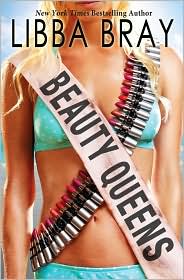
Beauty Queens. Libba Bray. 2011. Scholastic.  400 pages.

This book begins with a plane crash. We do not want you to worry about this. According to the U.S. Department of Unnecessary Statistics, your chances of dying in a plane crash are one in half a million. Whereas your chances of losing your bathing suit bottoms to a strong tide are two to one. So, all in all, it's safer to fly than to go to the beach. As we said, this book begins with a plane crash. But there are survivors. You see? Already it's a happy tale. They are all beauty queen contestants. You do not need to know their names here. But you will get to know them. They are all such nice girls. Yes, they are nice, happy, shining, patriotic girls who happen to have interests in baton twirling, sign language, AIDS prevention in the animal population, the ancient preparation of popadam, feminine firearms, interpretive dance, and sequins. Such a happy story. And shiny, too.

Beauty Queens has action, adventure, drama, romance, and humor. I can't promise that you'll love Beauty Queens--or even like Beauty Queens. I'm not even sure how I feel about it. It kept me reading. It was over-the-top. It was sarcastic. It was funny. Perhaps some of the humor is a bit twisted, a bit out of the ordinary, a bit insane. A satire of sorts I believe examining our culture, our society, our obsession with reality TV, our obsession with beauty and fashion and celebrity status, our commercialism, our materialism. I do believe there were some hidden and not-so-hidden messages that tend towards the truth--minus some of the exaggeration and ridiculousness. So part of me thought Beauty Queens was clever. At least clever in premise. For I do believe that Beauty Queens is driven by the premise. It is a story where beauty queens battle to survive and are forced to come to terms with who they are as individuals without the attention, without the glamor, without the immediate need to be objectified and validated by others, by society. In other words, can these thirteen survivors get beyond the pretty?

If Beauty Queens has a weakness, it is that the book lacks in believability and characterization. While half the girls are more realized than the others--some we never even learn their names, we just know their state--few really reach their full potential. Perhaps because this novel is told through so many narrators. Or perhaps because we're told more than we're shown. Readers first see stereotypes, then ever so slowly, readers learn more about the characters. Readers come to see them grow through the novel. But some of this growth is a little too sudden. In one chapter they'll be doing this, saying that--and then the next chapter, it seems they've radically changed into better, stronger, smarter, more empowered women. We do follow their individual journeys; we do learn their secrets one by one. So I'm not saying the novel is lacking in all characterization. Perhaps just that it's a bit uneven?

Did I like it? Did I love it? I'm not sure I can say either. I found it a compelling read. I found it hard to put down. I had the need to know what happened next. I found myself smiling at some of the foot notes and some of the commercials and advertisements. I do think this one is so unique, so creative--at least at this moment*--that it will be hard to forget it. I can definitely see the appeal to this one. But did I personally love it--like LOVE, LOVE, LOVE it? Probably not. Still, it was a good way to spend the afternoon.

*There was probably a time when "good" vampires were unique.

© 2011 Becky Laney of Becky's Book Reviews


Sharp North (YA)

Sharp North. Patrick Cave. 2004/2006. Simon & Schuster. 528 pages.

The girl nearly didn't find out who she was. What she was.

Sharp North is a perplexing YA novel. Part mystery. Part thriller. Part dystopian. It's set in a future world forever altered by global warming. A future world with a corrupt government. (How many fictional future worlds don't have a corrupt government?) A future world threatened by an underground movement, a revolution in the making. Our heroine, Mira, has a role to play in this world--for better or worse. And it's a role that mystifies Mira. For Mira's future is just as uncertain as her past.

Sharp North begins with a murder. Mira witnesses this murder, this hushed up murder, and it forever changes the way she sees the world, the way she sees her community. In part because she finds out that she is connected to the victim. She finds a piece of paper, a mere scrap, with a list of names. Her name is on the list. And so is the name of one of her friends, Gil Moore. He's listed as "her watcher." But why is he watching her? Is he her friend or her enemy? Is he out to see that she survives? Or is he in place to eliminate her? That's what Mira can't forget, can't erase. Are the people who murdered this mysterious woman, this mysterious stranger, out to get her? What led to this crime? For even if the whole world chooses to ignore it, Mira can't. Was it the woman's curiosity? Well, Mira can't help being curious now!

So Mira sets out on a journey to discover the truth, the truth about who she is, what she is. In a way she's running away from danger just as much as she's running straight into it. For Mira hasn't a real clue who her enemies are and who her friends may be. Is there a safe place for Mira? Or is she destined to upset the balance of those around her?

We meet a few interesting characters in Patrick Cave's Sharp North. Including several members of the Saint family, one of the "Great Families" that govern in this new world.

Maybe other readers can piece together this mystery. Maybe other readers can read it without being confused by the ending--as for me, well, I'm puzzled by how it ended. I still don't know what really happened.

So did I like it? Yes and no. I liked the idea of it. But. It felt like two or three stories pieced together. And it didn't always work for me.

© 2011 Becky Laney of Becky's Book Reviews


The Dead and the Gone (YA)

the dead & the gone. Susan Beth Pfeffer. 2008. Houghton Mifflin Harcourt. 321 pages.

At the moment when life as he had known it changed forever, Alex Morales was behind the counter at Joey's Pizza, slicing a spinach pesto pie into eight roughly equal pieces.

The dead & the gone is the companion novel to Susan Beth Pfeffer's Life As We Knew It. While Miranda's story--set in Pennsylvania--chronicles her life from May through March of that decisive year, Alex's story--set in New York City--chronicles his life from May through December. Both are family-oriented. Miranda's life being closely tied to her mom and two brothers; Alex's life being closely tied to his two younger sisters, Brianna and Julie. But Alex's story is stronger in many ways. For Alex is the head of the family--for better or worse. Alex is the one making life-and-death decisions. His mom vanished on May 18th--the day the asteroid struck the moon. His dad may or may not have survived the first terrible week. Having been in Puerto Rico for a funeral, he's unable to make contact with his family. And, well, the coasts were hit hard--again and again. So even surviving the first tsunamis might not mean much in the long term. His older brother, Carlos, is in the Marines. He was far from home when it happened, and while he's able to send word--by phone or mail--a few times throughout the book. He's not the one in charge. He's not the one responsible for making the tough decisions on how to best survive. So while Miranda has to grow-up, it is a gradual growing into adulthood. She still has her relaxed moments. There is never one moment for Alex to relax. He carries a heavy weight day and night.

I enjoyed rereading Life As We Knew It and the dead & the gone back to back. There are things I love about both books. Things I appreciate about both books. One thing that makes the dead & the gone a very different story is the focus on faith and community. The dead & the gone is faith-oriented. Alex and his family are Catholics. They all attend Catholic school. They all regularly attend mass. They take their faith, their spirituality, their religion very seriously. The words mean something. The faith means something to them. Something real. Something personal. While each of the siblings has their own reaction--response--to the crisis, none loses their faith, none lose hope completely. I loved seeing this Catholic community in action. I loved seeing the Catholic church reaching out in love and compassion--with great hope and faith--to their community, to their parishioners. There were so many great scenes of this faith-in-action. Where people were responding with their hearts in faith as opposed to acting out of fear and anxiety. It's courageous and wonderful.

The dead & the gone has a broader outlook as well. While the electricity isn't reliable on a day-by-day basis in the dead & the gone, it is certainly more stable than in Life As We Knew It. Alex is connected to the larger world. He hears--for better or worse--more about the world at large. He is more aware of what is going on in other states. While Miranda and her family may go weeks or months without contact to other survivors, Alex is out of the house most days--at least before the flu epidemic comes. He's not as isolated as Miranda. Does not being so isolated help him cope? Maybe. But every day, every week is a struggle. Alex does things he'd NEVER thought he'd be doing.

Is Alex more of a hero than Miranda? I'm not sure that is exactly fair. Miranda has her courageous moments too. (I'm thinking of the woodstove mishap.) But. Alex's story has power no doubt about it.
I would definitely recommend both books.

"Give the scientists some time and they'll figure out what to do."
"This is too big for the scientists," Lorraine said. "Only God can save us now."
"Then He will," Alex said. (13)

God save their souls, Alex prayed. God save ours. It was the only prayer he could think of, no matter how inadequate it might be. It offered him no comfort, but he repeated it unceasingly. As long as he prayed he didn't have to think. He didn't have to remember. He didn't have to decide. He didn't have to acknowledge he was entering a world where no one had laid out the rules for him to follow, a world where there might not be any rules left for any of them to follow. (65)

"She says you've been having bad dreams."
"Aren't you?" Julie asked. "Isn't everyone?"
Alex burst out laughing. "Only sane people," he said. "Okay, maybe not Bri. But everyone else is."
"Are things going to get better?" Julie asked. "Is that why you listen to the news all the time, because someday things are going to get better?"
Alex shook his head. "That's not why I listen," he replied. "That's why I pray but not why I listen."
"Do you think God listens?" she asked.
"Bri thinks so," Alex said. "Father Franco thinks so." (81)

It was hard being alone in the apartment staring at an unringing phone, haunted by the food in the kitchen, which he wouldn't allow himself to touch, haunted even more by the image of his mother drowning in the subway that very first night. He tried reading. He tried praying. He tried push-ups. He tried counting the cans of soup. He listened to the radio, using up the twenty-dollar batteries. The world was coming to an end. Well, that was nothing new. (123)

"And what's so special about you that you deserve compassion?" Father Mulrooney said. "You have shelter. You have food. You have family and friends. I'm supposed to feel pity for you because of a cut cheek?"
"You don't understand at all," Alex said. "I have shelter for as long as no one thinks about it. Once they do, once they realize my father is gone, they can throw us out. I have food only if I get lunch here. We're down to almost nothing at home, and I have to make sure my kid sister eats. She is my family right now, because my parents are both gone and my older brother is in the Marines somewhere and I sent my other sister to live at a convent with strangers. My cheek was cut because I got caught in a food riot, with my kid sister, and we ended up with no food anyway. I'm not asking you to pity me. I pity me enough for the two of us. But when one of your students asks you for food, you shouldn't say no and feel righteous about it. That's not what Christ would have done, and you know it." (133)

"What do you have planned for tomorrow?"
Alex shrugged. "The usual," he said. "Checking on the elderly, studying theology, fighting for survival. Same old, same old." (151)

"I know it's wrong to feel that way about God and I know it's wrong to not feel anything. I hate it. I don't hate God. I hate not loving Him." (184)


© 2011 Becky Laney of Becky's Book Reviews


Life As We Knew It (YA)

Life As We Knew It. Susan Beth Pfeffer. 2006. Houghton Mifflin Harcourt. 352 pages.


Lisa is pregnant. 

Life As We Knew It by Susan Beth Pfeffer is one of my favorite books. It's one of the few young adult books that I reread regularly. I believe--counting the audio book--that this was my fifth time to read this bleak book. (The only other book I reread with that much regularity is Mary Shelley's Frankenstein.)

It stars Miranda and her family (a mom and two brothers--Matt, the older, Jonny, the younger). Miranda's world is turned upside down one May--and it isn't just her world--when an asteroid crashes into the moon bringing it closer to Earth; nature turns violent, extreme, deadly. No one--at that point--knows how bleak it will be, how many lives will be lost. Not just from tsunamis, floods, earthquakes, and volcanoes, but from disease and malnutrition too.

They are dealing with the loss of modern conveniences-- extremely limited amounts of natural gas and oil, and no electricity. (It's rare to have electricity.)

So how does one survive? Where do you find food? How can you ever have enough when you don't know how long this crisis will last? How long it will be before food supplies reach your town? What if no relief ever comes? How do you find water? How do you cook your food if you have a gas-stove or electric stove? How do you heat your homes without gas, oil, or electricity? How do you keep things sanitary and hygienic? How do you stay healthy? How do you stay smart?     

Miranda is one of the fortunate ones. She has a quick thinking mom who at the first opportunity rushes to the grocery store and buys close to a dozen carts of food and other necessities before the shelves are emptied completely. And they do live in a wooded area and happen to have a wood-burning stove. And miraculously enough they have magic well water that works without an electric pump. (That one still boggles.) But this struggle to survive is very personal, very compelling.

I enjoy Miranda and her family. I enjoy reading Miranda's journal. Is Miranda perfect? No! Is her family perfect? No! They argue. They fight. They get on each other's nerves. They love each other very, very much. And they are all dealing with harsh conditions, bleak situations. There is fear and tension and anxiety. But there's also love and hope.

My favorite quotes:

“Sometimes when Mom is getting ready to write a book she says she doesn’t know where to start, that the ending is so clear to her that the beginning doesn’t seem important anymore. I feel that way now only I don’t know what the ending is, not even what the ending is tonight” (16).

“For a moment I thought about all the people throughout history who saw Halley’s Comet and didn’t know what it was, just that it was there and frightening and awe inspiring. For the briefest flick of a second, I could have been a 16 year old in the Middle Ages looking up at the sky, marveling at its mysteries, or an Aztec or an Apache. For that tiny instant, I was every 16 year old in history, not knowing what the skies foretold about my future.” (18)

“And then it hit. Even though we knew it was going to, we were still shocked when the asteroid actually made contact with the moon. With our moon. At that second, I think we all realized that it was Our Moon and if it was attacked, then we were attacked.” (18-19)
“What about desserts?” I asked. “If the world comes to an end, I’m going to want cookies.” “We’re all going to want cookies if the world comes to an end,” Mrs. Nesbitt agreed. “And chips and pretzels. If the world is coming to an end, why should I care about my blood pressure?” “Okay, we’ll die fat,” Mom said. “Grab what you can grab and ram it into your wagons. But remember if we actually need this stuff, we’re going to be a lot more grateful for a can of soup than for a box of stale cookies.” “Speak for yourself,” Mrs. Nesbitt said. (34)
 “I guess I always felt even if the world came to an end, McDonald’s would still be open.” (46)
“Lately I’ve been trying not to know what’s going on. At least that’s the excuse I’ve been giving myself for not caring about all the stuff that’s happening outside of my little section of Pennsylvania. Who cares about earthquakes in India or Peru or even Alaska?
Okay that’s not fair. I know who cares. Matt cares and Mom cares and if there were any baseball involved, Jonny would care, too. Knowing Dad, he cares. Mrs. Nesbitt, too.
I’m the one not caring. I’m the one pretending the earth isn’t shattering all around me because I don’t want it to be. I don’t want to know there was an earthquake in Missouri. I don’t want to know the Midwest can die, also, that what’s going on isn’t just tides and tsunamis. I don’t want to have anything more to be afraid of.
I didn’t start this diary for it to be a record of death.” (70-71)
“We have clean sheets to sleep on, a clean house, clean clothes, clean dishes. We spent the evening laughing. It wasn’t 90 degrees in the house when we went to bed. We weren’t hungry. We’re not worried about Dad. I know what it feels like to be kissed by a boy. If I could, I would relive this day over and over. I can’t imagine a more perfect one.” (95-96)
“I can’t decide which is worse, no electricity or unreliable electricity. I wonder if I’ll ever have to decide which is worse, life as we’re living or no life at all.” (119)
“Here’s the funny thing about the world coming to an end. Once it gets going, it doesn’t seem to stop.” (120)
“I told Mom I was doing history (she never would have believed me if I said math) and stayed in bed all morning.” (191)

“I know I’m going to have to be strong for the next couple of weeks. No more whining. No more picking fights. I’ll have to do whatever Mom asks me and not protest and not complain. I know I can do it. But for that one moment I felt so weak, so helpless. I felt nothing but fear and despair and the most awful need to be anyplace else. I told myself it was hunger, but I knew that was a lie.
As long as Mom was all right, I could fool myself into thinking we’d all be all right.” (206)
“It’s funny how sorry I feel for Jon these days. I’m 2 1/2 years older than him and I feel like got those 2 1/2 years to go to school and swim and have friends and he got cheated out of them. And maybe he’ll live 2 1/2 years longer than me, or 20 years or 50, but he’ll still never have those 2 1/2 years of normal life.

Every day when I go to sleep I think what a jerk I was to have felt sorry for myself the day before. My Wednesdays are worse than my Tuesdays, my Tuesdays way worse than my Tuesday of a week before. Which means every tomorrow is going to be worse than every today. Why feel sorry for myself today when tomorrow’s bound to be worse?
It’s a hell of a philosophy, but it’s all I’ve got.” (275)


“But I hope when I get closer to death, however old I might be, that I can face it with courage and good sense the way Mrs. Nesbitt does.” (234)

“A while ago Jonny asked me why I was still keeping a journal, who I was writing it for. I’ve asked myself that a lot, especially in the really bad times.
Sometimes I’ve thought I was keeping it for people 200 years from now, so they can see what our lives were like.
Sometimes I’ve thought I’m keeping it for that day when people no longer exist but butterflies can read.
But today, when I am 17 and warm and well fed, I’m keeping this journal for myself so I can always remember life as we knew it, life as we know it, for a time when I am no longer in the sunroom.” (337)


© 2011 Becky Laney of Becky's Book Reviews


The Blending Time (YA)

The Blending Time. Michael Kinch. 2010. Flux. 254 pages.

Jaym stirred as morning light slanted across his cot. He squinted at the pumpkin sun pushing through layers of smudge. No hint of a sea breeze to clean out the Corridor. He'd need a level-4 breather to hit the pavement today. And now he needed to hit it hard. It was getting too close to Cutoff. 

S'teeners do not have it easy. Just ask Jaym, Reya, or D'Shay.

The Blending Time has a promising premise, "In the year 2069, turning seventeen means mandatory Global Alliance work assignments that range from backbreaking drudgery to deadly canal labor." Three teens with different backgrounds have chosen to join SUN's "blending" project in Africa. (How much choice did they have? Well, it was a matter of choosing the army, the canal, or the blending project.) These three meet on the trip to Africa, and it is then that they learn the truth. They really will be "blending" with Africans. Each will be paired with someone--and essentially given the command to 'be fruitful and multiply.'

But it wouldn't be much of a dystopian if it was that easy, that simple.

There are many in Africa that are NOT happy with this SUN project. Many who react with violence. Many who seek to kill these blenders and destroy the villages where these blenders are located. Will Jaym, Reya, and D'Shay survive these dangers?


I didn't love The Blending Time. I'm not even sure I liked it. I did find it an interesting read--definitely interesting enough to keep turning pages. But the ending, well, it didn't quite satisfy. Readers are not given much closure. I have found from reading other reviews that there will be a sequel.

© Becky Laney of Becky's Book Reviews


Nonfiction Monday: Shipwreck at the Bottom of the World

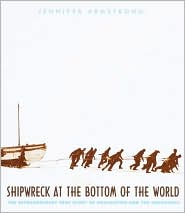
Shipwreck at the Bottom of the World: The Extraordinary True Story of Shackleton and the Endurance. Jennifer Armstrong. 1998. Random House. 144 pages.

Just imagine yourself in the most hostile place on earth. It's not the Sahara or the Gobi Desert. It's not the Arctic. The most hostile place on earth is the Antarctic, the location of the South Pole--what's the difference? The Arctic is mostly water--with ice on top, of course--and that ice is never more than a few feet thick. But under the South Pole lies a continent that supports glaciers up to two miles in depth. Almost the entire southern continent is covered by ice. The mammoth icecap presses down so heavily that it actually distorts the shape of the earth. The ice never melts; it clings to the bottom of the world, spawning winds, storms, and weather that affect the whole planet.

Shipwreck at the Bottom of the World is an amazing survival story. Against all odds, these men--twenty-eight in all--led by Ernest Shackleton survived the harshest conditions imaginable. Of course, when these men set sail they had big dreams. They wanted to become the first team of explorers to cross Antarctica. But life doesn't always go as planned. And when their ship became trapped by ice, their mission changed. To survive was all that mattered. 

I loved this book. I did. There is a very good reason it won the Orbis Pictus Award for Outstanding Nonfiction. It fascinates from cover to cover. Amazing writing--storytelling. The book is so engaging, so compelling, so powerful, so amazing. I think the story would be gripping no matter who told it. But I do think that Jennifer Armstrong did a wonderful job in painting a very human picture of Shackleton and his crew. I think the ending was beautiful--very moving! This one is a book I think everyone should read.


© Becky Laney of Becky's Book Reviews


Twitter Delicious Facebook Digg Favorites More