Showing posts with label J Fiction. Show all posts

Darth Paper Strikes Back (MG)

Darth Paper Strikes Back. Tom Angleberger. 2011. Harry N. Abrams. 176 pages.

It is a dark time at McQuarrie Middle School...when did it start? I can tell you exactly when it started.
The first day of school. The very first day of seventh grade. We didn't even get one good day. We got, like, five minutes.

Darth Paper Strikes Back is the sequel to The Strange Case of Origami Yoda. Sixth grade is over, seventh grade is just beginning. And it seems the wisdom of everyone's favorite origami Yoda isn't as revered or respected as in previous days. Teachers and administrators aren't so fond of the "disruptions" made by Dwight and his paper puppet. And there are some in the class who are oh-so-tired of it all. Or at least tired of Dwight getting all the attention. Harvey a student who can be a little mean at times--but isn't quite a complete bully at heart--comes to school with Darth Paper. And thus a NEW saga begins.

So the novel begins with bad news. Dwight has been kicked out of school. He may or may not be allowed to return after a few weeks. His case has to come before the school board. His friends want to help him, of course. And so they set about writing this casebook as to why Dwight and his origami Yoda are positive influences on the school, on the class. They're defending their friend.

So the book has multiple narrators. And there are many stories to tell. If you liked the first book, then you'll definitely want to read this one! It's an entertaining read!

© 2011 Becky Laney of Becky's Book Reviews


The 21 Balloons

The Twenty-One Balloons. William Pene du Bois. 1947. Viking 180 pages.

There are two kinds of travel. The usual way is to take the fastest imaginable conveyance along the shortest road. The other way is not to care particularly where you are going or how long it will take you, or whether you will get there or not. 

I should have believed my mother. She's been trying to tell me that this was a good read for many, many years. And she was right. This is a good read. I'm not sure I'd say it was the best, best book I've ever read. Or the best Newbery I've ever read. But this book is anything but boring! It surprised me in all the right ways.

The hero of this one is Professor William Waterman Sherman. This teacher-turned-adventurer left San Francisco in August of 1883 hoping to spend about a year in his balloon. He'd chosen his design carefully and thoughtfully. And he was so excited at the thought of being away from it all--all the cares, all the stress, all the worries of this world. He wanted FREEDOM and then some. But that wasn't to be...

For an accident leaves him stranded on a "deserted" island. The island's community does NOT want to be discovered by the world, so any visitors are welcomed permanently in the community and renamed. I don't want to give away all the quirks of this one though! But I found this one to be quite a read!

Enjoyable and satisfying...a great way to spend the afternoon.

© 2011 Becky Laney of Becky's Book Reviews


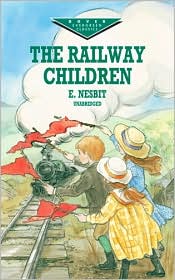
The Railway Children (MG)

The Railway Children. E. Nesbit. 1906/2011. Penguin. 304 pages. 

They were not railway children to begin with.

I loved this one. I did. I don't know how I'd ever choose a favorite, favorite E. Nesbit because all of her books are oh-so-good. The Railway Children stars three siblings: Roberta (Bobbie), Peter, and Phyllis. This one features a strong mother figure, an involved parent. (Or at least the most involved parent I've encountered in Nesbit's fiction.)

This family is under stress. The father disappears quite suddenly from his children's lives. The mother won't explain just why their father has to go away, and why the family has to move to a little place in the country. The children just know that everything is changing--little things and big things. For example, they now must choose between jam or butter for their toast--they can't afford to have both.

But while many things are changing, not all of the changes are bad. For the children discover a new way of living life. And they become involved in their new community! For better or worse! Not every person is instantly charmed by these three children, but, it's hard to resist them for long.

There were many things I enjoyed about this one. I enjoyed the children. I enjoyed their mother. I loved that she was a writer, that she was supporting her family by writing stories. I enjoyed their community, I loved meeting the different characters. It was just a satisfying story with a lot of heart.

© 2011 Becky Laney of Becky's Book Reviews


The Story of the Treasure Seekers (MG)

The Story of the Treasure Seekers. E. Nesbit. 1899. Puffin. 250 pages.

This is the story of the different ways we looked for treasure, and I think when you have read it you will see that we were not lazy about the looking. 

I just loved The Story of the Treasure Seekers. I loved the Bastables. There are six children: Dora, Oswald, Dicky, Noel and Alice, and H.O. (Horace Octavius). The children have a father, but no mother. But the father, for the most part, is absent from their day to day lives. This one has a simple plot. The children know that the family is in desperate need of money, and, well, they decide to look for treasure. Each child has an opportunity (or two) to come up with a plan for 'finding' treasure (getting money). Some of the plans are silly and over the top. (Like Noel's plan to marry a princess when he grew up.) But many of their plans lead to a FUN adventure!

I definitely enjoyed this one and would recommend it! It's a great adventure story with many satisfying moments. IF you've only read Nesbit's fantasy, you should give this one a try.

© 2011 Becky Laney of Becky's Book Reviews


The Phoenix and the Carpet (MG)

The Phoenix and the Carpet. E. Nesbit. 1904. 224 pages.

It began with the day when it was almost the Fifth of November, and a doubt arose in some breast--Robert's, I fancy--as to the quality of the fireworks laid in for the Guy Fawkes celebration.

I first read The Phoenix and the Carpet last June, but completing the trilogy last week really made me want to revisit them all. I just love and adore the fantasy world created by E. Nesbit! All three of the novels are magical. The children meet several magical creatures (the Psammead, the Phoenix) and find several magical objects (the Carpet, the Charm).

The children--Cyril, Robert, Anthea, Jane, and Lamb--can be naughty. Not so much Lamb. But the other four, well, they can be TROUBLE.

So how do they meet the Phoenix? How do they get a magic carpet? Well, it all starts when the children decide that it would be a very good idea, a very fun idea, to try out their fireworks--to make sure they work properly--INSIDE the house, inside the nursery to be precise. And when one of the fireworks seems to not be lighting, one of the children pours paraffin on it while another lights it again. While the results are not horribly tragic, the nursery must be repainted/repaired, and a new carpet is a must. The carpet that replaces the old is magical, of course. And inside this roll of carpet is an egg. But not an ordinary egg. Though of course, they don't know that until it accidentally falls into the fire in their nursery. And the Phoenix emerges....

And thus the adventures begin. The Psammead is not completely absent from this second adventure, though the children themselves never ask him directly (face-to-face) for wishes. Still, the Phoenix makes good use of him...because truth be told...the children need to be rescued more than once!!!

There were many things I loved about this one. I loved the trouble that comes about when the wishing carpet makes its own wish--and brings back one-hundred and ninety-nine Persian cats. Of course, that is only the start of that particular mishap...

I also LOVED Lamb's scenes in this novel. In particular when this little one crawled onto the wishing carpet and started babbling. The carpet, of course, understands all languages--even baby ones--and Lamb and the carpet vanish. This puzzles the children, how will they get their baby brother back?! How can they ever explain to their mom what happened?! I won't tell you how this one resolves, but I just loved it!

I loved this one. I don't know that I love it any more than I do Five Children and It. I just know that I love E. Nesbit. I love her narrative style. I love her descriptions. And I am so very thankful I've discovered her! And I'm looking forward to reading more of her books.

Favorite passages:

You can always keep the Lamb good and happy for quite a long time if you play the Noah's Ark game with him. It is quite simple. He just sits on your lap and tells you what animal he is, and then you say the poetry piece about whatever animal he chooses to be. Of course, some of the animals, like the zebra and the tiger, haven't got any poetry, because they are so difficult to rhyme to. The Lamb knows quite well which are the poetry animals. (34)

On this particular Sunday there were fowls for dinner, a kind of food that is generally kept for birthdays and grand occasions, and there was an angel pudding, when rice and milk and orange and white icing do their best to make you happy. (52)

Mother was really a great dear. She was pretty and she was loving, and most frightfully good when you were ill, and always kind, and almost always just. That is, she was just when she understood things. But of course she did not always understand things. No one understands everything, and mothers are not angels, though a good many of them come pretty near it. The children knew that mother always wanted to do what was best for them, even if she was not clever enough to know exactly what was the best. (73)

When people have hurt other people by accident, the one who does the hurting is always much the angriest. I wonder why. (102)

"I wish we could find the Phoenix," said Jane. "It's much better company than the carpet."
"Beastly ungrateful, little kids are," said Cyril.
"No. I'm not; only the carpet never says anything, and it's so helpless. It doesn't seem able to take care of itself. It gets sold, and taken into the sea, and things like that. You wouldn't catch the Phoenix getting sold."
It was two days after the bazaar. Everyone was a little cross--some days are like that, usually Mondays, by the way. And this was a Monday. (117)

© 2011 Becky Laney of Becky's Book Reviews


Five Children and It (MG)

Five Children and It. E. Nesbit. 1902/2004. Puffin Classics. 240 pages.

The house was three miles from the station, but before the dusty hired fly had rattled along for five minutes the children began to put their heads out of the carriage window and to say, 'Aren't we nearly there?' And every time they passed a house, which was not very often, they all said, 'Oh, is this it?' But it never was, till they reached the very top of the hill, just past the chalk-quarry and before you come to the gravel-pit. And then there was a white house with a green garden and an orchard beyond, and mother said, 'Here we are!'

It has been almost two years since I first discovered E. Nesbit. Five Children and It was the very first of her novels that I read, and it was definitely LOVE from the very beginning.

The five children are Robert, Cyril, Anthea, Jane, and Lamb. The 'it' is a sand fairy--a Psammead. The four children discover him one day during their summer vacation while they're digging in a nearby sand pit. They're quite delighted to learn that he can grant wishes. Though it's easy for anyone to see that he doesn't like granting wishes all that much. Still, the children are happy to think of one wish after another after another. A wish per day is what they're allowed. And oh the wishes they think up!!! But it doesn't take them very long to realize that they're not all that smart and clever with those wishes. For almost every day their wish leads them into TROUBLE. If wishing leads to trouble, why wish for anything? Well, even bad wishes make for a way to spend the day.

This book is so much fun! Just a delight to spend time with these characters. I'd definitely recommend it!

My favorite quotes:
Grown-up people find it very difficult to believe really wonderful things, unless they have what they call proof. But children will believe almost anything, and grown-ups know this. That is why they tell you that the earth is round like an orange, when you can see perfectly well that it is flat and lumpy; and why they say that the earth goes round the sun, when you can see for yourself any day that the sun gets up in the morning and goes to bed at night like a good sun as it is, and the earth knows its place, and lies as still as a mouse. (5)

I daresay you have often thought what you would do if you had three wishes given you, and have despised the old man and his wife in the black-pudding story, and felt certain that if you had the chance you could think of three really useful wishes without a moment's hesitation. These children had often talked this matter over, but, now the chance had come suddenly to them, they could not make up their minds. (17)

But the happening of strange things, even if they are not completely pleasant things, is more amusing than those times when nothing happens but meals, and they are not always completely pleasant, especially on the days when it is cold mutton or hash. (54)

Lending ears was common in Roman times, as we learn from Shakespeare; but I fear I am getting too instructive. (59)

When the frock was darned, the start for the gravel-pit was delayed by Martha's insisting on everybody's washing its hands -- which was nonsense, because nobody had been doing anything at all, except Jane, and how can you get dirty doing nothing? That is a difficult question, and I cannot answer it on paper. In real life I could very soon show you -- or you me, which is much more likely. (59)

It is very wise to let children choose exactly what they like, because they are very foolish and inexperienced, and sometimes they will choose a really instructive thing without meaning to. (85)

The people who decide what the weather is to be, and put its orders down for it in the newspaper every morning, said afterwards that it was the hottest day there had been for years. They had ordered it to be 'warmer -- some showers', and warmer it certainly was. In fact it was so busy being warmer that it had no time to attend to the order about showers, so there weren't any. (86)

'I was always generous from a child,' said the Sand-fairy. 'I've spent the whole of my waking hours in giving. But one thing I won't give --that's advice.'
'You see,' Anthea went on, 'it's such a wonderful thing -- such a splendid, glorious chance. It's so good and kind and dear of you to give us our wishes, and it seems such a pity it should all be wasted just because we are too silly to know what to wish for.'
Anthea had meant to say that -- and she had not wanted to say it before the others. It's one thing to say you're silly, and quite another to say that other people are.
'Child,' said the Sand-fairy sleepily, 'I can only advise you to think before you speak--'
'But I thought you never gave advice.'
'That piece doesn't count,' it said. 'You'll never take it! Besides it's not original. It's in all the copybooks.' (89-90)

© 2011 Becky Laney of Becky's Book Reviews


The Book of Dragons (MG)

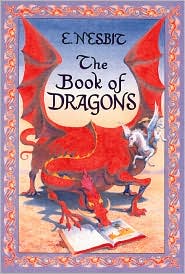
The Book of Dragons. E. Nesbit. 1900. 180 pages.

The Book of Dragons is a collection of eight short stories by E. Nesbit. While I enjoy fantasy--especially when I'm in the right mood for it, especially when it is written by someone as talented as E. Nesbit--I am not always a big fan of short stories--no matter the genre.

I did enjoy this collection. I didn't love every story within the book, but I enjoyed many of them. The writing was just so delightful, so right, so satisfying. The eight stories are: The Book of Beasts, Uncle James or the Purple Stranger, The Deliverers of Their Country, The Ice Dragon Or Do As You Are Told, The Island of the Nine Whirlpools, The Dragon Tamers, The Fiery Dragon Or the Heart of Stone and the Heart of Gold, and Kind Little Edmund Or The Caves and the Cockatrice.

My favorite stories were The Island of The Nine Whirlpools and The Book of Beasts.

© 2011 Becky Laney of Becky's Book Reviews


From the Mixed-Up Files of Mrs. Basil E. Frankweiler

From the Mixed-Up Files of Mrs. Basil E. Frankweiler. E. L. Konigsburg. 1967. Simon & Schuster. 162 pages.


Claudia knew that she could never pull off the old-fashioned kind of running away. That is, running away in the heat of anger with a knapsack on her back. She didn't like discomfort; even picnics were untidy and inconvenient: all those insects and the sun melting the icing on the cupcakes. Therefore, she decided that her leaving home would not be just running from somewhere but would be running to somewhere. To a large place, a comfortable place, an indoor place, and preferably a beautiful place. And that's why she decided upon the Metropolitan Museum of Art in New York City.

Claudia Kincaid, our heroine, wants to run away, but she knows she can't do it alone so she recruits her younger brother, Jamie, to go with her. He may just be her favorite brother, and he's definitely her richest brother. Their plan is successful...and they do manage to have quite the adventure.

I really, really liked this one. I thought it was great fun. I loved Claudia. I loved Jamie. I loved the writing of this one. I loved the way we got to know the characters. This brother-sister relationship is done so well. I love that I can relate to both Claudia and Jamie. While we don't get to know anything really about the rest of the Kincaid family--about the parents, about the other kids, we do get to know these two very, very well! Which was enough for me!

Here is one of my favorite scenes between the two:
Upon their return to the museum, Claudia informed Jamie that they should take advantage of the wonderful opportunity they had to learn and to study. No other children in all the world since the world began had had such an opportunity. So she set forth for herself and for her brother the task of learning everything about the museum. One thing at a time. (Claudia probably didn't realize that the museum has over 365,000 works of art. Even if she had, she could not have been convinced that learning everything about everything was not possible; her ambitions were as enormous and as multi-directional as the museum itself.) Every day they would pick a different gallery about which they would learn everything. He could pick first. She would pick second; he third; and so on. Just like the television schedule at home. Jamie considered learning something every day outrageous. It was not only outrageous; it was unnecessary. Claudia simply did not know how to escape. He thought he would put a quick end to this part of their runaway career. He chose the galleries of the Italian Renaissance. He didn't even know what the Renaissance was except that it sounded important and there seemed to be an awful lot of it. He figured that Claudia would soon give up in despair.
When she gave Jamie first pick, Claudia had been certain that he would choose Arms and Armor. She herself found these interesting. There was probably two days' worth of learning there. Perhaps, she might even choose the same on the second day. (47)
Jamie's choice of the Italian Renaissance leads them on their biggest adventure yet. It leads them to a statue. A statue that may have been done by Michelangelo. A small statue of an angel that they learn was donated by a Mrs. Basil E. Frankweiler. Once they become curious about this statue, once they decide they want to "solve" the mystery, well, that's when their adventure finds a purpose, a dream.

I really loved this one. It was such a great read--very satisfying. I would definitely recommend it.

Happiness is excitement that has found a settling down place, but there is always a little corner that keeps flapping around. (151)

© 2011 Becky Laney of Becky's Book Reviews


The Boxcar Children

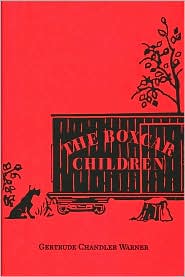
The Boxcar Children. Gertrude Chandler Warner. 1942. 155 pages.

One warm night four children stood in front of a bakery. No one knew them. No one knew where they had come from. The baker's wife saw them first, as they stood looking in at the window of her store. The little boy was looking at the cakes, the big boy was looking at the loaves of bread, and the two girls were looking at the cookies.

Henry, Jessie, Violet, and Benny are orphans. Scared of a grandfather they never met, these children are running away. When the novel opens, they are seeking refuge for the night, asking permission to sleep on the benches of the bakery shop. (They bought bread). After hearing the couple discuss them--on how they should "keep" the three oldest because they would be useful to have around as workers, but how the youngest one would need to go to a Children's Home--Henry and Jessie decide to wake everyone and leave while they still have a chance. They walk most of the night, sleep most of the day. Their journey takes them into the woods, and during a storm, they seek shelter in an abandoned boxcar. It doesn't take the children very long to realize that if a boxcar is good shelter from a storm, it would be a good home for always. There is a town within walking distance so that Henry can find work and buy food. And the rest of the children can do what they can to make it a real home. And that is just what they do...day by day creating a home for themselves.

I liked  The Boxcar Children. I did. I had read it more than a few times growing up, but it had been at least fifteen or twenty years since I'd last read it. It was such a treat to read it again. It's a simple book, in many ways, yet it's got its charms. I liked how these children do make a home for themselves. How they work together as a family. While I wouldn't say that I ever loved this one as much as Mandy or Anne of Green Gables or The Secret Garden, I have definitely always liked it.

© 2011 Becky Laney of Becky's Book Reviews


Swift Rivers (MG)

Swift Rivers. Cornelia Meigs. 1932/2004. Walker. 288 pages.

It was the summer that Chris Dahlberg was seventeen that he mowed the high meadow alone for the first time.

I can't say that I LOVED Swift Rivers. But I can say that I did enjoy it--most of it at least. I checked it out from the library not really knowing what to expect. My plan was to give it a chapter or two to see if it was even something I wanted to read. And it was. Chris Dahlberg is a great hero for an adventure story. After his parents' death, his Uncle became responsible for him. But this responsibility didn't include love and respect. Chris works hard day after day after day with no one to really appreciate him. Since the Uncle absolutely HATES his father--Chris' grandfather--when Chris decides to leave home for four days to check on his grandfather, the Uncle forbids him, warning him that if he leaves he shouldn't bother coming back. For he'll never, ever, ever welcome him back into his home. Knowing that the grandfather is getting older, knowing that there must be a reason why he didn't come to help the mowing this year--like he has every year since he can remember--he makes his decision. He just has to see if his grandfather needs help. He needs to see if grandfather is ready to make it through the winter. The uncle is true to his word, but that doesn't turn out to be such a bad thing. For Chris and his grandfather and a helpful neighbor or two come up with an idea. It's a bit of a risk, it's not really been done before, but if it succeeds, it will be the start of something big. Chris and his grandfather are determined to enter the logging business, to cut down trees, and float the logs down the river, etc.

Half of the novel is the adventure of the logs-down-the-river. How this journey changes Chris. So it's a coming-of-age adventure story set in the 1830s. It's an industrious novel--one that focuses on men hard at work. It's a dangerous job that requires focus and skill and determination.

I liked this one because I liked Chris. I didn't necessarily love all the descriptions of river rafting. But even though I wasn't loving each and every page, I still enjoyed it for the most part. 


© 2011 Becky Laney of Becky's Book Reviews


The Trumpeter of Krakow

The Trumpeter of Krakow. Eric P. Kelly. 1928. 208 pages.

It was in late July of the year 1461 that the sun rose one morning red and fiery as if ushering in midsummer's hottest day. His rays fell upon the old city of Krakow and the roads leading up to it, along which rolled and rocked a very caravan of peasants' wagons. 

Don't judge a book by its cover. Or, at least don't judge this book by its cover! For appearances can be deceiving, The Trumpeter of Krakow is anything but boring! It's an exciting adventure story with elements that reminded me of some great fantasy novels! (It stars an alchemist and his "student" who is obsessed with finding the philosopher's stone.)

The Charnetski family has come to Krakow seeking protection. The father (Andrew Charnetski) has relatives in the city, and he's hoping to find sanctuary there until he can have an audience with the King (Kazimir Jagiello). But when he arrives, he learns that his relative has died--been murdered--and that the rest of the family has fled. Knowing that his family is in great danger--especially if the man seeking to prevent him from entering the city comes back to cause trouble--he returns to the market to think out his options. Joseph, the son, happens to rescue a young woman from an attacking dog, and in doing so wins the gratitude of her uncle. An invitation is extended to Joseph and his family, and lodgings are arranged. Around the same time, Andrew meets an important man in the city, Jan Kanty, who listens sympathetically and offers great advice. Sell your horses and your cart, change your name, and become the trumpeter in the tower of the Church of Our Lady St. Mary. Andrew is happy to follow this advice closely. He even teaches his son to play the trumpet hymn (Heynal) that is to played four times every hour. There is a story about this hymn, and a legend of sorts about a trumpeter. Readers learn of this at the very beginning, for it is set several centuries before this adventure even begins.

There is never a dull moment in The Trumpeter of Krakow. For there are the neighbors above and below to keep things interesting. The most interesting, perhaps, being the alchemist, Kreutz, he is the distracted uncle of the grateful girl, Elzbietka. He has a student, Johann Tring, a young man that makes many--including Joseph and Elzbietka--nervous. The two--in varying degrees--are obsessed with finding out the secret of how to make gold, fascinated with the philosopher's stone. The niece feels that Tring is a bad, bad influence on her uncle, and that Tring is leading her Uncle into dangerous territory.

And of course, never for a minute forget that this family is being pursued. Why? Well, the family DOES have a secret, they have something in their possession that drives people mad, something that people are willing to kill to have.

The novel is exciting. It has action and adventure, and a bit of magic as well. I do believe this one is more plot-driven than character-driven, but that didn't bother me at all. For it was enough that I wanted to find out what happened next. And the writing, I felt, was pleasant.

© 2011 Becky Laney of Becky's Book Reviews


The Light Princess

The Light Princess. George MacDonald. 1864. 110 pages.

Once upon a time, so long ago that I have quite forgotten the date, there lived a king and queen who had no children. And the king said to himself, "All the queens of my acquaintance have children, some three, some seven, and some as many as twelve; and my queen has not one. I feel ill-used." So he made up his mind to be cross with his wife about it. But she bore it all like a good patient queen as she was. Then the king grew very cross indeed. But the queen pretended to take it all as a joke, and a very good one too.
"Why don't you have any daughters, at least?" said he. "I don't say sons; that might be too much to expect." 
"I am sure, dear king, I am very sorry," said the queen.
"So you ought to be," retorted the king; "you are not going to make a virtue of that, surely."
But he was not an ill-tempered king, and in any matter of less moment would have let the queen have her own way with all his heart. This, however, was an affair of state. The queen smiled. 
"You must have patience with a lady, you know, dear king," said she.
She was, indeed, a very nice queen, and heartily sorry that she could not oblige the king immediately. (1-2)

The Light Princess is such a DELIGHTFUL book. It seems obvious in a way to call it delightful and charming and oh-so-magical. But it's true. There are no other words that could do it justice. It's the story of what happens when this childless king and queen have a baby girl of their own. It's the story of what happens when one of the princesses (who is also a witch) is NOT invited to the christening.
The king tried to have patience, but he succeeded very badly. It was more than he deserved, therefore, when, at last, the queen gave him a daughter--as lovely a little princess as ever cried.
The day drew near when the infant must be christened. The king wrote all the invitations with his own hand. Of course somebody was forgotten.
Now it does not generally matter if somebody is forgotten, only you must mind who. Unfortunately, the king forgot without intending to forget; and so the chance fell upon the Princess Makemnoit, which was awkward. For the princess was the king's own sister; and he ought not to have forgotten her. But she had made herself so disagreeable to the old king, their father, that he had forgotten her in making his will; and so it was no wonder that her brother forgot her in writing his invitations. But poor relations don't do anything to keep you in mind of them. Why don't they? The king could not see into the garret she lived in, could he?
She was a sour, spiteful creature. The wrinkles of contempt crossed the wrinkles of peevishness, and made her face as full of wrinkles as a pat of butter. If ever a king could be justified in forgetting anybody, this king was justified in forgetting his sister, even at a christening. She looked very odd, too. Her forehead was as large as all the rest of her face, and projected over it like a precipice. When she was angry, her little eyes flashed blue. When she hated anybody, they shone yellow and green. What they looked like when she loved anybody, I do not know; for I never heard of her loving anybody but herself, and I do not think she could have managed that if she had not somehow got used to herself. But what made it highly imprudent in the king to forget her was--that she was awfully clever. In fact, she was a witch; and when she bewitched anybody, he very soon had enough of it; for she beat all the wicked fairies in wickedness, and all the clever ones in cleverness. (3-5)
Of course, the uninvited guest comes, and of course they bring an unwelcome gift. In this case, the princess-witch deprived the baby of gravity. So from the day of the christening on, she floated. The king and queen tried to find some positive aspects to it, but, really what could they do when their apologies failed? Just go on loving their daughter as she was with all their hearts.

But their daughter was different in another way too. She had no gravity in matters of the heart and mind too. She could not take anything seriously. Her reaction to life--to all of life--was laughter. Which is just as serious a curse as the other, in my opinion. For there was an emptiness in all her emotions, her actions.

The Light Princess is the story of what happens when she meets a prince. Will the young woman incapable of falling, be capable of falling in love?

I loved this one. I really loved it. It was charming, delightful, and witty. I loved the writing. Some of the descriptions just had me at hello. Like this one, "The wrinkles of contempt crossed the wrinkles of peevishness, and made her face as full of wrinkles as a pat of butter." To any reader who likes fairy tales, this one is a must!!! It's a beautiful, sweet story. And it's such a quick read. You can easily read it in one sitting.


© 2011 Becky Laney of Becky's Book Reviews


Heidi's Children

Heidi's Children. Charles Tritten. 1939. 255 pages. 

Dorfli was still enveloped in a mantle of snow, but the baker, returning from Maienfeld in his wagon, reported that down in the valley it was already spring. 

Heidi's Children is, I believe, the third and final Heidi book. Heidi Grows Up, the second novel, ended triumphantly with Heidi wedding Peter, the goat herding boy she first met when she was just five. This third novel opens with Heidi just a few months away from giving birth to her first child.

Heidi and Peter live with Heidi's grandfather and Peter's mother in the village of Dorfli. (During the summer months, they retreat higher up in the mountains, though the grandfather's original hermit-hut is no more.) As they have the largest house in the village, they also have the local school teacher, Heidi's old school chum, Jamy, living with them. The novel opens with Jamy making a request of Heidi and Peter. She wants them to welcome her younger sister, Marta, into their home. It seems Marta is too difficult for her own parents to handle, and they essentially don't want to have her around...at all. Marta, of course, has figured all this out. Peter has his doubts initially, let the reader never forget how jealous and possessive he can be with Heidi, but eventually he agrees to the plan.

So Marta is the "first" of Heidi's "children" to arrive. A few months later Heidi welcomes twins into the world. A baby boy. A baby girl. And grandfather is there to welcome this next generation. He even suggests the names for both the babies.

This naming scene is funny, in my opinion. For it sees just about everyone from the village coming into their home to give advice and share gossip.
"Well, what do you think of them, Peterli?" his mother asked after he had studied their features for some time without making any comment.
"As alike as two strawberries," he answered, "and just as red. How long will it be before their eyes open?"
"They aren't kittens," laughed Heidi, looking up from her pillows. "Their eyes have already opened and they're as blue as the sky itself. They're sleeping now. Little babies have to sleep."
"Has the Alm-Uncle seen them?" asked Peter his face still thoughtful.
"Oh, yes," answered Heidi. "He was so pleased but he escaped to his own room again as soon as the neighbors came. Their chatter bothers him as it does me, but I can't ask them to leave."
"I'll ask them if you want me to," announced Marta, her eyes still fiery. "They're out there in the living room saying horrid things about everybody in the family and suggesting the most dreadful names for the babies. You won't name them anything they suggest, will you?"
"I swear it!" said Peter, raising his hand as though taking an oath. "Whatever they suggest, the babies shall surely be named something different."
Old age had not affected the Alm-Uncle's hearing, for suddenly he called out so loudly that those in Heidi's bedroom and even the neighbors in the living room beyond could hear it, "If they're her surprise, why not name the girl baby after the child?"
"After me?" said Marta, hardly believing her ears, for the Alm-Uncle had never once spoken her name all the time she had been there.
"As you say, Grandfather!" Heidi called back. "But what shall we name the boy?"
"Your father was an upright man, Heidi. It might be well to remember him."
Heidi had not thought of naming the boy anything but Peter. But since Peter objected to that, why not Tobias? She called again, "Very well, Grandfather. He shall be our little Tobi. The neighbors shall hear at the church what names we have chosen." (84-85)
Marta, Jamy's younger sister, is the real heroine of Heidi's Children. It is her story--her emotional and spiritual journey--that is told within the pages of the book. Her developing relationship with the grandfather, her love for Heidi and Peter, her finding a place to belong, etc. Her story isn't always a happy one. For she's still broken. She's mourning the loss of her grandmother. And she definitely hasn't healed from being completely rejected and abandoned by her parents.

The grandfather also plays a big part in this one. Though I don't want to spoil anything by sharing those details here. Let's just say that this is the first Heidi book where the reader catches glimpses of his past.

I did like Heidi's Children. I liked Marta. I liked how she was able to form a good relationship with the Grandfather. I liked how he was able to help her and reach her in a way that her own parents couldn't or wouldn't. It was nice to see him sharing Bible stories with her, for example. And it was nice how he helped fix her cross necklace.

I have enjoyed all three Heidi books! I do wish I'd read them sooner!


© 2011 Becky Laney of Becky's Book Reviews


Heidi Grows Up

Heidi Grows Up. Charles Tritten. 1938. 190 pages. 

At nine o'clock one evening a very shy-appearing little girl stepped off the train at the big station in Lausanne.

Heidi Grows Up is the sequel to Heidi by Johanna Spyri written by Spyri's translator, Charles Tritten. The novel covers Heidi's teen years, for the most part. Readers briefly see a fourteen-year-old Heidi attend a French school. She meets other girls her own age and makes a few good friends. Her best friend being a girl named Jamy. The focus is on her first semester at school and her first summer vacation back home. The novel then speeds ahead to when Heidi has finished her schooling and is ready to teach school in the local village school. There readers are treated to learning about her first year as a teacher. We see her successes and failures as a teacher. We see her stand up to the school warden, and battle some of the bigger problems in the education department.

But Heidi Grows Up is still very much a sweet family story. We see a tender, loving Heidi who always knows what is most important in life. We see Heidi devoted and loyal as ever to her grandfather, to the doctor, to Peter, and even to the goats. One cute scene--early on in the novel--is when Heidi is praying. She's lifting her concerns for God and praying for those she loves best. And...at the end...she mentions each of the village goats by name. Yes, there's something very simple--and very pleasant--about this story.

I did like this one. I am still liking the characters very much. I am liking Heidi. And Peter seems to have grown out of some of his issues. Enough that by the ending, I was pleased with the development!


© 2011 Becky Laney of Becky's Book Reviews


Heidi (MG)

Heidi. Johanna Spyri. 1880/2009. Puffin Classics/Penguin.  320 pages.

The pretty little Swiss town of Mayenfeld lies at the foot of a mountain range, whose grim rugged peaks tower high above the valley below.

If the cover to Heidi had looked this pretty, this inviting, this appealing, when I was a kid, there's a good chance I wouldn't have spent most of my life avoiding it. (It didn't help that the cover of the Heidi we had was AWFUL.) What I discovered was that Heidi is a nice, satisfying read. One that may just improve upon a reread. I can easily see why Eva Ibbotson, who wrote the introduction to this edition, described reading this one as feeling like you're coming home. There's just something cozy-and-comfortable about it.

So Heidi is an orphan, she's been one since the age of one. She has spent the next four years with her Aunt Detie. But at the start of the novel, at age five, she's being "given" to her grandfather. Detie has decided that enough is enough. She's not the only relative this kid has, and, well, she wants to live her own life without being a mother to her dead sister's kid. If my description is blunt and ugly, it's because Detie is. The way she speaks of the child--of Heidi--well it made me take an instant disliking to her. (And nothing in the book makes me change my opinion of her.) So Heidi and Detie are on their way up the mountain. The grandfather has a moment or two of doubt, but, Heidi erases his fears early on. He takes an instant liking to his granddaughter. And he notices how bright and wonderful she really is. Readers see this bond grow and grow as the two spend time together. No one could love grandfather more than Heidi, and no one could love Heidi more than her grandfather. Heidi has found her a home at last. And all seems right with the world. Heidi loves her grandfather, loves her new home, loves the mountains, loves the flowers, loves the goats, loves the goat herder, Peter, loves Peter's Grannie. Here is a girl that has a love of life, who doesn't want for anything.

But. All that changes with (boo, hiss) the arrival of Aunt Detie who seems to think that Heidi will be better off away from her grandfather. It has been arranged for Heidi to become the companion of a sickly little girl, Clara. Heidi has no choice in the matter. And is told that she can't have an opinion about it--essentially. Now, Heidi does like Clara well enough. It's not like she HATES Clara. I'm not sure it's in Heidi's nature to HATE anybody. But Heidi is definitely upset that she's been taken from everybody she loves, the home she loves, etc. And city life just isn't the same. Heidi doesn't feel like she belongs there.

The highlight of her time in the city may just be when Clara's grandmother comes to visit. This grandmother takes the time to get to know Heidi. She comes to love Heidi and care deeply about her. She encourages Heidi and gives her attention. She says you can learn to read and write. You are smart, you are capable, you can do it. Which is just the message this little girl needs to hear! When Heidi does learn to read, she is given a lovely picture book by this grandmother. But perhaps even more important than that gift is the gift of faith. For this grandmother--Mrs. Sesemann--talks to Heidi of God and prayer. She encourages the young girl to pray to God, to seek Him. She teaches Heidi that when God doesn't answer prayers right away--in the way we expect, in the time period we expect--that doesn't mean God hasn't heard. It's just that God knows what is best for us, he knows what we need, and when we need it. God may seem to be delaying his promises, or slow to working his promises, but God is a God who makes all things beautiful in HIS time.

So does Heidi get to return to her grandfather? What do you think?! Would it be so satisfying and happy-making if she didn't?

While I'm not quite sure that Heidi herself is flawed--she seems to represent everything pure and innocent and good in the world--the rest of the characters within the novel are flawed. And many--though not all--are lovable. Two of my favorites are Heidi's Grandfather (Uncle Alp) and Dr. Classen.

One of my favorite scenes with Dr. Classen:
"When you can do no more yourself," said Heidi confidently, "tell God."
"Those are good words, my dear," said the doctor, "but suppose it was God Himself who sent the sorrow."
Heidi sat pondering for a while. She was sure God could always help, but was trying to find the answer out of her own experiences. "I think you have to wait," she said at last, "and keep on thinking that God has something good which He's going to give you out of the sad thing, but you have to be patient. You see, when something's awfully bad, you don't know about the good bit coming, and you think it's going on for ever."
"I hope you will always feel like that, Heidi," he said, and fell silent, drinking in the scene before him.  (202)
And my favorite scene with the Grandfather--well, there are many, many scenes that I love between these two--is when she reads him the story of the prodigal son from her picture story book. The quote comes from an online edition of Heidi, not the exact same translation as the Puffin classic. (And I liked the Puffin classic better. In the book this comes from pages 172-175.)
"If God had let me come at once, as I prayed, then everything would have been different, I should only have had a little bread to bring to grandmother, and I should not have been able to read, which is such a comfort to her; but God has arranged it all so much better than I knew how to; everything has happened just as the other grandmother said it would. Oh, how glad I am that God did not let me have at once all I prayed and wept for! And now I shall always pray to God as she told me, and always thank Him, and when He does not do anything I ask for I shall think to myself, It's just like it was in Frankfurt: God, I am sure, is going to do something better still. So we will pray every day, won't we, grandfather, and never forget Him again, or else He may forget us."
"And supposing one does forget Him?" said the grandfather in a low voice.
"Then everything goes wrong, for God lets us then go where we like, and when we get poor and miserable and begin to cry about it no one pities us, but they say, You ran away from God, and so God, who could have helped you, left you to yourself."
"That is true, Heidi; where did you learn that?"
"From grandmamma; she explained it all to me."
The grandfather walked on for a little while without speaking, then he said, as if following his own train of thought: "And if it once is so, it is so always; no one can go back, and he whom God has forgotten, is forgotten for ever."
"Oh, no, grandfather, we can go back, for grandmamma told me so, and so it was in the beautiful tale in my book--but you have not heard that yet; but we shall be home directly now, and then I will read it you, and you will see how beautiful it is." And in her eagerness Heidi struggled faster and faster up the steep ascent, and they were no sooner at the top than she let go her grandfather's hand and ran into the hut. The grandfather slung the basket off his shoulders in which he had brought up a part of the contents of the trunk which was too heavy to carry up as it was. Then he sat down on his seat and began thinking.
Heidi soon came running out with her book under her arm. "That's right, grandfather," she exclaimed as she saw he had already taken his seat, and in a second she was beside him and had her book open at the particular tale, for she had read it so often that the leaves fell open at it of their own accord. And now in a sympathetic voice Heidi began to read of the son when he was happily at home, and went out into the fields with his father's flocks, and was dressed in a fine cloak, and stood leaning on his shepherd's staff watching as the sun went down, just as he was to be seen in the picture. But then all at once he wanted to have his own goods and money and to be his own master, and so he asked his father to give him his portion, and he left his home and went and wasted all his substance. And when he had nothing left he hired himself out to a master who had no flocks and fields like his father, but only swine to keep; and so he was obliged to watch these, and he only had rags to wear and a few husks to eat such as the swine fed upon. And then he thought of his old happy life at home and of how kindly his father had treated him and how ungrateful he had been, and he wept for sorrow and longing. And he thought to himself, "I will arise and go to my father, and will say to him, 'Father, I am not worthy to be called thy son; make me as one of thy hired servants.'" And when he was yet a great way off his father saw him . . . Here Heidi paused in her reading. "What do you think happens now, grandfather?" she said. "Do you think the father is still angry and will say to him, 'I told you so!' Well, listen now to what comes next." His father saw him, and had compassion, and ran, and fell on his neck and kissed him. And the son said to him, "Father, I have sinned against heaven and in thy sight, and am no more worthy to be called thy son." But the father said to his servants, "Bring forth the best robe, and put it on him; and put a ring on his hand and shoes on his feet: and bring hither the fatted calf and kill it; and let us eat and be merry, for this my son was dead and is alive again; he was lost and is found." And they began to be merry.
"Isn't that a beautiful tale, grandfather," said Heidi, as the latter continued to sit without speaking, for she had expected him to express pleasure and astonishment.
"You are right, Heidi; it is a beautiful tale," he replied, but he looked so grave as he said it that Heidi grew silent herself and sat looking quietly at her pictures. Presently she pushed her book gently in front of him and said, "See how happy he is there," and she pointed with her finger to the figure of the returned prodigal, who was standing by his father clad in fresh raiment as one of his own sons again.
A few hours later, as Heidi lay fast asleep in her bed, the grandfather went up the ladder and put his lamp down near her bed so that the light fell on the sleeping child. Her hands were still folded as if she had fallen asleep saying her prayers, an expression of peace and trust lay on the little face, and something in it seemed to appeal to the grandfather, for he stood a long time gazing down at her without speaking. At last he too folded his hands, and with bowed head said in a low voice, "Father, I have sinned against heaven and before thee and am not worthy to be called thy son." And two large tears rolled down the old man's cheeks.
Early the next morning he stood in front of his hut and gazed quietly around him. The fresh bright morning sun lay on mountain and valley. The sound of a few early bells rang up from the valley, and the birds were singing their morning song in the fir trees. He stepped back into the hut and called up, "Come along, Heidi! the sun is up! Put on your best frock, for we are going to church together!"
Not that Heidi is free from some oddities! I read somewhere that Johanna Spyri didn't really "like" school. And perhaps that shows in Heidi and Peter's reluctance to go to school and learn to read. Peter especially seems angry about it. Heidi, well, initially hers was thinking that she was too stupid to ever learn anything. So when Heidi does return to the mountain, to her grandfather, to Peter, she wants to help him learn to read. But as a modern reader, I can't really say I *like* her method of teaching the alphabet! Was this little rhyme something she learned from Clara's tutor? Perhaps. But maybe she should have recalled how it was the kind, encouraging, you-can-do-it words of Clara's grandmother that inspired her the most in her own learning.
If A B C you do not know
Before the judge you'll have to go

If D E F you cannot say
Bad luck is sure to come your way

If you forget your H J K
You'll have misfortune all the day

If L and M you can't say clear
You'll have to pay a fine, I fear.

Trouble will be in store for you
If you can't say N O P Q

If you get stuck at R S T
A dunce's cap your lot will be

If you confuse a V with U,
You'll find yourself in Timbuctoo

If over W you fall,
Beware the rod upon the wall

If letter X you can't recall,
You'll get no food today at all

If you find Y is hard to say,
They'll laugh at you at school today.

If Z should tie you up in knots
They'll send you to the Hottentots.
Heidi seems to be an optimistic hope-filled novel about brokenness. There were some very touching moments--very human moments--and then there were the purely satisfying sweet moments. And I definitely enjoyed it!!! 

© 2011 Becky Laney of Becky's Book Reviews


The Hidden Gallery (MG)

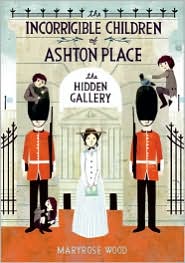
The Hidden Gallery (The Incorrigible Children of Ashton Place #2) Maryrose Wood. 2011. HarperCollins. 320 pages.

"But the workmen swore the repairs to the house would be finished by now!"

It's been a few months since the disastrous Christmas affair when the three Incorrigible children--Alexander, Beowulf, and Cassiopeia--went a little crazy in front of all the guests. But the children have made friends with the squirrel, Nutsawoo, and they've been behaving well enough ever since. They've been themselves, true, confusing words like matador and metaphor. But they've not been awful or dreadful. Still, a little change of scene might be just the thing. For Penelope Lumley, the young but bright governess, has been invited to London by one of her former teachers. And Miss Lumley is eager to go with the children. She didn't necessarily expect Lord and Lady Ashton to want to go to London too. But the more the merrier, right?

So this second book is ALL about their London adventure. Do you think that these three children--supposedly raised by wolves--can go unnoticed in London? You're right. Things do get a little messy. But in the midst of the chaos, Miss Lumley discovers that she needs to be extra careful. For there is someone who wants to hurt the children. But who?! Miss Lumley's former teacher is NO help at all. Just warning Penelope to not ask questions of anyone and to leave well enough alone. But does that really sound like something Penelope can do?

I liked The Hidden Gallery. I didn't love it as much as the first one, perhaps, but it was a good read, an enjoyable one. Within this one, Penelope makes a new friend, Simon, whom she trusts almost immediately. At times I forget that Penelope is VERY young herself--just fifteen or so? So it was nice to see that she is interested in boys too. That she can think of more than Latin and geography and such. 

© 2011 Becky Laney of Becky's Book Reviews


The Story of the Amulet (MG)

The Story of the Amulet. E. Nesbit. 1906. 228 pages.

First Sentence: There were once four children who spent their summer holidays in a white house, happily situated between a sandpit and a chalkpit. 

I believe that this is the final adventure of Cyril, Robert, Anthea, and Jane. The first adventure, Five Children and It, and the second adventure, The Phoenix and the Carpet, were both delightful. The novel has a sad beginning. Their father is off to Manchuria to be a war correspondent, and their mother and Lamb are recovering their health in Madeira. (Their mother has been sick, Lamb has not.) They have been left in the care of Nurse, they have been left in London.

One of the children has the idea that if they leave the house and go explore the city--on their own, with proper permission, of course--that it would cheer everyone up. And that works, in a way. For in their exploring they discover an old, old friend of theirs. Someone that they'd not seen since that oh-so-magical summer. Yes, the four children happen to find Psammead caged up and for sale in a shop. Of course, they have to rescue him. And he is thankful--to a certain extent. But though he may be grateful to be out of the shop, out of the cage, he does NOT want to become a toy for the children, a wish-granter. But not wanting to be completely mean and unsociable, he tells them of an amulet with magical powers. This amulet is also for sale, and if the children purchase it, well, they can have their heart's desire.

Sound too good to be true? Well, if they want their heart's desire they are going to have to prove themselves worthy--or clever. For the amulet they buy is only half of the magical charm. They'll have to find the second half of the charm and the pin that binds these two together in order for this charm to grant their heart's desire. What good is half a charm? Well, it's still plenty powerful! Especially if you like to travel through time! For this amulet--when magical words are spoken, when held in a certain way, in a certain direction, becomes a doorway to the past. The children can step through the amulet to the past on their quest to find the missing half.

And these time travel adventures are fun! They go to Babylon, Egypt, Tyre, Atlantis, etc. Will they ever find the missing half? Will their amulet ever be whole? While the four children may have slightly different ideas on how to go about the quest, they agree on what their wish will be, they know their heart's desire.

I enjoyed this one. I've enjoyed all three of the books very much. I'm so glad that I decided to read E. Nesbit!!!

 © 2011 Becky Laney of Becky's Book Reviews


Smells Like Treasure (MG)

Smells Like Treasure. Suzanne Selfors. 2011. Little, Brown. 416 pages.

There are two types of people in this world--people who sit by their mailboxes and wait for a delivery from the Map of the Month Club and people who don't. You might be asking yourself, What kind of person would sit by his mailbox and wait for a map? An image might pop into your head of a nerdy sort of person with messy hair and pants that are too short. A soft sort of person who'd rather sit in his room and dream about treasure than climb a tree or ride a bike. A smart sort of person because map reading uses 2.5 million more brain cells than watching television. Did you know that the person you've just imagined is Homer Winslow Pudding? 

This is Homer Pudding's second novel. His first adventure can be found in Suzanne Selfors' Smells Like Dog. Once again Selfors assures her readers that Dog, our hero's oh-so-faithful companion, will be alive and well at the end of the novel. From the introduction, "I hate stories about dogs that die, and so I will never, ever write that kind of story. That is my solemn promise. In fact, I believe there should be some sort of punishment for people who write stories about dogs that die. Maybe they should be forced to peel gum off the bottoms of movie-theater seats, or file old people's toenails, or clean the shark tank at the zoo. That's what they deserve after bringing such terrible unhappiness into our lives."

So is Homer Pudding ready for his second adventure? Mostly. He has been looking forward to the county fair for months and months. But when he's banned--in part due to Dog's enthusiasm--on opening night, he's a little relieved to learn that L.O.S.T. will be meeting very, very soon. And their meeting will be to see if he will inherit his uncle's seat within the oh-so-secret-treasure-hunting-club. Zelda shows up in her cloud copter to tell him the news and take him to the club's clever tailor for his first professional treasure-hunting-suit. With a little lie or two, his parents are convinced that their son will be safe with Uncle Drake's good friend, Zelda, whom they've never actually met, for a week. The fair being a very good distraction, I think!

Zelda has told Homer that there is one club member that does NOT want Homer to become a member of the club. But can he figure out which member it is? Well, appearances can be deceiving. It looks like it's just a formality, until a former friend, Lorelei, shows up and starts telling smooth lies. Claiming that Uncle Drake promised her his seat in the club, that Uncle Drake gave her his membership coin. Many know she's lying. Many remember Uncle Drake speaking of Homer and how he is the one to inherit. But not everyone is eager to welcome Homer into the club, and well, this is a convenient way to make him earn it.

If Homer wants to be accepted into L.O.S.T. he'll have to prove himself worthy against his opponent. Both will receive the same clues. Both will have a sponsor member to provide transportation and such. Both will have to solve the mystery and find the "missing" coin that will be hidden somewhere--anywhere--in the world.

Can Homer prove that he has what it takes to be a real treasure hunter?

I liked Smells Like Treasure. I'm not sure that I LOVED, LOVED, LOVED it like I did the first book. But it was nice to visit with Homer and Dog again. I liked getting to know the characters introduced in this second novel like Hercules, Homer's sponsor. I didn't like him immediately, in fact, I thought he was a bit annoying. But by the end of the novel, well, I had changed my mind. I think Hercules is better for having this real adventure.

© 2011 Becky Laney of Becky's Book Reviews


No Passengers Beyond This Point (MG)

No Passengers Beyond This Point. Gennifer Choldenko. 2011. Penguin. 256 pages.

My mom says worry is like a leaky faucet--every drip makes you imagine something bad on the way...trouble...trouble...trouble...do something...do something...do something. But when you're twelve and the only guy in the house, you're responsible for an awful lot. It isn't just the heavy lifting and taking out the garbage either. You've got to be aware.

India, Finn, and Mouse are three children on their way--by plane--to their Uncle Red's house. They're not going on vacation, this won't be a short stay. No, the three will be there to stay. Their mom has every intention of joining them when the school year is through, but for now, they'll need to stick together and take care of one another. This move is sudden and not-so-sudden. It's definitely a surprise to the three kids. To the mom? Well, she's been fighting to save her home from foreclosure for the past six months. And then the fight is over, and she's lost. Now she has to tell her kids they'll be going to stay with Uncle Red in Colorado, they'll be leaving the next day. No time to say goodbye to their friends. No time to pack up their belongings properly. No, one suitcase a piece is all they'll be taking with them. This move seems so crazy, so weird. Yet it's the sanest part of the book, perhaps?!

After the first fifty pages, well, No Passengers Beyond This Point reads like an episode of The Twilight Zone. For those that love realistic fiction--and only realistic fiction--this may be an unpleasant surprise. For those that love a bit of fantasy and mystery, well, this change may be quite welcomed. (Is it a difficult mystery to solve? I'm not a good judge of that. I certainly began putting the pieces together early on, BUT that doesn't mean it won't be suspenseful to kids. And even though I had a good idea on where this one was going, it didn't take the fun out of reading it.)

No Passengers Beyond This Point is narrated by Finn (middle child), India (oldest child), and Mouse (youngest child). And I don't always love appreciate it when authors do this. Multiple narrators can be a big disappointment at times. They can keep me from connecting with a book. They can keep me from getting to know any of the characters well enough. BUT. I didn't have a problem with it in No Passengers Beyond This Point. In fact, it was one of the novel's greatest strengths. Which narrator would I want to give up??? NONE OF THEM!!! I just loved and adored Mouse and her invisible friend, Bing. I loved seeing the world through her eyes. I loved her observations. And Finn, well, he was responsible--though worried--and was able to think things through without giving into panic. I definitely think he's a good brother for these two to have! And India, well, I might have struggled to like her at first. (Though I wouldn't say I see her exactly the same way Mouse does...) But her chapters--especially towards the end--are so INTENSE and compelling. And when it comes down to it, ALL the narrators are so important to the story itself.

So I definitely enjoyed No Passengers Beyond This Point. I loved the characters. I loved the family dynamics. I thought Choldenko did a great job with developing relationships between siblings. And, for me, the atmosphere, the setting--strange as it was--worked very well. I can't say that every reader will love it. But then again, the same is true for ANY book I review!

Some of my favorite Mouse observations:

Ever since I found out they kicked Pluto out of the planets, I have not been feeling so sure about a lot of things. If they can decide Pluto is not a planet all of a sudden like that, things are not being run the right way up top. Pluto is a planet in My Solar System on page one, page six, and all of chapter three.
My brother, Finn, who has no pimples, says that's because Pluto is a dwarf star, but Finn is wrong about this. Finn is wrong about a lot of things, but I keep quiet about how many. He is a nice big brother and I don't want to ruin him.
My sister, India, is fourteen and she's only nice when Mommy makes her. (26-27)

I do not like being way back here with Bing and Marvin. What is Marvin going to ask? I try to think of every answer I know.
"Name?" Marvin asks.
"Geneva Tompkins, but everybody calls me Mouse on account of I'm good at squeaking. Want to hear?"
Marvin shakes his head. "You're traveling with your mother."
"No," I say. "We've used up all our money. Mommy has to work because that's how she gets more. Is that how you get more, Marvin?"
Marvin writes this down on his clipboard. "Who exactly are you traveling with?"
"My sister, India, and my brother, Finn. India, Geneva, and Finland. Two countries and a city. That's me." I raise my hand. "My mother wanted to travel, but instead she had kids."
This is my grown-up joke. I got it from India. Marvin doesn't laugh.
"And your father?" Marvin asks.
"He died when I was in Mommy's tummy. I couldn't see him on account of there was skin in the way. But Bing saw him. He took a picture for me."
"Who is Bing?"
"He's my friend."
"Did you pack your own suitcase?"
"My mom and India did, only I made a few corrections."
"Which means?"
"I added the explosives," I whisper.
His face looks suddenly the color of my snot when Mommy says I have to stay home from school. "Explosives?"
"Have you ever seen mints explode? You put them in soda and Pfffffff." I make my best explosion noise, but it's not as good as Finn's.
"This is some kind of science experiment?" His voice squeaks.
"Oh, no. I don't have science yet. Not until third grade."
Marvin shakes his head and makes grunting noises. "Do you understand you aren't allowed to bring liquids on the plane? Liquids like vinegar, liquids like soda."
"I would have understood if Finn let me read the whole sign, but he said we had to--"
"You stay here," he snaps before I even finish explaining.
When Marvin comes back, Mommy, Finn, and India are with him. Marvin hands me my suitcase. It's very light. He's taken all the good stuff out. (31-32)

Now I have to go to the bathroom. But I don't want to go in a strange bathroom, so I hold it like at school. I will hold it until we get back from Uncle Red's. I only like the toilet paper at home. (42)

I'm used to knowing more than everyone else on account of Bing. He has in some knee-a, you know. You can find out a lot of things when you're awake at night. In the morning, Bing tells me everything he found out the night before. (86)


© 2011 Becky Laney of Becky's Book Reviews


Trauma Queen (MG)

Trauma Queen. Barbara Dee. 2011. Simon & Schuster. 272 pages.

I am standing outside homeroom in yellow flannel monkey pajamas.
Everyone else is dressed normally: jeans, track pants, sweaters, whatever.
Apparently because today, Monday, February 3, is not Pajama Day at Crampton Middle School. Also apparently I am the only one who is celebrating Pajama Day, because I am the only one whose mother told her it was Pajama Day. 

Marigold doesn't always love her mom. You see, Marigold's mom is a performance artist. She does crazy, crazy, embarrassing things in front of people...on purpose. Sometimes Marigold wishes her Mom could really stick to one performance: normal, sane, ordinary mother of two. But that's a role she rarely does.

Trauma Queen is about new beginnings. Marigold's family is starting over--again. The last town, well, it didn't end so well. On the positive side, Marigold made a friend--a really good friend--a girl named Emma. And things seemed to be going well until Emma's mom met Marigold's mom. Then it got UGLY, UGLY, SUPER-UGLY. Now Emma isn't allowed to speak with her...at all. So it's just as well, I suppose, that they did start over in a new town. But some things Marigold can't really forget.

One of the things that I LOVED about Trauma Queen were the characters. I thought they were well-developed. I loved how we get to know Marigold's family: her mom, her sister, Kennedy, her Gram. I especially loved to see the conversations between Mari and her Gram. I did. I loved how we get to know Marigold's classmates. Those that like Marigold (Layla, Ethan, Brody, etc.). And those that don't (Jada). WE get to see the tensions in her class. And it's so well done! It felt very authentic. I thought the author did a great job with showing not telling.

It was easy to love Marigold. It was easy to sympathize with her. But it was also easy--at least for me--to see the Mom's strengths. I couldn't not like the Mom. I couldn't. And when she started working with some of Marigold's classmates in an after school program, well, I admired her all the more. Was she perfect? No. Of course not. But she was not "the enemy" out to ruin her daughter's life. Seeing Gram, Mom, and Marigold together, well, it felt right. This novel has substance and depth.

I would definitely recommend Trauma Queen. I've also read This is Me From Now On.

My favorite quote:

But how do you know you're seeing things through your own eyes? Maybe you think you are, but really, you're just collecting other people's points of view. Maybe you're seeing the world through their eyes, and you don't even know it. (211)


© 2011 Becky Laney of Becky's Book Reviews


Twitter Delicious Facebook Digg Favorites More