Showing posts with label Jane Austen. Show all posts

Sense and Sensibility

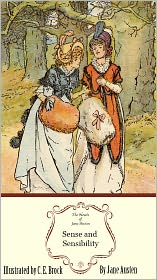
Sense and Sensibility. Jane Austen. 1811. (The Complete Novels) Random House. p. 3-175.

The family of Dashwood had been long settled in Sussex. Their estate was large, and their residence was at Norland Park, in the centre of their property, where for many generations they had lived in so respectable a manner as to engage the general good opinion of their surrounding acquaintances.

I don't know why I didn't love Sense and Sensibility the first time I read it. I really don't. Because it's just as good as all the other Austen I've read--or reread as the case may be. Could it be that some Austen novels just need to be read twice to be appreciated? Or could it be that this novel was just in the right place at the right time for me to love it? Mood does factor into my experience after all! Could me loving Colonel Brandon's Diary by Amanda Grange have something to do with it? And I couldn't help making comparisons between Sense and Sensibility with Anthony Trollope's The Small House of Allington. Couldn't help concluding that if Austen had been writing it, readers would have had a FULLY, FULLY satisfying ending! (And if Trollope had been writing Sense and Sensibility, well, Marianne might not have given up some of her notions.) Let's just be thankful that Thomas Hardy did not write Sense and Sensibility or The Small House of Allington!

I almost feel silly not including a summary, but it also feels silly to include a summary. I feel so many people will already be familiar with the basics of the story. So here it goes.
Soon after the novel opens, Mr. Dashwood dies. The second Mrs Dashwood has three daughters and not much money. For most everything went to Mr. John Dashwood, the eldest son, the son of the first Mrs. Dashwood. He promised his father--promised--that he would provide for his half-sisters and step-mother. (For the father was very distraught about his family and how they would be able to live.) To borrow from Dr. Seuss, he said and said and said those words, he said them but he lied them*. Is that exactly fair? Yes and no. He just didn't remember that he's not allowed to have thoughts and opinions of his own. He forgot to take into account his wife, Fanny Dashwood. He forgot that she would most definitely have an opinion on his her their newly inherited money. The scene between the two is quite remarkable and clever. If you can view them as villains providing comic relief. If you consider them as human beings, well, their actions can't be justified so don't even try.

So after many uncomfortable months sharing a home with John and Fanny Dashwood (and their son), Mrs. Dashwood decides she's had enough. She agrees to move with her three daughters to a small cottage (on the estate of Barton Park) where they can afford the rent. It isn't a perfect situation because it brings them into the company of Sir John Middleton, Lady Middleton, and Mrs. Jennings, just to name a few. (A little of their company goes a long, long way). But they are happy enough in their own way.
So Elinor is the oldest daughter, Marianne is the middle daughter, and Margaret is the youngest daughter. Marianne is the one most like her mother. And Marianne and Mrs. Dashwood can clash quite a bit with Elinor. Not in a needing Dr. Phil way. Not in an outrageous way. Just that they have different ideas about love and life and the finer things in life like art, music, poetry, novels, etc. To be quite honest, I found myself taking Elinor's side for many of these conversations. Marianne's strong opinions, well, they irritated me in many ways. And quite a few actually disgusted me. I had to keep telling myself, she's seventeen, she's seventeen, she's seventeen. She just hasn't experienced enough of life, of love, to know any better. Not that I believe she needed to outgrow her spirit. For her passionate spirit, her love of life, isn't a bad thing.

So Sense and Sensibility is a romance. Readers meet the men in Marianne and Elinor's lives. We meet Edward Ferrars, the brother of Fanny. Perhaps because she is already connected--for better or worse--with Fanny, Elinor doesn't hold that against him. It helps that he's not really anything like his sister. We meet John Willoughby, Marianne's ideal romantic hero. He wins Marianne and Mrs. Dashwood over with very little effort. They're just convinced that he's the best thing ever. The problem may just be that he knows it. He knows the effect he has on women--the more romantic, the more passionate, the sillier, the easier it is for him to make them swoon. And then there is Colonel Brandon. The man that perhaps only Elinor can fully appreciate--at least at the beginning. Marianne being too silly, going "he's so old, he's so ancient, who could ever love someone so old and decrepit?" Never considering that he is close to her mother's age--give or take a few years. How old is old? Well, he's 35. (Not so old in my opinion! Definitely not so old that he should just give up living life.)

I loved Sense and Sensibility. I did. I wouldn't say it was like I was reading it for the first time. Because goodness knows that when I read it the first time I was obviously not paying attention to the little things or even the not-so-little things. I suppose I was reading with a limited attention span? Or maybe I just wanted to get done quickly? I read with attention and appreciation this time. I read for pleasure. I read at my own pace. I took in each scene without rushing, without pushing. I saw just how much there was to see.

For example, I noticed that sometimes it wasn't always what was being said that mattered. That sometimes it was all about what was NOT being said. There were many, many times when the words that were being said, weren't meant at all. There were conversations veiled in polite words that were actually quite mean-spirited, full of insult, and revealing some jealousy. The text actually has quite a bit of sarcasm and humor or wit to it. That Elinor might say all the right things--at times--but that doesn't mean she's always sincere. "It was impossible for [Marianne] to say what she did not feel, however trivial the occasion; and upon Elinor, therefore, the whole task of telling lies when politeness required it always fell" (57). And so I was able to "see" more of Elinor this time through, perhaps, in her conversations with the Middletons and Palmers and Steeles and Mrs. Jennings. Like this little gem:
"I have a notion," said Lucy, "you think the little Middletons rather too much indulged; perhaps they may be the outside of enough; but it is so natural in Lady Middleton; and for my part, I love to see children full of life and spirits; I cannot bear them if they are tame and quiet."
"I confess," replied Elinor, "that while I am at Barton Park, I never think of tame and quiet children with any abhorrence." (58)
Almost from start to finish, I thought about each conversation, each relationship. Was it all pretense and politeness? Was it sincere or genuine? What wasn't being said? Was what being said the truth and nothing but the truth? Who did Elinor feel comfortable with? Who was she real with?

So there was much to think about this time through. And I wasn't solely thinking of Elinor throughout. I was trying my best to appreciate all the characters--even the ones I didn't especially like....like Willoughby. What I noticed was that Austen created plenty of flawed characters. That there are characters that have a few quirks, a few flaws, a few weaknesses, but that also have their good qualities too.

So I definitely LOVED this one and would recommend it. I would suggest that you go at your own pace, that you don't read it in a hurry. That you let yourself enjoy it in the moment, enjoying each scene as part of the whole, instead of trying to rush to the happily ever after ending.

*Adapted from "What Was I Scared Of?"

© 2011 Becky Laney of Becky's Book Reviews


Dueling Authors: Jane Austen vs. Charles Dickens

Today I am participating in the Classics Circuit Dueling Author tour. Participants had the option of reading Jane Austen OR reading Charles Dickens OR reading both Dickens and Austen. For this tour, I decided to read Northanger Abbey by Jane Austen and Pickwick Papers by Charles Dickens.

I've been a fan of Jane Austen for almost six years now. I've read Persuasion, Pride and Prejudice, Emma, Sense & Sensibility, Mansfield Park, Northanger Abbey, and Lady Susan. (Persuasion is my favorite and best, by the way. Emma is probably my least favorite.)

For many, many years I was decidedly NOT a fan of Dickens. Why?! Well, I had been forced required to read Great Expectations in high school. And it was so traumatic--perhaps--that I blocked it from my memory. Same thing in college when it was once again required. It seemed to me that Great Expectations was the novel that could not--would not--stick in my memory. But my dear, dear friend gently but firmly persuaded me to change my mind. Not all at once. Little by little. And when I finally gave Dickens a chance, when I came to him without prejudice, I found out something about myself. I really do love and adore bearded Victorians. I love Dicken's style. I love his asides, his ramblings, his descriptions. I love his characters. I even love the way he names his characters. I love the complexities of his writing. Sure there might be people out there who don't think Dickens worth their time, worth their effort. But. For me. I couldn't imagine feeling that way. Last fall, I read Bleak House, and this spring, I read Our Mutual Friend and Little Dorrit. Of those three, my favorite and best is Our Mutual Friend.

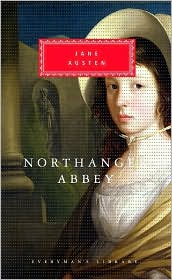
Northanger Abbey. Jane Austen. 1817/1992. Everyman's Library. 288 pages. 

No one who had ever seen Catherine Morland in her infancy, would have supposed her born to be an heroine. Her situation in life, the character of her father and mother, her own person and disposition, were all equally against her. 

I love to reread books. And I love to write new reviews of the books I reread. In the case of Northanger Abbey, I get to see how much I've changed as a reader. I can't believe that just a couple of years ago I thought that this Austen book was "just okay" and "not one of my favorites." That I didn't find the romance between Henry Tilney and Catherine Morland to have any spark or sizzle. You can say my opinions on this one have changed considerably!!! For one, Henry Tilney is now one of my favorite, favorite, favorite Austen heroes. And I've come to find the whole novel--not just the first chapter--delightful and charming and delicious and oh-so-satisfying. One of those novels where I could almost open it to any page, start reading, and find myself thinking, "Oh I love that part!"

Our heroine, Catherine Morland, is on vacation with Mr. and Mrs. Allen. They've gone to Bath. And Catherine is longing for something to happen, something exciting, something new, something wonderful. Something worth remembering. At home, well, nothing all that special happens. Certainly nothing as dramatic as what happens in Catherine's favorite novels. There have been no young men, no would-be-heroes, to win her heart. But Mr. and Mrs. Allen aren't the most social of couples. And they don't happen to know any one at Bath when they first arrive. So her adventures are put on hold--for the moment. But when Henry Tilney enters the scene, when the two are introduced, Catherine KNOWS that her life will never be quite the same again. At least not if Tilney is really, truly hero material. And oh how he seems to be!

And then there is the Thorpe family. Isabella Thorpe befriends Catherine quickly and enthusiastically. You'd think they'd been best friends for years and years instead of just ten minutes. There's something almost desperate about how Isabella clings to Catherine at the first. Like she just has to have someone to talk with, to gossip with. And what can I say about her brother John? I truly think that even if he hadn't been a liar, hadn't been so selfish, hadn't been so weird, Catherine would still have never considered him as a love interest. Because. It was always ever Tilney in her thoughts, in her heart. She spent her time with John Thorpe wishing that she was somewhere else, with someone else! Unlike the brother-sister team in Mansfield Park--Mary and Henry Crawford--I feel no sympathy for John Thorpe. He's just not hero material.

The novel focuses on Catherine's adventures and misadventures in the world. Will Catherine meet a true friend that could be closer than a sister? Will Catherine find her hero? Will she live happily ever after? Will real life prove better than any novel?

So the plot of Northanger Abbey is relatively simple. But I found it oh-so-satisfying. Just a joy to read this one.

Favorite quote:
"She had reached the age of seventeen without having seen one amiable youth who could call forth her sensibility; without having inspired one real passion, and without having excited even any admiration but what was very moderate and very transient. This was strange indeed! But strange things may be generally accounted for if their cause be fairly searched out. There was not one lord in the neighborhood; no, not even a baronet. There was not one family among their acquaintances who had reared and supported a boy accidentally found at their door; not one young man whose origin was unknown. Her father had no ward, the the squire of the parish no children. But when a young lady is to be a heroine, the perverseness of forty surrounding families cannot prevent her. Something must and will happen to throw a hero in her way."
 The Pickwick Papers. Charles Dickens. 1836/1837/1999. Penguin Classics. 810 pages.

The first ray of light which illumines the gloom, and converts into a dazzling brilliancy that obscurity in which the earlier history of the public career of the immortal Pickwick would appear to be involved, is derived from the perusal of the following entry in the Transactions of the Pickwick club, which the editor of these papers feels the highest pleasure in laying before his readers, as a proof of the careful attention, indefatigable assiduity, and nice discrimination, with which his search among the multifarious documents confided to him has been conducted.

Did I love Pickwick Papers? Yes. Did I love it as much as Our Mutual Friend or Bleak House? Well, I'm not sure I could honestly say that I love it that much. But the subject matter seems to be much cheerier than his other works. Pickwick Papers focuses on a circle of friends. Mr. Pickwick, of course, is at the center of this circle. Mr. Snodgrass, Mr. Winkle, Mr. Tupman are fellow Pickwickians. They accompany him on some of his journeys. They witness some of these adventures. They lead the group into some trouble, into some fun. Mr. Winkle is probably the most important of his friends.

But the character that I came to love the most--that is if I had to choose just one--would be Sam Weller. Sam Weller is a man we meet in one of the adventures, a man that becomes Mr. Pickwick's valet, a man that becomes a true friend when Mr. Pickwick's life turns a bit topsy-turvy.

Is there ONE central story to The Pickwick Papers? Yes and no. I mean the adventures are very casual, a bit spontaneous. But they're not unrelated. For me, the ONE story is Mr. Pickwick being sued by his former landlady, a widow named Mrs. Bardell. Readers witness what seems to be an insignificant scene, a comical misunderstanding that really only readers understand, a scene that ends with Mrs. Bardell fainting into Mr. Pickwick's arms. Months later Mr. Pickwick learns something startling. He's being sued for breach of promise. Mrs. Bardell is claiming that Mr. Pickwick led her to believe that he was going to marry her. She believes she's entitled to some of his money for the emotional damage he's caused her. He disagrees of course. The thought of his marrying her--of his marrying anyone--never ever ever occurred to him. And he certainly would remember if he ever spoke tenderly, romantically to her. If he ever once said that he cared for her, loved her, wanted to spend the rest of his life with her. No, she's lost it. And come what may, no matter what the court says, he will never ever ever ever give her any money. Not if it costs him his freedom, not if it costs him his reputation. (The court scene had me hooked. From that point on I just couldn't put this one down.)

I enjoyed this one. I enjoyed the characters and character sketches. I didn't love *every* story within The Pickwick Papers. There were some stories, some asides, that just weren't for me. In his adventures, Mr. Pickwick was collecting stories from others, so Mr. Pickwick would meet someone new, and often times, that someone new had a story or two to share with his new friend. Some of the chapters were quite funny. And The Pickwick Papers does have a little bit of romance--just not with Mr. Pickwick in the lead!

For the most part, I enjoyed this one. It made me smile in many, many places. I would recommend it.

Favorite quotes:

There are very few moments in a man's existence, when he experiences so much ludicrous distress, or meets with so little charitable commiseration, as when he is in pursuit of his own hat. (62)

Out came the chaise -- in went the horses -- on sprung the boys -- in got the travellers. (122)

© 2011 Becky Laney of Becky's Book Reviews


A Darcy Christmas

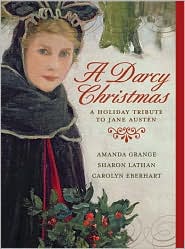
A Darcy Christmas: A Holiday Tribute to Jane Austen. By Amanda Grange, Carolyn Eberhart, and Sharon Lathan. Sourcebooks. 304 pages.

From Mr. Darcy's Christmas Carol by Carolyn Eberhart: Old Mr. Darcy was dead to begin with. There is no doubt whatsoever about that. The clergyman, the clerk, the undertaker, and the chief mourner had all signed the register of his burial. His son signed it. And Fitzwilliam Darcy's name was as good as his father's before him. Old Mr. Darcy was as dead as a doornail.

From Christmas Present by Amanda Grange: It is a truth universally acknowledged, that a married man in possession of a good fortune, must be in want of an heir, and Mr. Darcy of Pemberley was just such a man. Moreover, he was soon to have that want satisfied, for his wife, Elizabeth, was expecting their first child.

From A Darcy Christmas by Sharon Lathan: He set the painting onto the sofa, assuring it was well supported before stepping away. He gazed at the canvas, a smile spreading as he looked upon his family. His family. The family created by him and his wife, just as he had dreamt for so many lonely years. They stood on the portico of Pemberley flanked by their precious children on the steps. All of them were smiling at the artist. A sentimental man by nature, he silently examined the newest portrait of his family and lost himself in happy memories.

For the most part, I liked this one. I did. I really enjoyed two of these novellas! And while I wasn't impressed with "A Darcy Christmas" I would still recommend this collection.

"Mr. Darcy's Christmas Carol" was surprisingly fun. I had my doubts--as you might have your doubts about weaving these two stories together--but I thought it worked. It does a slight variation on the original. What if Jane and Charles Bingley got their happily ever after--after Lydia was "rescued" by Mr. Darcy's intervention--but Mr. Darcy's pride was still in the way of his declaring his love (the second time). This is what that first Christmas might have been like. If he'd been visited by the spirits of Christmas past, present, future.

"Christmas Present" was a great novella by Amanda Grange. I've enjoyed many of her Austen adaptations in the past. This one did not disappoint. She got the characters just right. It felt authentic like what a Darcy Christmas might have *really* been like. Elizabeth and Darcy are expecting their first child, and Charles and Jane just had their first child. So the families are coming together--the extended families--to celebrate. I really enjoyed this one!

"A Darcy Christmas" is a collection of holiday short stories following the Darcy family through twenty or so years of marriage. (I believe we see their twenty-third Christmas as a couple? Although I might have lost track of the last few stories.) Since we only catch glimpses of the family--on Christmas Eve/Christmas--it's hard to precisely follow these stories. We do know that (almost) every Christmas sees Elizabeth either with a new baby or pregnant. (Perhaps these stories do connect to Lathan's previous novels about Elizabeth and Darcy. If that is the case, then the stories might make more sense when it comes to keeping up with their family, friends, etc. Especially in the case of her children's love interests.)

© Becky Laney of Becky's Book Reviews


Bespelling Jane Austen

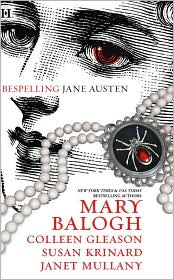
Bespelling Jane Austen. By Mary Balogh, Susan Krinard, Colleen Gleason, Janet Mullany. 2010. Harlequin. 377 pages.

From Almost Persuaded by Mary Balogh: Miss Jane Everett, middle daughter of Sir Horace Everett of Goodrich Hall in Hampshire, did not call as often as she ought at the vicarage in the village nearby. She called everywhere else--on tenants and laborers and others, on those who sick or elderly or in need of any sort. She took her duties very seriously.

From Northanger Castle by Colleen Gleason: Miss Caroline Merrill smoothed her ruffled-hem skirt as she settled into the chair against the wall. She quickly tucked her feet under the seat to keep them from being stepped upon or tripped over, and confirmed that the heavy, bulky reticule still dangled from her wrist. One never knew when one might need one of the accoutrements from within.

From Blood and Prejudice by Susan Krinard: It is a truth universally acknowledged that every decent straight guy who isn't dead broke, is in want of a good woman. As my dear Grandpa Bennet used to say...Bull.

From Little To Hex Her by Janet Mullany: "She turned me into a frog." I bit back the comment that he seemed to have recovered. "I can't tell you how sorry I am, Elton. I know it's no excuse, but it is almost full moon, and Harriet tends to be..." I paused and added a description of my assistant that seemed lame as soon as it was out of my mouth. "Difficult."

Bespelled By Austen is a collection of paranormal novellas "inspired by" four Jane Austen novels. Northanger Castle and Almost Persuaded are historical retellings of Persuasion and Northanger Abbey. (Names and situations have been altered.) Blood and Prejudice and Little To Hex her are modern day adaptations of Pride and Prejudice and Emma. Names have not changed though many aspects of the novel have been updated to reflect a contemporary setting. Each novella is by a different romance novelist. As you can imagine with reading any collection of novellas I have favorites and not so favorites. (My favorites may not be your favorites.)

My thoughts on "Almost Persuaded": I was not almost persuaded to believe in reincarnation. Unfortunately, that seemed to take precedence over the romantic aspects of this retelling of Persuasion. Much of the dialogue between our hero, Captain Mitford, and heroine, Jane Everett, seeming to be about past lives, soul mates, and such. You might not think it would be so intrusive to the text, but I found it to be so. When they weren't talking about the many times they got their love wrong in their past lives, they were doing things that seemed out of place with the historical time period. (Like shedding some clothes to go swimming together, and then getting intimate.) I did NOT like this one at all. Persuasion is my favorite Austen, and to see it "adapted" in this way irritated me.

My thoughts on "Northanger Castle": To be honest, I don't have many thoughts on this one. Unfortunately, I had a headache while reading this one, and I didn't feel a connection with this one. But. I think it was probably my fault. I think I would have been struggling to "enjoy" whatever I was reading at that time.

My thoughts on "Blood and Prejudice": This one was interesting. I thought I wouldn't like the modern-day adaptations. But I found both Blood and Prejudice and Little To Hex Her the best in the collection. Elizabeth, our heroine, finds out a secret about Mr. Darcy--and Mr. Wickham--they're vampires! But she's still doesn't have all her facts straight. Can Elizabeth discover the truth in time to find love for herself and her older sister, Jane? I liked this one.

My thoughts on "Little to Hex Her": This one was my favorite! Dare I say it? This one rivals Clueless for me on my favorite telling of Emma. (Emma is NOT my favorite Austen. I struggled through that one.) Emma, our heroine, is a matchmaker. That's her job. She runs a PARANORMAL dating service. Elton? Well, he's an Elf. Harriet? She's a werewolf. Frank Churchill? A vampire. Jane Fairfax? Well, she's a moody witch. Knightley? Well, he's a wizard. And her ex-boyfriend.  This adaptation was playful and flirty and fun. It worked really well--from the smallest details--"Missy" who can't stop talking about the emails she receives from Jane Fairfax--to the big declaration of love. I just loved this one. It would make a great movie!


© Becky Laney of Becky's Book Reviews


Twitter Delicious Facebook Digg Favorites More