Showing posts with label 2006. Show all posts

By His Own Hand?

By His Own Hand? The Mysterious Death of Meriwether Lewis. Edited by John D.W. Guice. Contributions by James J. Holmberg, John D.W. Guice, and Jay H. Buckley. Foreword by Elliott West. Introduction by Clay S. Jenkinson. 2006. University of Oklahoma Press. 208 pages.

From the foreword: In darker moments I sometimes wonder whether we require our most favored historical characters to die in particular ways. 

From the preface: Late in the afternoon on 10 October 1809 one of the nation's great heroes reined his horse off the Natchez Trace to spend the night at Grinder's Stand. The rustic homestead consisted of two rough-hewn log cabins a few paces apart and a distant barn. It was a pleasant fall day some seventy miles southwest of Nashville, Tennessee. What occupied Meriwether Lewis's mind we will never know, but we do know that shortly after sunup the next morning he died there. Who held the weapon or weapons that fired the fatal shots during the night? Did Lewis take his own life or did an assassin? After nearly two centuries, this remains one of the most fascinating, puzzling, and enduring questions in all of American history. 


I found By His Own Hand? a fascinating read, a true mystery.

In the first chapter, James J. Holmberg presents his case for suicide. He presents the facts of the case and argues that suicide is the most logical explanation, or the best educated guess for what happened that night. He examines several primary resources--letters, written accounts of oral testimonies or oral histories, etc. One of his main points is that Lewis' closest friends--those who knew him best, men like Thomas Jefferson and William Clark--believed that their friend took his own life. The information in the letters primarily comes from the account of Priscilla Grinder. Several men wrote letters recounting these events, but they got their story from talking to her. There were no other witnesses at the inn to verify what Priscilla Grinder heard or saw that night.

In the second chapter, John D.W. Guice presents his case for homicide. He goes over the facts yet again. He provides further context--in some areas--for readers. He argues that while it cannot be proven that it was not suicide, while it can not be thoroughly proven that it was in fact murder, enough questions remain that there is definitely reasonable doubt. Suicide may satisfy some, but for those historians on the other side, there are still so many unanswered questions that they can't just accept that it was suicide. They would need more facts, more answers. While the first chapter tried to argue that Lewis was in a bad state of mind, that he was depressed and suicidal and anxious, that he'd already tried and failed to commit suicide in the weeks leading up to his death, this second chapter tries to argue the opposite. They try to prove that while Lewis was human, while he had moments of doubts or anxieties, there were still plenty of indicators in his life to show that he had not given up, that he had every intention of living. And these rumors of previous suicide attempts are questionable. While one man writes of them, he does not give any clues at all as to the when or the where or the how. If he knew these attempts to be true, why not include at least some detail. If he really, truly thought this man was a danger to himself, why didn't he do something about it? And, of course, that is just one example. The chapter argues that the "witnesses" in the case are not infallible, and in some cases quite questionable. Priscilla Grinder's story changed, and changed quite a bit with each telling or retelling. And her story does not make that much sense even if she'd kept it the same. She claims that she heard two gunshots, when she went to investigate, she saw Lewis walking around begging for help, begging for water, begging for someone to finish the job. She did absolutely nothing...except wait for him to die. Many--if not all--primary accounts of Lewis' death depend on facts as shared by Mrs. Grinder. So William Clark and Thomas Jefferson learned of events second or third hand. Another point argued in this chapter is why would Lewis do such a horrible, horrible job at killing himself? Would he really do such a horrible job aiming twice so that he lingers for hours? Did he really linger for hours or was that Grinder adding drama to the story?

The third chapter by Jay H. Buckley is "a postmortem trial." Buckley provides summaries of the arguments from chapter one and two. He examines the strengths and weaknesses of the suicide theory and the strengths and weaknesses of the assassination theory. He does a great job in highlighting both sides. His goal, of course, is to get readers engaged, to challenge readers to think for themselves and decide which is most likely.

All of the chapters are well written. All are fascinating. Both sides argue quite well...
I really loved the mystery of this one. There are some things in history that are just mysteries. We don't know what happened--what really happened. And sometimes these mysteries are a bit hidden away. Some historians write what they think happened and leave it at that, taking some of the mystery out of life.

© 2011 Becky Laney of Becky's Book Reviews


Star-Crossed (YA)

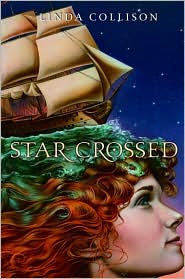
Star-Crossed. Linda Collison. 2006. Random House. 416 pages.

I came aboard with the prostitutes the night before the ship set sail. It was a rash scheme, but I was a brash girl with nothing to my name but a promise.

Patricia Kelley, the heroine of Star-Crossed, was a great annoyance to me throughout the book. I wanted to be honest about that from the start. I don't think that you'll necessarily agree with me on that. And I wouldn't be surprised if others liked this one a lot more than I did.

Some people might not find a stupid clueless heroine such an annoyance. (Star-Crossed reminded me of Emma's Harriet.)

Our heroine is the illegitimate daughter of a gentleman who owns a sugar plantation in Barbados. Perhaps her impressions of her father have been 'helped' by the distance between them, perhaps her impression of him remains what it was when she was still six years old and living at the plantation where she was born. She's spent ten of her sixteen years away at a boarding school in the English countryside for 'gentlemen's daughters.' She believes with all her heart that this school is only for the very, very, finest young ladies. (I'm not completely convinced.) She seems to have complete confidence in the fact that she--the daughter who does not even bear his name--will inherit the plantation. You see, she's learned that her father has died. And she's convinced that if she can just go herself to Barbados, to the plantation, then NATURALLY, everything will go her way.

Not having any money or any friends, she resorts to disguising herself as a prostitute and going on board the merchant ship destined for the West Indies. She's discovered, as might be expected, by a sailor, Brian Dalton, who befriends her. But it is only the fact that she is saved by Dr. MacPherson that keeps her on board after their first stop--for either the captain or the owner--not quite sure which--is very angry to have a stowaway. MacPherson agrees to pay for her passage if she'll be his 'loblolly boy.' She agrees. During the day, she's his assistant. At night--in the early morning hours--she sneaks out of the cabin to find Dalton. He's a most kissable boy when no one is around to see her questionable behavior. She decides she likes some aspects of living at sea. She likes dressing as a boy and playing at doing the work of a sailor--when it's convenient, when there's a cute guy around, etc. BUT for the first third of the novel, she's living in a fantasy world where arriving in Barbados will make her every dream come true. It's not that no one on board is asking her exactly what her plan is, for they all seem to be living in the real world, it's just that our heroine insists that she doesn't need a plan to get what is hers.

Can you predict where this one's going? Maybe that was one of the issues I had with it. Maybe it's an issue you won't have. I could see a few things happening very early on. I could predict what was NOT going to happen at Barbados. And I could predict precisely what was going to happen when it came to the 'romance.'

Another issue I had with this one is that I kept having shouting matches at the heroine. It was SO VERY EASY to shout at her. Not that it did any good. It didn't make her any smarter. It didn't make her have even a little common sense. But I felt better while I was reading it.

So. I didn't hate this one exactly. It could have been MUCH worse. For one, if it had been an adult romance novel, it probably would have included attempted rape/rape scenes. And the doctor would have offered "protection" from other men on the ship--at a cost. So. At least this book wasn't predictable in that way. It was historical adventure with romantic elements. (I didn't find the romantic story enjoyable, but other readers may.) The heroine rather reluctantly perhaps becomes a spunky adventurer/sailor. If the heroine becomes independent and free-thinking by the end of the novel, it is more by chance than design. Well, I'm not sure if that is exactly true. She may just have become better at it. While it's true I didn't like the heroine, I did like some of the minor characters, or the minor-minor characters. (There were some characters that were only in one chapter that I liked better than some of the regulars.)

S
P
O
I
L
E
R

ABOUT

THE

R
O
M
A
N
C
E

So when our heroine returns to the ship actually shocked and devastated by the fact that she is NOT a plantation owner and that she has absolutely nothing to inherit; no money of her own, no place to live, no place to go, etc. She's "comforted" perhaps by two men who love her: Dalton, the boy she just LOVES to make out with. And Dr. MacPherson, a man she has no interest in making out with. Can you guess which one she chooses? Can you guess why?

Our heroine is the illegitimate daughter of a "gentleman" with massive amounts of debts and reckless gambling habits. (Her father also had other illegitimate children. Not that she knew that before she arrived to learn 'the truth.') She has such a high opinion of herself, of her place in society, never doubting FOR ONE LITTLE SECOND that she belongs to the highest ranks of society, never doubting that she is so very very superior to everyone else because her father was a gentleman. She can't understand the basic facts of the case. She is illegitimate. She doesn't share her father's name. Their relationship may have been understood in some circles, and she may been treated fairly well at that boarding school in the country. But a country boarding school isn't exactly London society. You can't very well put on your calling card, illegitimate daughter of Mr. So-and-So. The very fact that she was illegitimate would probably keep her out of the best circles in society. Add to the fact that she has NO MONEY AT ALL. Who in the world would accept a penniless illegitimate daughter into their society? Who would marry her? Who of "her class" would marry her? With NO money and no social connections? Who would "sponsor" her into society at all? Who would "introduce" her into society?

So when she rejects Dalton BECAUSE he is her INFERIOR. Well, it irritated me. Not because I liked Dalton. Not because I preferred him to Dr. MacPherson. Not because Dalton had any personality to him at all. What annoyed me was the why behind it. He's not good enough for her. He is not of her class. She thinks he's DREAMY. She loves to kiss him. She loves to daydream about him. BUT. He's just not quality enough for her. It would be one thing if she was equally attracted to the doctor. But she isn't.

The truth? She's so stuck on herself being somebody big-and-important (even though there's no basis in reality to back this up) that she doesn't see that she doesn't have money, she has no place to call home, she has no way of earning money and THEREFORE it doesn't matter "who" she is. Whether she wants a new beginning or not, she's got one. She could CHOOSE to be with the man she loves best and no one would think a thing of it. There is no society that she belongs to at the moment that would judge her or could judge her. She may think she's the center of the universe, but she's not.

So she chooses who she chooses. And, if I'm being honest, I do actually like Dr. MacPherson. (I think our heroine is not good enough for him. I think he deserved much, much, much better.) The middle section of the novel focuses on her marriage to the doctor. We see her grow--or supposedly grow--into a competent nurse or surgeon mate. I don't know if she grows in intelligence as she matures, but, there are less opportunities for her to be stupid. And, to give her the benefit of the doubt, she could be quite a bit smarter from when we first met her.

The third section of the novel is what happens after her husband dies...how she becomes 'a man' and goes to see as a surgeon mate....and you can guess who she accidentally meets....and how that develops....


© 2011 Becky Laney of Becky's Book Reviews


Sharp North (YA)

Sharp North. Patrick Cave. 2004/2006. Simon & Schuster. 528 pages.

The girl nearly didn't find out who she was. What she was.

Sharp North is a perplexing YA novel. Part mystery. Part thriller. Part dystopian. It's set in a future world forever altered by global warming. A future world with a corrupt government. (How many fictional future worlds don't have a corrupt government?) A future world threatened by an underground movement, a revolution in the making. Our heroine, Mira, has a role to play in this world--for better or worse. And it's a role that mystifies Mira. For Mira's future is just as uncertain as her past.

Sharp North begins with a murder. Mira witnesses this murder, this hushed up murder, and it forever changes the way she sees the world, the way she sees her community. In part because she finds out that she is connected to the victim. She finds a piece of paper, a mere scrap, with a list of names. Her name is on the list. And so is the name of one of her friends, Gil Moore. He's listed as "her watcher." But why is he watching her? Is he her friend or her enemy? Is he out to see that she survives? Or is he in place to eliminate her? That's what Mira can't forget, can't erase. Are the people who murdered this mysterious woman, this mysterious stranger, out to get her? What led to this crime? For even if the whole world chooses to ignore it, Mira can't. Was it the woman's curiosity? Well, Mira can't help being curious now!

So Mira sets out on a journey to discover the truth, the truth about who she is, what she is. In a way she's running away from danger just as much as she's running straight into it. For Mira hasn't a real clue who her enemies are and who her friends may be. Is there a safe place for Mira? Or is she destined to upset the balance of those around her?

We meet a few interesting characters in Patrick Cave's Sharp North. Including several members of the Saint family, one of the "Great Families" that govern in this new world.

Maybe other readers can piece together this mystery. Maybe other readers can read it without being confused by the ending--as for me, well, I'm puzzled by how it ended. I still don't know what really happened.

So did I like it? Yes and no. I liked the idea of it. But. It felt like two or three stories pieced together. And it didn't always work for me.

© 2011 Becky Laney of Becky's Book Reviews


Life As We Knew It (YA)

Life As We Knew It. Susan Beth Pfeffer. 2006. Houghton Mifflin Harcourt. 352 pages.


Lisa is pregnant. 

Life As We Knew It by Susan Beth Pfeffer is one of my favorite books. It's one of the few young adult books that I reread regularly. I believe--counting the audio book--that this was my fifth time to read this bleak book. (The only other book I reread with that much regularity is Mary Shelley's Frankenstein.)

It stars Miranda and her family (a mom and two brothers--Matt, the older, Jonny, the younger). Miranda's world is turned upside down one May--and it isn't just her world--when an asteroid crashes into the moon bringing it closer to Earth; nature turns violent, extreme, deadly. No one--at that point--knows how bleak it will be, how many lives will be lost. Not just from tsunamis, floods, earthquakes, and volcanoes, but from disease and malnutrition too.

They are dealing with the loss of modern conveniences-- extremely limited amounts of natural gas and oil, and no electricity. (It's rare to have electricity.)

So how does one survive? Where do you find food? How can you ever have enough when you don't know how long this crisis will last? How long it will be before food supplies reach your town? What if no relief ever comes? How do you find water? How do you cook your food if you have a gas-stove or electric stove? How do you heat your homes without gas, oil, or electricity? How do you keep things sanitary and hygienic? How do you stay healthy? How do you stay smart?     

Miranda is one of the fortunate ones. She has a quick thinking mom who at the first opportunity rushes to the grocery store and buys close to a dozen carts of food and other necessities before the shelves are emptied completely. And they do live in a wooded area and happen to have a wood-burning stove. And miraculously enough they have magic well water that works without an electric pump. (That one still boggles.) But this struggle to survive is very personal, very compelling.

I enjoy Miranda and her family. I enjoy reading Miranda's journal. Is Miranda perfect? No! Is her family perfect? No! They argue. They fight. They get on each other's nerves. They love each other very, very much. And they are all dealing with harsh conditions, bleak situations. There is fear and tension and anxiety. But there's also love and hope.

My favorite quotes:

“Sometimes when Mom is getting ready to write a book she says she doesn’t know where to start, that the ending is so clear to her that the beginning doesn’t seem important anymore. I feel that way now only I don’t know what the ending is, not even what the ending is tonight” (16).

“For a moment I thought about all the people throughout history who saw Halley’s Comet and didn’t know what it was, just that it was there and frightening and awe inspiring. For the briefest flick of a second, I could have been a 16 year old in the Middle Ages looking up at the sky, marveling at its mysteries, or an Aztec or an Apache. For that tiny instant, I was every 16 year old in history, not knowing what the skies foretold about my future.” (18)

“And then it hit. Even though we knew it was going to, we were still shocked when the asteroid actually made contact with the moon. With our moon. At that second, I think we all realized that it was Our Moon and if it was attacked, then we were attacked.” (18-19)
“What about desserts?” I asked. “If the world comes to an end, I’m going to want cookies.” “We’re all going to want cookies if the world comes to an end,” Mrs. Nesbitt agreed. “And chips and pretzels. If the world is coming to an end, why should I care about my blood pressure?” “Okay, we’ll die fat,” Mom said. “Grab what you can grab and ram it into your wagons. But remember if we actually need this stuff, we’re going to be a lot more grateful for a can of soup than for a box of stale cookies.” “Speak for yourself,” Mrs. Nesbitt said. (34)
 “I guess I always felt even if the world came to an end, McDonald’s would still be open.” (46)
“Lately I’ve been trying not to know what’s going on. At least that’s the excuse I’ve been giving myself for not caring about all the stuff that’s happening outside of my little section of Pennsylvania. Who cares about earthquakes in India or Peru or even Alaska?
Okay that’s not fair. I know who cares. Matt cares and Mom cares and if there were any baseball involved, Jonny would care, too. Knowing Dad, he cares. Mrs. Nesbitt, too.
I’m the one not caring. I’m the one pretending the earth isn’t shattering all around me because I don’t want it to be. I don’t want to know there was an earthquake in Missouri. I don’t want to know the Midwest can die, also, that what’s going on isn’t just tides and tsunamis. I don’t want to have anything more to be afraid of.
I didn’t start this diary for it to be a record of death.” (70-71)
“We have clean sheets to sleep on, a clean house, clean clothes, clean dishes. We spent the evening laughing. It wasn’t 90 degrees in the house when we went to bed. We weren’t hungry. We’re not worried about Dad. I know what it feels like to be kissed by a boy. If I could, I would relive this day over and over. I can’t imagine a more perfect one.” (95-96)
“I can’t decide which is worse, no electricity or unreliable electricity. I wonder if I’ll ever have to decide which is worse, life as we’re living or no life at all.” (119)
“Here’s the funny thing about the world coming to an end. Once it gets going, it doesn’t seem to stop.” (120)
“I told Mom I was doing history (she never would have believed me if I said math) and stayed in bed all morning.” (191)

“I know I’m going to have to be strong for the next couple of weeks. No more whining. No more picking fights. I’ll have to do whatever Mom asks me and not protest and not complain. I know I can do it. But for that one moment I felt so weak, so helpless. I felt nothing but fear and despair and the most awful need to be anyplace else. I told myself it was hunger, but I knew that was a lie.
As long as Mom was all right, I could fool myself into thinking we’d all be all right.” (206)
“It’s funny how sorry I feel for Jon these days. I’m 2 1/2 years older than him and I feel like got those 2 1/2 years to go to school and swim and have friends and he got cheated out of them. And maybe he’ll live 2 1/2 years longer than me, or 20 years or 50, but he’ll still never have those 2 1/2 years of normal life.

Every day when I go to sleep I think what a jerk I was to have felt sorry for myself the day before. My Wednesdays are worse than my Tuesdays, my Tuesdays way worse than my Tuesday of a week before. Which means every tomorrow is going to be worse than every today. Why feel sorry for myself today when tomorrow’s bound to be worse?
It’s a hell of a philosophy, but it’s all I’ve got.” (275)


“But I hope when I get closer to death, however old I might be, that I can face it with courage and good sense the way Mrs. Nesbitt does.” (234)

“A while ago Jonny asked me why I was still keeping a journal, who I was writing it for. I’ve asked myself that a lot, especially in the really bad times.
Sometimes I’ve thought I was keeping it for people 200 years from now, so they can see what our lives were like.
Sometimes I’ve thought I’m keeping it for that day when people no longer exist but butterflies can read.
But today, when I am 17 and warm and well fed, I’m keeping this journal for myself so I can always remember life as we knew it, life as we know it, for a time when I am no longer in the sunroom.” (337)


© 2011 Becky Laney of Becky's Book Reviews


The Murder of Roger Ackroyd

The Murder of Roger Ackroyd. Agatha Christie. 1926/2006. Black Dog & Leventhal. 288 pages.

Mrs. Ferrars died on the night of the 16th-17th September--a Thursday.

Someone has killed Roger Ackroyd, but who? The police are doing their best--no doubt. But one member of the family wants the best on the case, and the best would be Hercule Poirot, of course. Only he will be able to see through the holes of everyone's stories--their lies and half-truths. Only he will be able to piece together the strange motive for the crime. 

Dr. Sheppard narrates this Hercule Poirot mystery novel. And he's no Hastings, I'll tell you that now! I'll also admit from the start that I did not like this one at all. If I had been reading Christie's Poirot chronologically--there's a good chance I would not have continued on past this one. And I don't think Poirot is to blame. I just had a very difficult time with our narrator.

The Murder of Roger Ackroyd made me appreciate Agatha Christie more. It made me thankful for the Poirot novels that I have enjoyed--really enjoyed. And it made me thankful for the Miss Marple books which--with one exception--I've loved and adored. I picked up A Caribbean Mystery after completing The Murder of Roger Ackroyd, and I realized that I got more enjoyment out of that one chapter of a Marple novel then in the entirety of this one.


© 2011 Becky Laney of Becky's Book Reviews


Everybody Kills Somebody Sometime

Everybody Kills Somebody Sometime. Robert J. Randisi. 2006. St. Martin's Press. 288 pages.

When I spotted Joey Bishop walking toward me across the Sands casino floor, I figured he wasn't heading for a blackjack table.

This adult mystery is set during 1960, during the filming of Ocean's 11 in Las Vegas. It stars the Rat Pack: Frank Sinatra, Dean Martin, Sammy Davis Jr., Joey Bishop, and Peter Lawford. It's narrated by Eddie Gianelli (Eddie G) a pit boss at the Sands hotel. When the novel opens, he's being given an opportunity to do a favor for Frank Sinatra. Though he's flattered that Frank even knows he exists--to some degree--he is a bit hesitant too. What kind of "favor" could Sinatra want? And how dangerous would it be to say no? to say yes? Either way, it's a risk, a gamble. He certainly doesn't want to make enemies...

 But after a "friendly" discussion with his boss, Eddie G. decides to meet with Frank Sinatra, to do this special favor. What is the favor? Well, it's to figure out who is sending threatening letters to Dean Martin. Is it dangerous? Yes! But not quite for the reasons you might think.

I liked this one. I thought it was an interesting premise for a new mystery series. A bit playful, but full of drama. The others in the series include: Luck Be A Lady, Don't Die, Hey There (You With The Gun In Your Hand), You're Nobody Til Somebody Kills You, and I'm A Fool To Kill You.

© 2011 Becky Laney of Becky's Book Reviews


North by Northanger

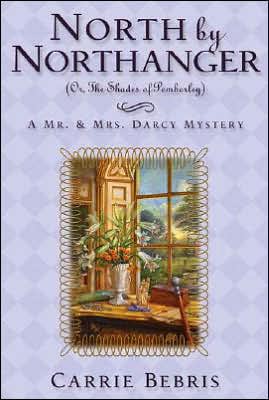
North by Northanger: Or, The Shades of Pemberley. A Mr. & Mrs. Darcy Mystery. Carrie Bebris. 2006. Tor. 320 pages.

Less than a year into the marriage that made her mistress of one of England's finest houses, Elizabeth Darcy knew she still had much to learn about the place she now called home. Of one thing, however, she was certain. A ghost haunted Pemberley.
She was not a ghost in the traditional sense. She did not moan, or shriek, or rattle chains. She did cause rooms to grow cold, objects to fall, or fires to sputter. She did not manifest at midnight to pace on creaking floorboards, visiting in death the rooms she had occupied in life.
Yet the continued presence of Lady Anne Fitzwilliam Darcy was as real and pervasive as that of any spectre.

I definitely enjoyed Pride and Prescience, the first in Carrie Bebris' series of mysteries starring Elizabeth and Darcy. Sadly, my library does not have the second volume in this series, Suspense and Sensibility: Or, First Impressions Revisited, so I was unable to read it. (Though based on B&N's description, it unites characters from Sense & Sensibility with Pride and Prejudice. Specifically a Bennet sister with a Dashwood cousin.) But. I was delighted to pick the third one up!

Elizabeth is pregnant with their first child. And while she's not as nervous as her husband, she's not completely anxiety free. Distractions exist to keep her mind off of upcoming labor, however. She discovers a letter from Darcy's mother. It's addressed to her, to Mrs. Fitzwilliam Darcy. It was written the day of Lady Anne's death--the day Darcy's sister was born. She speaks of a charm, a statue, that she has hidden but could not find in her time of need. Something that she hoped would protect her and her unborn child. Elizabeth shares this with her husband, of course, and one mystery begins.

It is a mystery that will--for better or worse--lead them to Northanger Abbey and the questionable Tilney family.

This one is a mystery. It is intense in places--as Darcy is charged with a crime he did not commit. But it is also a charming read with plenty of wit and humor. In part, because Lady Catherine is (by necessity) on an extended visit to Pemberley (until Darcy's trial can be held). Can Elizabeth tolerate Lady Catherine during these difficult months? Can she tolerate her "advice"? Can she work with her husband to prove his innocence?

I enjoyed spending time with these characters. I'm still loving Bebris' interpretation of Darcy and Elizabeth. Still finding her characters, and her stories satisfying.

© Becky Laney of Becky's Book Reviews


Wintersmith (MG/YA)

Wintersmith. Terry Pratchett. 2006. HarperCollins. 325 pages.

When the storm came, it hit the hills like a hammer. No sky should hold as much snow as this, and because no sky could, the snow fell, fell in a wall of white.

Wintersmith is the third Tiffany Aching Adventure. The first two are The Wee Free Men and A Hat Full of Sky. As much as I loved The Wee Free Men, I think Wintersmith might be the better novel. It's a great adventure, a great fantasy.

Tiffany has unknowingly walked into danger. Or should I say danced her way into danger, danced her way into story. The story. Of winter and summer. Wintersmith--the elemental god--has fallen in love with her. Even when he finds out that she's no goddess, well, he's fascinated by her, by her humanness. He sets out to become human. But how can the god of winter become human?

No matter if he's a god or a human, Wintersmith's passion means trouble for the human world. In big ways--ice bergs in the likeness of Tiffany--in small ways, Tiffany-shaped snowflakes. Tiffany caused this problem, she'll need to be the one to solve it. Of course, she can count on help from other witches--Granny Weatherwax, Miss Treason, and Nanny Ogg especially--and, of course, the Nac Mac Feegles. Rob Anybody is always there for Tiffany.

I loved this one. I just LOVED it! It was such a great story. This series features some very interesting characters, very enjoyable characters. And the books always offer a little humor too! One of my favorite comedic scenes? When Tiffany begins to read the romance novel the Nac Mac Feegles bring her to "help" her understand the "romance" of the story she has found herself in. I loved the passages about the librarian too!
The librarians were mysterious. It was said they could tell what book you needed just by looking at you, and they could take your voice away with a word. (180)
I would definitely recommend this series!

© Becky Laney of Becky's Book Reviews


Twitter Delicious Facebook Digg Favorites More