Showing posts with label 1932. Show all posts

Swift Rivers (MG)

Swift Rivers. Cornelia Meigs. 1932/2004. Walker. 288 pages.

It was the summer that Chris Dahlberg was seventeen that he mowed the high meadow alone for the first time.

I can't say that I LOVED Swift Rivers. But I can say that I did enjoy it--most of it at least. I checked it out from the library not really knowing what to expect. My plan was to give it a chapter or two to see if it was even something I wanted to read. And it was. Chris Dahlberg is a great hero for an adventure story. After his parents' death, his Uncle became responsible for him. But this responsibility didn't include love and respect. Chris works hard day after day after day with no one to really appreciate him. Since the Uncle absolutely HATES his father--Chris' grandfather--when Chris decides to leave home for four days to check on his grandfather, the Uncle forbids him, warning him that if he leaves he shouldn't bother coming back. For he'll never, ever, ever welcome him back into his home. Knowing that the grandfather is getting older, knowing that there must be a reason why he didn't come to help the mowing this year--like he has every year since he can remember--he makes his decision. He just has to see if his grandfather needs help. He needs to see if grandfather is ready to make it through the winter. The uncle is true to his word, but that doesn't turn out to be such a bad thing. For Chris and his grandfather and a helpful neighbor or two come up with an idea. It's a bit of a risk, it's not really been done before, but if it succeeds, it will be the start of something big. Chris and his grandfather are determined to enter the logging business, to cut down trees, and float the logs down the river, etc.

Half of the novel is the adventure of the logs-down-the-river. How this journey changes Chris. So it's a coming-of-age adventure story set in the 1830s. It's an industrious novel--one that focuses on men hard at work. It's a dangerous job that requires focus and skill and determination.

I liked this one because I liked Chris. I didn't necessarily love all the descriptions of river rafting. But even though I wasn't loving each and every page, I still enjoyed it for the most part. 


© 2011 Becky Laney of Becky's Book Reviews


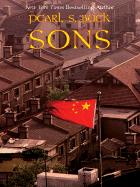
Sons

Sons. Pearl S. Buck. 1932/2005. Moyer Bell. 320 pages.

Wang Lung lay dying. He lay dying in his small, dark, old earthen house in the midst of his fields, in the room where he had slept as a young man, upon the very bed where he had lain on his marriage night. 

Sons is the second novel in Pearl S. Buck's Good Earth Trilogy. While the first novel chronicled the life of the farmer, Wang Lung, the second book chronicles the lives of Wang Lung's three sons: Wang the Eldest (also known as, Wang the Landlord), Wang the Second, (also known as, Wang the Merchant), and Wang the Third (also known as, Wang the Tiger). These are the same three sons that were nameless in The Good Earth.

If Sons has a main character, it is the youngest of Wang Lung's sons, Wang the Tiger. This is the 'rebellious' son that left home when his father took his third woman, Pear Blossom, in old age. The son that left home to become a soldier. If his father's ambition was to buy good land, to create a lasting legacy for his sons, Wang the Tiger's ambition is to be a great war lord, to collect an army--a well-trained, trustworthy army--and to make a name for himself. The book follows his life over several decades. We follow him on his ambitious journey. We witness his crimes in the name of justice--murdering robbers and bandits, murdering traitors in his own army, murdering the opposition. Wang the Tiger being just one of many war lords who choose to go to battle in the spring of each year. (And it really did seem that random. Who are we going to go fight this year? Okay! Let's go!) If there was logic involved in the warring, I missed it. I mean it was "I want more power, more land, more glory, more people paying taxes TO ME" which turned into who do I kill to get what I want. (Or at the very least who would I be willing to kill if he doesn't feel like surrendering to me.)

For the first two-thirds of the novel, Wang the Tiger believes that he will never get married, that he'll never have sons of his own. But. As he gets a little older, he begins to see things differently. He begins to want a son of his own. A son to be a great soldier, a great leader, a great war lord. His ambitions turn from himself to his son. So he asks his two brothers for help. Each brother selects a wife for him. And Wang the Tiger does not have a favorite wife--he barely recognizes that they have faces and are capable of speech. (Yes, it really is that bad.) One wife gives birth to a daughter, another gives birth to a son. (I don't believe the wives or the sons have names. Though I could be wrong about the son. Chances are he'll have a name in the next novel, A House Divided.)

So do you think that this son will grow up to please his father in every way? Or will this rebellious son have a rebellious son of his own?

This novel doesn't exclusively focus on Wang the Tiger. We also learn about Wang the Landlord, his two wives (still nameless), his sons and daughters (also nameless) and Wang the Merchant, his wife (still nameless), and their children (also nameless). We see their strengths and weaknesses. We see how these brothers relate to one another--on the rare occasions they come together. It's interesting to see how the brothers treat Wang the Tiger. When his future is still uncertain, when his army is unproved, the two are very reluctant to ally themselves with him. But when things change, then they definitely change the way they treat him!

I'm not sure that I "liked" any of the characters in this one. Wang the Tiger can be fierce and cruel when angry. And sometimes his anger is justifiable. But not always. And Wang the Tiger sees himself as being too soft--not hard enough, not cruel enough. He feels that he should be able to kill on a whim without having to be good and angry first. He wishes that he didn't feel what (little) he feels. He's definitely VERY different from Wang Lung. As for Wang the Merchant and Wang the Landlord, I feel what we get are mostly one-dimensional portraits. Wang the Landlord is given to pleasure--selfish pleasure. He doesn't know how to say no--when it comes to himself, when it comes to his eldest son, when it comes to pleasing his two wives and keeping peace in the house. He spends money freely, recklessly. And he has no great ambition in life other than to feel pleasure at every opportunity. Wang the Merchant, on the other hand, is greedy--but in a different way. He's a shrewd business man. He wants to make as much money as possible. He's not above using guile if it helps him make a bit more money with each transaction. He does not want money so he can spend it. He does not believe in needlessly spending money--just because you have it, just because you can, just to show other people how much you've got. He's practical. He's got a plan. Wang the Tiger definitely has thoughts about each of his brothers!

I'm not sure I'd recommend The Good Earth and Sons. But if you've read The Good Earth, I would recommend--unless you ABSOLUTELY hated it--continuing on with the series. It is interesting to see how these two books contrast one another, and to see the family drama continue through a second generation.

© 2011 Becky Laney of Becky's Book Reviews


Have His Carcase

Have His Carcase. Dorothy L. Sayers. 1932/1995. HarperCollins. 448 pages. 

The best remedy for a bruised heart is not, as so many people seem to think, repose upon a manly bosom. Much more efficacious are honest work, physical activity, and the sudden acquisition of wealth.

Harriet Vane and Lord Peter Wimsey star in this mystery novel by Dorothy L. Sayers. After the murder charge against her has been dropped, Harriet Vane needs a good vacation. And so we find her, when the novel opens, on a little trip. But relaxing isn't quite the right word for her vacation. For it turns into another murder mystery. She discovers the body of a man on the beach. She has just enough time to take a few quick pictures of the body--of the crime scene--before the tide begins to threaten both. She seeks help--the police--but the damage has already been done. The body has vanished into the sea.

Is this murder? Is this suicide? There seems to be problems with both theories. Lord Peter Wimsey has his ideas--as does Harriet--but can they ever agree with the police in the matter? As these two set about privately investigating the affair, can they work out some of their personal problems too? For you see, Lord Peter still is madly, deeply in love with Harriet. And. He's still proposing. Often.

I still love Harriet and Lord Peter. I do. I just LOVE, LOVE, LOVE Lord Peter Wimsey! I've included some of my favorite scenes--but none of what I include is a spoiler to the mystery, so don't worry about that!

She fell a victim to an inferiority complex, and tripped over her partner's feet.
"Sorry," said Wimsey, accepting responsibility like a gentleman.
"It's my fault," said Harriet. "I'm a rotten dancer. Don't bother about me. Let's stop. You haven't got to be polite to me, you know."
Worse and worse. She was being peevish and egotistical. Wimsey glanced down at her in surprise and then suddenly smiled.
"Darling, if you danced like an elderly elephant with arthritis, I would dance the sun and moon into the sea with you. I have waited a thousand years to see you dance in that frock."
"Idiot!" said Harriet (151).

"Why didn't you sock him one over the jaw?"
"It was a temptation. I felt that you would love me better if I did. But you would not, in your calmer moments, really wish me to put my love before my detective principles."
"Certainly not. But what's his idea?" (152)

"I may be everything you say--patronizing, interfering, conceited, intolerable, and all the rest of it. But do give me credit for a little intelligence. Do you think I don't know all that? Do you think it's pleasant for any man who feels about a woman as I do about you, to have to fight his way along under this detestable burden of gratitude? Damn it, do you think I don't know perfectly well that I'd have a better chance if I was deaf, blind, maimed, starving, drunken, or dissolute, so that you could have the fun of being magnanimous? Why do you suppose I treat my own sincerest feelings like something of a comic opera, if it isn't to save myself the bitter humiliation of seeing you try not to be utterly nauseated by them? Can't you understand that this damned dirty trick of fate has robbed me of the common man's right to be serious about his own passions? Is that a position for any man to be proud of?"
"Don't talk like that."
"I wouldn't, if you didn't force me. And you might have the justice to remember that you can hurt me a damned sight more than I can possibly hurt you."
"I know I'm being horribly ungrateful--"
"Hell!" (167)

"I could kiss you for it. You need not shrink and tremble. I am not going to do it. When I kiss you, it will be an important event--one of those things which stand out among their surroundings like the first time you tasted li-chee. It will not be an unimportant sideshow attached to a detective investigation." (203)

"Now then! My dear, what's happened? You're all of a doodah!"
"Peter! I believe I've been kissed by a murderer."
"Have you? Well, it serves you right for letting anybody kiss you but me. Good heavens! You raise all sorts of objections to a perfectly amiable and reasonably virtuous man like myself, and the next thing I hear is that you are wallowing in the disgusting embraces of a murderer. Upon my soul! I don't know what the modern girl is coming to." (234)
I would definitely recommend Dorothy Sayers. Particularly, Whose Body, Strong Poison, and Have His Carcase.


© 2011 Becky Laney of Becky's Book Reviews


Twitter Delicious Facebook Digg Favorites More