Showing posts with label adult fiction. Show all posts

Signs and Wonders

Signs and Wonders: A Harmony Novel. Philip Gulley. 2003. HarperCollins. 224 pages. 

The summer Barbara Gardner turned sixteen, she was crowned the Tenderloid Queen by the Lawrence County Pork Producers.

While I enjoyed the first Harmony book very much, I haven't quite been able to appreciate the later books in the series. (The Christmas novella was nice, however.) Signs and Wonders, the fourth book, is the biggest disappointment to me yet. I am finding things that made me laugh out loud in the first book--the 'observations' about how church meetings go--are making me cringe now. Because what I took for light fun in the first book--and even, to a certain degree, in the second book, I now feel is over-the-top mocking. In a condescending, mean-spirited way. To laugh with characters that are quirky are one thing--to make them be 'the joke' five hundred thousand times in a row--is another. The sentimentality lessons which I found more charming than annoying in the first book are now much too much for me to endure. Because I now feel he is pushing an agenda, that he has a message, and if you don't agree with him, well, you'll end up being the next big joke.

I don't know if I'll continue on with the series or not.

© 2011 Becky Laney of Becky's Book Reviews


Just Shy of Harmony

Just Shy of Harmony. Philip Gulley. 2002. HarperCollins. 272 pages.

Sam Gardner sat on the porch the Monday after Easter. 

Home to Harmony delighted me. It was a story collection with heart. There were stories that made me laugh, smile, and almost cry. Just Shy of Harmony is not a collection of stories; it is a novel set in Harmony. Readers follow this small town from Easter to Easter--the course of one year. There are essentially three or four stories:

The pastor Sam Gardner is having a crisis of faith: he no longer believes in the God he's supposed to preach about. He's realized that he has at least eight of ten signs of depression, and he finds the church much too overwhelming. And those feelings keep him from being able to pray. When he confesses to the elders of the church, they decide to take turns preaching each week. Which is good--the first few weeks--but Sam learns that not everyone has more than one (or two) good sermons in them. Will stepping back from the chaos of the church--the endless meetings, etc.--help him believe in God's goodness again?

Asa and Jessie Peacock won the lottery in Home to Harmony, but they refused to accept the money. In this novel, they struggle with their decision when EVERYTHING goes wrong all at once. If they accept the money, can they use it wisely?

Wayne Fleming has started dating Deena Morrison. But that relationship is threatened by the return of Wayne's wife, Sally. Sally thought she had a very very good reason for leaving Wayne and their kids last year. She wanted to spare them the pain of watching her die. But now she's having second thoughts about that decision, now she wants her family back. The community thinks they know everything about Sally, but what they don't know about her health, well, it surprises almost everyone. Can this community come together to help this family in need?

Dale Hinshaw feels "led" to start a Scripture egg ministry. By feeding chickens small pieces of paper with Bible verses on them, he hopes that the eggs they lay will minister to people, to shock them perhaps, into the faith. But this ministry is just a little too weird for the town to get behind and support.

While I didn't love this book--at least not as much as Home to Harmony--it was a nice read.

© 2011 Becky Laney of Becky's Book Reviews


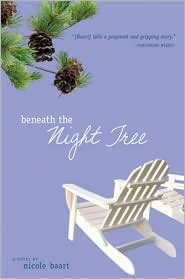
Beneath the Night Tree

Beneath the Night Tree by Nicole Baart. 2011. Tyndale. 400 pages.

Daniel hummed in his sleep. It was an unconscious song, a midnight lullaby, as familiar to me as the sigh of my own breath. I fell asleep at night listening to the cadence of his dreams, and when I woke in the morning, his quiet melody was a prelude to birdsong. 

Julia DeSmit, our heroine, is a single mom essentially raising two kids. One, Simon, is her half-brother, who's now ten. The second, Daniel, is her son. She isn't all on her own. She lives with her grandmother--the woman who raised her.

Julia DeSmit is used to feeling a bit lost, a bit of a wanderer--though that isn't really the case. She has strong family roots and unlike her mother she knows how to be responsible and loving and compassionate. Still, she has certain dreams of her own, a vague idea on how she wants her life to go. And so when one of those dreams seemingly starts to come true--a marriage proposal from Michael, her boyfriend, well, you'd think she'd be happier.

But Julia is learning that love isn't always simple, that some people are worth giving second chances. Parker, the biological father of her son, contacts her and wants to know if their one night together resulted in a child. And slowly--one or two words at a time--she catches him up on all he's been missing. But the decision to allow him into their son's life isn't automatic.

Parker may be just what Simon and Daniel need. A strong, smart father figure who gives his time and attention...he is the exact opposite of Michael in oh-so-many ways.

And that's just the beginning...

This is the third novel in the series and I enjoyed it very much. The first two are After the Leaves Fall and Summer Snow.

© 2011 Becky Laney of Becky's Book Reviews


The Autobiography of Mrs. Tom Thumb

The Autobiography of Mrs. Tom Thumb. Melanie Benjamin. 2011. Random House. 425 pages.

I suppose it would be fashionable to admit to some reservations as I undertake to write the History of My Life. Popular memoirs of our time suggest a certain reticence is expected, particularly when the author is female. We women are timid creatures, after all; we must retire behind a veil of secrecy and allow others to tell our stories. To that, I can only reply, "Rubbish!" I have let others--one other, in particular--tell my story for far too long. Now is the time to set the record straight, to sort out the humbug from the truth, and vice versa.

Mercy Lavinia Warren Bump (Vinnie) is the star of Melanie Benjamin's novel The Autobiography of Mrs. Tom Thumb. The novel begins with a quick reflection of her life mentioning her celebrity wedding with Tom Thumb (Mr. Charles Stratton) and honeymoon. (On their honeymoon tour they stayed over at the White House.) They married during the Civil War, but their wedding was THE BIG STORY of the day. For some the details of what she was wearing, of what she was buying, was more important than news of the battles. But the novel soon goes back to the beginning of the story. Readers learn of her childhood, of her school years, of her one (or possibly two terms) as school teacher before she was "discovered" and left her quiet life for show business.

Her first exposure to the 'real world' to show business, may not have been the best. (But it could have been a lot, lot worse). But she was determined to be somebody, to be somebody no one would ever forget. A dream that led her to writing P.T. Barnum. And she did indeed become famous! Her fame only grew when she married General Tom Thumb.

The novel focuses on her life, on her relationships. Specifically her relationship with P.T. Barnum. There were many, many things she loved about her life, about being famous, about touring and performing. But she didn't love everything.

The novel, this fictionalized autobiography, is a reflection. It shows a grown woman reflecting on the choices she's made in her life. And one of the things she regrets in this novel is the fact that she brought her younger sister with her into the world, into her crazy touring-and-performing life. She blames herself for her sister's death.

I found the novel fascinating. I found it impossible to put down. It was so captivating, so emotional, so exciting.

The novel mainly focuses on the 1860s, 1870s, and 1880s.

© 2011 Becky Laney of Becky's Book Reviews


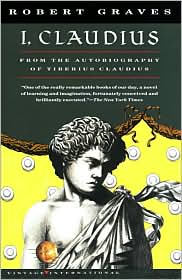
I, Claudius

I, Claudius. Robert Graves. 1934. 480 pages.

I, Tiberius Claudius Drusus Nero Germanicus This-that-and-the-other (for I shall not trouble you yet with all my titles) who was once, and not so long ago either, known to my friends and relatives and associates as “Claudius the Idiot,” or “That Claudius,” or “Claudius the Stammerer” or “Clau-Clau-Claudius” or at best as “Poor Uncle Claudius,” am now about to write this strange history of my life; starting from my earliest childhood and continuing year by year until I reach the fateful point of change where some eight years ago, at the age of fifty-one, I suddenly found myself caught in what I may call the “golden predicament” from which I have never since become disentangled.

This was an impulse read--or reread. I first read it in 2008 and I liked it. I didn't quite love it. I remember thinking at some point I want to read the sequel, one day I want to finish the story. But I wasn't in a rush. Obviously. But a few weeks ago, I saw it on the library shelf, and, well, I just HAD to read it. (I picked up both books because of course I wanted to read them both.)

What did I think the second time through this one? Well, I just LOVED it. I just loved, loved, loved it. Perhaps because I've changed as a reader. Perhaps because I knew the basic story and was free to enjoy the details more. I don't know why some books are just better the second time around. I would say the biggest difference--for me--was that there was no confusion the second time round. I wasn't lost with the names, I wasn't struggling with piecing together the story. The more I read, the more right it felt.

Anyway, the essentials remain:

Narrated by Claudius, I, Claudius is an often bloody memoir of the Roman empire under Augustus, Tiberius, and Caligula. (It might reference pre-Augustan Roman history, but it does so in a flashback kind of way.) What can I say about this one? The narration varies between being very witty and dry and sarcastic and just downright fun in that sort of way. But I won't lie either. There are hundreds of names from first to last. Some turn out to be key players, some disappear a page or two later--and it's hard to distinguish between the two. I did get lost in more than a few places trying to puzzle out who was who. But at the same time, it was enjoyable. Even though I didn't pick up on every single little detail, what I did pick up on and follow I enjoyed for the most part. The book is full of politics, plots, crimes, murders, and plenty of drama both small and grand in scale. Claudius had three wives and two main mistresses, for example, (one at a time though) and a few of them were truly scary. Livia, Claudius's grandmother, is one of the stars of the novel. She's a truly despicable character--poisoning and plotting to kill off most of the opposition even if the opposition were completely innocent and were her own flesh and blood.

© 2011 Becky Laney of Becky's Book Reviews


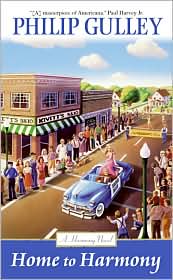
Home to Harmony

Home to Harmony. Philip Gulley. 2002. HarperCollins. 225 pages.

When I was in the second grade, my teacher, Miss Maxwell, read from The Harmony Herald that one in every four children lived in China. I remember looking over the room, guessing which children they might be. I wasn't sure where China was, but suspected it was on bus route three. 

One of the best, best, best books I've read lately. One of those books that had me at hello. It may not appeal to every one. I suppose you might say it is a little sentimental now and then. But. It is truly one of those cozy books that make you feel oh-so-happy. Or, I should say it made me feel oh-so-happy. There were chapters that had me laughing--really laughing hard. There were chapters that had me close to tears. And almost every chapter had something worth quoting. I realized this right away and didn't even try to mark them all. (Some books are like that.)

So the premise of this one is simple. Sam Gardner lives in the small town of Harmony. He went away--to school, to seminary--but now he's back. And unlike some in the town, he's very happy to be back, very happy to be living in Harmony. He understands--better than some--why it may not be a town for everyone, but to him it's right where he wants to be.

The book is a collection of stories. Some set in the past, some set in the present. The stories are arranged by season--spring, summer, fall, winter. And the stories are about the community, the people who live there or who have lived there. We meet Bob Miles Sr. and Dale Hinshaw. The narrator is a Quaker minister.

My favorite stories were: Miss Rudy, Wilbur, and Friday Nights; Burma-Shave; The Birds and the Bees; This Callous Pride; Mutiny; The Twins; Miriam and Ellis; and The Spelling Bee. 

"He had been inoculated with a small dose of Christianity, which had kept him from catching the real thing." (51)

"When love takes you by the hand and leaves you better, that is home." (63)

"The Dale Hinshaw Effect is simply this: If there is a bad idea to be thought, Dale Hinshaw will think it." (67)

© 2011 Becky Laney of Becky's Book Reviews


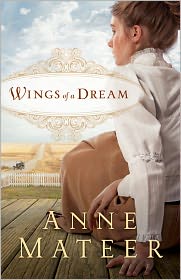
Wings of A Dream

Wings of a Dream. Anne Mateer. 2011. Bethany House. 319 pages.

"Rebekah Grace, if you don't hurry we'll be late for the lecture."

 I had my doubts about Wings of a Dream after reading the first chapter. But. I kept reading. And it didn't take me long to realize that I had judged it much, much too soon. This one hooked me. I ended up loving this sweet historical romance. Was it predictable? Yes. I won't lie. If you demand that your romance, your historical romance, be absolutely original and unpredictable...then you may be disappointed with this one. But if what you're looking for is a feel-good story, a satisfying read that is oh-so-cozy, then Wings of a Dream may just be for you.

This historical romance is set in Texas in 1918 during the last months of World War I. Our heroine, Rebekah Grace, travels to a small Texas town to care for her sick aunt. She arrives just in time--to meet the woman she barely knew, to make a difficult promise, to care for the children in her aunt's care. Rebekah is forced to grow up as she becomes the caregiver of four young children--one just a baby. (Their father is in the army, their mother is dead.)

There is plenty of drama in Wings of a Dream, and I must say that I liked it much more than I thought I would. I wouldn't say it is the best, best book I've ever read. But it was certainly enjoyable!

© 2011 Becky Laney of Becky's Book Reviews


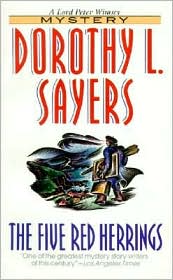
The Five Red Herrings

The Five Red Herrings. Dorothy L. Sayers. 1931. HarperCollins. 325 pages.

If one lives in Galloway, one either fishes or paints. "Either" is perhaps misleading, for most of the painters are fishers also in their spare time. To be neither of these things is considered odd and almost eccentric. 

The Five Red Herrings is the seventh mystery starring Lord Peter Wimsey. Lord Peter is a character that I just love and adore. He's just one of my favorite, favorite, favorite characters ever. So I was so happy to read another mystery in this series.

In The Five Red Herrings, Lord Peter Wimsey is on vacation in Scotland. Though he neither paints or fishes, he is accepted--for the most part--by the community. It's hard to not like him, after all! Early in the novel--though I'm not sure if it's early in his holiday--a murder is committed. The "victim" is someone EVERYONE hates; threats against this guy were so common that they were hardly worth taking seriously. I mean Campbell, the victim, was just impossible to get along with. But now that he's dead, it is up to the police (the constables and detectives, etc.) to solve the crime. And since Lord Peter just happens to be very, very good at detecting, he offers to help them out.

There are six suspects--all artists. Hugh Farren, Henry Strachan, Matthew Gowan, Jock Graham, Michael Waters, and Ferguson. All had motive, all had opportunity. All of them are lying, all of them are hiding things from the police. Since there are so many suspects, since they all appear equally capable of committing the crime, it's just a matter of discerning the truth. Which theory--which plausible theory--is the truth? Which is most likely? Which uses all the clues that have been left behind?

Five Red Herrings is set in Scotland. And, for me, it was a delightful mystery.

Lord Peter Wimsey:

I was born looking foolish and every day in every way I am getting foolisher and foolisher. (52)

One of these days I shall write a book in which two men are seen to walk down a cul-de-sac, and there is a shot and one man is found murdered and the other runs away with a gun in his hand, and after twenty chapters stinking with red herrings, it turns out that the man with the gun did it after all. (114)

The essence of detection is secrecy. It has no business to be spectacular. But you can watch me if you like. (218)

© 2011 Becky Laney of Becky's Book Reviews


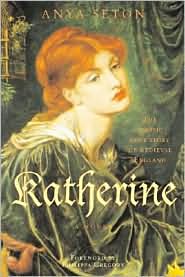
Katherine

Katherine. Anya Seton. 1954/2004. Chicago Review Press. 512 pages.

In the tender green time of April, Katherine set forth at last upon her journey with the two nuns and the royal messenger.

Katherine is the third Anya Seton novel I've read, and it is probably my favorite so far. It is the 'love story' of Katherine de Roet and John of Gaunt (Duke of Lancaster). It's definitely a 'love story' with complications!

The book opens with Katherine traveling with several nuns to visit her sister, Philippa, who is in the service of the Queen. Her arrival catches the attention of at least two guys. The most persistent being Hugh Swynford. Her sister just hopes that her sister has enough sense to know that these men are after one thing and only one thing. And Katherine does know that. But she can't protect herself from unseen dangers.

One day, Katherine takes a walk in the garden thinking that she is alone, that she is safe, only to discover that Hugh Swynford is there and he means to get his way. They struggle. And only fate in the form of John Gaunt, the Duke, saves her. He demands to know what is going on and Hugh stammers something about how he really truly means to marry the penniless girl. The Duke takes the poor woman home to his wife, Blanche, who takes pity on the girl and offers her friendship and kindness.

But within days Katherine learns her fate. She will be the wife of Hugh Swynford. For better or worse, she'll be stuck with him. But it's not like she has much of a say in her future. And a good match is a good match.

Katherine is a novel of medieval England. Readers get more than a quick and easy 'love story.' It's a novel about war and politics and social class. The novel follows the lives of Katherine and John through four decades. The 1360s through the 1390s.

There are plenty of characters to love and hate in this one. And it's a pleasant read. Not too dry, not too boring. But not completely romance either. There is history and politics and talk of war and riots, etc. If you're just looking for romance, this may not be the one for you. But if you want substance to your romance, then you should give it a try.

© 2011 Becky Laney of Becky's Book Reviews


Twenty Thousand Leagues Under the Sea

Twenty Thousand Leagues Under the Sea. Jules Verne. 1870. Puffin Classics. 280 pages.

In the year 1866 the whole maritime population of Europe and America was excited by a mysterious and inexplicable phenomenon.

I didn't seek out an abridged version of this Jules Verne classic. But when I discovered that the edition I'd checked out from the library was abridged--after I was four or five chapters into it--I didn't try to 'fix' it either.

I'll start with the good news. I definitely liked this one more than Journey to the Center of the Earth! There were times I actually thought Twenty Thousand Leagues Under the Sea was a good read. That the story had action and adventure and mystery.

Basic plot: A professor and his servant are 'captured' by a 'sea monster' created by the cranky Captain Nemo.

While reading this one, I started thinking about Frankenstein--which is a good thing, I think. I never did quite decide how the characters matched up between the two. But I think that there are definite similarities in theme. Frankenstein is one of my comfort reads--a book I love and adore. Twenty Thousand Leagues Under the Sea is a good read, but I'm not sure I'll ever want to reread it. If I ever do read it again, I might try the unabridged version.

© 2011 Becky Laney of Becky's Book Reviews


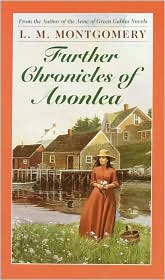
Further Chronicles of Avonlea

Further Chronicles of Avonlea. L.M. Montgomery. 1920/1989. Bantam Classics. 200 pages.

I love L.M. Montgomery. I do. I just love, love, love her books--her novels and her short stories. Chronicles of Avonlea and Further Chronicles of Avonlea are short story collections set on Prince Edward Island during Anne's time. (I get the impression that these stories are set around the time of Anne of Avonlea, Anne of the Island, etc. She has NOT married Gilbert yet.*)

There are fifteen short stories:

Aunt Cynthia's Persian Cat
The Materializing of Cecil
Her Father's Daughter
Jane's Baby
The Dream-Child
The Brother Who Failed
The Return of Hester
The Little Brown Book of Miss Emily
Sara's Way
The Son of His Mother
The Education of Betty
In Her Selfless Mood
The Conscience Case of David Bell
Only a Common Fellow
Tannis of the Flats

This collection features one of the best, best, best short stories, one that practically brings me to tears each and every time: The Brother Who Failed. There is a lot of variety in the stories. Comedy and tragedy and everything in between.

Aunt Cynthia's Persian Cat is the charming story of two sisters, Sue and Ismay, who absolutely hate their aunt's cat, Fatima. But the two are pressured into taking care of the cat while their aunt goes on holiday. One day the cat goes missing, and, well the two are at a loss to know what to do about it. They have to have a Persian cat--the real Fatima or not--to give to their aunt. But how will they find one that is a close enough match...and how will they pay for it?! Sue has been pursued by Max for many, many years. He's proposed over eleven times...he has a solution to the problem...but he wants a different answer to his twelfth proposal...

The Materializing of Cecil is another charming story--another romantic comedy. Charlotte Holmes, our heroine, is an old maid. And she wouldn't mind too terribly being an old maid if anyone had ever wanted her, courted her, etc. If she'd had an opportunity to marry but didn't. So one day--I believe on her fortieth birthday--she tells a little lie to one of the young women in the sewing circle. Before she knows it the whole room is her audience. She spins this tragic tale of a failed love affair. She invents the whole thing, of course, even gives him a name, Cecil Fenwick, and a profession, lawyer. A few months later, however, Charlotte is just shocked--and incredibly embarrassed--that a Cecil Fenwick, a lawyer, has come to town to visit his sister, Mrs. Maxwell. All the details seem to match--that's the odd part. Everyone just knows that this is Charlotte's Cecil. What will she do when she's confronted by Mr. Fenwick?!

Her Father's Daughter is a sadder story, perhaps, because of all the missed opportunities. It's the story of a broken family. Our heroine, Rachel Spencer, has never known her father, David, because her parents quarreled months before she was born. Her parents won't even talk to each other, won't even talk about one another. But Rachel feels the loss. One day she accidentally finds her father and the two share one perfect, perfect day together. She's stumbled across his home in the Cove, and he shows her his place and they talk and laugh, etc. She, of course, wants to come back again, wants to visit him now that she's found him. But he seems to know that her mother will find out about and forbid it. So he tells her not to feel guilty if she can't return, if she can't be a part of his life. Now that Rachel is grown up, now that she's getting married herself, she has a LOT to say about it. And she knows exactly what she wants for her wedding--a wedding with both parents there. Will anyone ever forget her wedding day?!

Jane's Baby isn't my favorite or best. It's about another feud--there are so many feuds it seems in Montgomery's fiction. In this case it is a fight between Miss Rosetta Ellis and Mrs. Charlotte Wheeler. I believe the two are sisters? Anyway, these two are fighting over a baby--an orphaned baby. And Miss Rosetta gets there first. She names the child Cordelia Jane. She takes her home. She loves her dearly and cares for her a few months at least. And then when no one quite expects it, Charlotte kidnaps the baby. She takes the baby home with her, renames it Barbara Jane. But she doesn't let the baby leave her sight for even a minute. She doesn't want Rosetta to have even a few seconds opportunity to get the baby back. But when the baby gets sick, Charlotte knows that Rosetta can help; she may be the only one who can help in time. Will these two women put aside their differences and let this baby have a happy home?

The Dream-Child is definitely a sadder story. It is about a couple who loses their child, David, when he is twenty months old. The two are devastated. But while the husband is deeply saddened by the loss, while he is genuinely in mourning for the child, the wife begins to lose touch with reality. Her loss--her grief, her depression--sends her to a dangerous place. She hears a 'dream-child' call to her by the sea every night. Each night she goes out searching for this child, desperate to reach him in time, fearing that her child doesn't know that his mother is searching--desperately searching--for him. So one night the two are out walking--much like every other night--but this time the crying is real. This time the couple discovers a real toddler. And he DESPERATELY needs a home--a good, safe, loving home. The wife believes that this boy is her boy, that obviously this child has been gifted to her. But the husband wants to find out the truth--where did this baby come from? who are his parents? There is a happy ending--but it is bittersweet, at least to me.

The Brother Who Failed is my favorite, favorite, favorite story of the bunch. It is about the Monroe family. The oldest brother, Robert Monroe, overhears his Aunt Isabel talking to one of his sisters, I believe, about how Robert is a failure, a disgrace to the family. Everyone else in the family has made a success of it, they are somebody. But Robert? What does Robert have going for him except the fact that he's not in debt? Robert doesn't want to believe that his whole family feels this way about him--but part of him fears it just the same. The sister "in conversation" with the mean aunt knows that Robert heard this nonsense. And so she arranges a surprise for Christmas. Readers hear from each member of the family--each brother, each sister--and their testimony speaks volumes!!!! This one is such an emotional story--a true feel-good story. I just LOVED it. You can read the entire story online.

The Return of Hester is a short story about how an older sister, Hester, keeps her younger sister from marrying. Having turned down the love of her life once, the sister agrees to never marry him. This promise being demanded of her while Hester is dying. A few months after Hester's death, this promise is put to the test. Will she ever get her happily ever after?

The Little Brown Book of Miss Emily is a short story narrated by Anne Shirley. There's even mention of Diana! The two young women have never really "liked" Miss Emily. She's old. She's red-faced. She's cranky. How could she have ever been young? How could she have ever been beautiful? So the two are surprised when Miss Emily leaves them something after her death. This chest holds some of Miss Emily's cherished memories--including a little brown book. And the two are forced to realize how much they don't know--can never know--about the people in their lives.

Sara's Way is about a stubborn young girl, Sara, who refuses to consider marriage with the oh-so-perfect Lige Baxter, but who is more than happy to consider marriage with the down-on-his-luck Lige Baxter.

The Son of His Mother is about a mother who will NOT LET GO of her son. Not even a little bit. This woman even hates her son's dog because she sees it as competition for his love, attention, affection. This unpleasant woman demands everything from her son. He must never, ever, ever, ever, ever court a woman--must agree to never even consider marriage. It would be impossible for her to live at all if her son were to think of such a thing... This story is not my favorite or best.

The Education of Betty is an odd story. At least Betty is named Betty and not Renesmee. It's narrated by a man disappointed in love. He sees his best friend, Jack, marry his best girl, Sara. When the story opens, he just knows that Sara is the love of his life. Ten years later, Jack dies leaving Sara a single mom. He proposes again--and is refused again. But he takes an interest in Betty. He tells Sara--let me educate your daughter, let me make all the important decisions about her life, her future, let me shape her. The years go by. She grows up. She becomes a beautiful woman--very smart. Her mother is SHOCKED and a bit disappointed that her daughter has a mind and is capable of actually thinking. And her mom worries that no man will ever want her now that she's been "ruined" by thinking deep thoughts. But someone does want her, of course, do you know who?!

In Her Selfless Mood is about a selfless sister who will do anything to take care of her brother.

The Conscience Case of David Bell is the story of what happens when a revival comes to Avonlea.

Only a Common Fellow is about a not-so-common fellow who lets the woman he loves break her promise to marry him so that she can marry her one true love whom she thought was dead.

Tannis of the Flats is without a doubt the WORST story of the bunch. I thought it a horrible, horrible story. It's rich in phrases like, "There is no worse enemy in all the world than a half-breed. Your true Indian is bad enough, but his diluted descendant is ten times worse."

*L.M. Montgomery wrote and published the Anne books in this order:

Anne of Green Gables (1908)
Anne of Avonlea (1909)
Chronicles of Avonlea (1912) -- not that you have to count it as part of the Anne series, but she is a character in some of the stories
Anne of the Island (1915)
Anne's House of Dreams (1917)
Rainbow Valley (1919)
Further Chronicles of Avonlea (1920) -- again not that you have to count it, but Anne is in a few of the stories
Rilla of Ingleside (1921)
Anne of Windy Poplars (1936)
Anne of Ingleside (1939)

© 2011 Becky Laney of Becky's Book Reviews


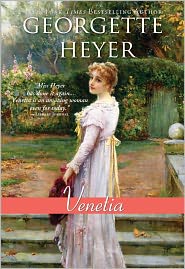
Venetia

Venetia. Georgette Heyer. 1955/2011. Sourcebooks. 368 pages.


'A fox got in amongst the hens last night, and ravished our best layer,' remarked Miss Lanyon. 'A great grand-grandmother, too! You'd think he would be ashamed!'

 I treated myself to a reread of Georgette Heyer's Venetia this week. And if you've read this one--or any Georgette Heyer's historical romances--you'll understand why it's a treat. For there is something oh-so-delightful, oh-so-satisfying about reading one of Heyer's romances. She has a way with her characters, and a way with dialogue.

If Heyer's romances have a flaw--and I don't really think of them as flawed--it would be that they require a bit of patience. You can't rush Heyer. Or, if you do try to rush Heyer, you end up missing the point. For it's all about the journey.

You can skim romances by contemporary authors. You can skim entire paragraphs or entire pages and not miss a thing. You can almost read an entire romance novel of several hundred pages without engaging any thought, any attention to the book in hand. That's why you can read several a day if you're an addict. But you can't skim Georgette Heyer. Not really. Not if you want to really enjoy it. And why bother if you don't want to enjoy yourself?

I've read almost all of Heyer's romances--all but seven, I believe. And Venetia is definitely one of my favorites, one of those in my top five. Now don't ask me to name my absolute favorite and best because I couldn't. I wouldn't even try.

Venetia, our heroine, has spent all of her life in the country having very little to do with society. She's known to two or three families in the neighborhood, perhaps, but for the most part her life has been secluded. She keeps company with her younger brother, Aubrey, whom she adores despite his flaws. He always, always, always has his nose in a book. But her lonely days are about to come to an end...

One day while taking a walk, she meets Lord Damerel. A man with an oh-so-dreadful reputation. He enters the novel in a spectacular way--for better or worse. For he sees the heroine strolling along on his land and impulsively grabs her and kisses her. Leaving her a bit shocked to say the least. They argue. They enjoy arguing. Readers know that Venetia won't be forgetting Damerel any time soon, and vice versa.

But the two really don't get to know one another--and I mean nothing improper by the word know--until her brother, Aubrey, is injured. Aubrey is taking to Damerel's home to recover, and Venetia, good sister that she is, must be near his side. Damerel and Venetia have plenty of time to talk--to really talk--and it's oh-so-obvious that these two are meant to be. That the two are soul mates. But his reputation, his past, is something he can't forget. She knows he's been a bad, bad boy, but she just knows that she loves him, that she accepts him as he is.

Of course, Lord Damerel isn't the only man in love with Venetia. She suffers through two suitors Oswald Denny and Edward Yardley. These two are laughable really. And if you take the time to appreciate them for what they are, for what they add to the novel, then you won't find their scenes boring.

Of course I haven't even mentioned the plot of this one, not really, but I'm not sure that matters so much. For it is the characters that are the heart and soul of this one. I loved, loved, loved the characters in this one. The dialogue of this one is so much fun!!!
"Who are you?" he demanded abruptly. "I took you for a village maiden--probably one of my tenants."
"Did you indeed? Well, if that is the way you mean to conduct yourself amongst the village maidens you won't win much liking here!"
"No, no, the danger is that I might win too much!" he retorted. "Who are you? Or should I first present myself to you? I'm Damerel, you know."
"Yes, so I supposed, at the outset of our delightful acquaintance. Later, of course, I was sure of it."
"Oh, oh--! My reputation, Iago, my reputation!" he exclaimed laughing again. "Fair Fatality, you are the most unusual female I have encountered in all my thirty-eight years!"
"You can't think how deeply flattered I am!" she assured him. "I daresay my head would be quite turned if I didn't suspect that amongst so many a dozen or so may have slipped from your memory."
"More like a hundred! Am I never to learn your name? I shall, you know, whether you tell me or no!" (33)
He released her hands, but only to pull her into his arms. "When you smile at me like that, it's all holiday with me! O God, I love you to the edge of madness, Venetia, but I'm not mad yet--not so mad that I don't know how disastrous it might be to you--to us both! You don't realize what an advantage I should be taking of your innocence!" He broke off suddenly, jerking up his head as the door opening on to the passage from the ante-room slammed. (235)


© 2011 Becky Laney of Becky's Book Reviews


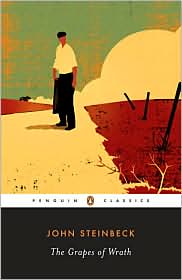
Grapes of Wrath

Grapes of Wrath. John Steinbeck. 1939. Penguin. 619 pages.

To the red country and part of the gray country of Oklahoma, the last rains came gently, and they did not cut the scarred earth. 

It is finished! After three or four false starts, after two library editions and two paperback editions, it is finished. If one word could sum up my experience with this one, it would be sluggish. Of course, I can think of a few other words to describe it. But I'll share just one more: bleak. (Or perhaps bleakity-bleak.)

To sum this one as quickly as possible: The Joad family, devastated by losses in Oklahoma, are forced to pack it all up and head to California where they find that life is just as hard if not harder than they could have ever imagined. There is no happy welcome awaiting them, they are viewed--at best--as mere animals. The only way out of the harsh ugly reality is death. And even death doesn't come easy. The end.

I'm not going to try to convince you that The Grapes of Wrath is a horrible book. I'm not going to try to convince you that The Grapes of Wrath is a wonderful book. I can--at best--only share with you why we're not a good match for one another.

The language. There are certain words that offend me each and every time they're used. It doesn't matter the circumstances. It doesn't matter who or where or why. The Grapes of Wrath uses a great many of these words. (Or should I say repetition of the same word.) Are the words realistic? Probably. But that doesn't change my reaction to those words.

I had big, big, big problems with the character of Jim Casy. This "former preacher" annoyed me every time he opened his mouth. Though annoy isn't quite the right word. I'm not sure offended is the right word either. Simply because people can't use the word offended without people judging them. It's just that his language is so crude, so vulgar. That his "story" is so vulgar--how every time he got worked up "in the spirit" preaching, he had to find sexual release with young women from his church (or audience or wherever). Yes, that was mostly in the past, and yes, this "sin" is what led him to eventually give up faith and religion. Casy, when we meet him, doesn't believe in God, doesn't believe in the church or religion, doesn't believe in prayer, doesn't believe in sin, doesn't believe in the concept of right or wrong, or heaven and hell. Casy doesn't believe in anything at all really. There are no answers, there will never be any answers. Suffer, suffer, suffer, why have hope at all that you will ever do anything but suffer. Any time Casy talked about matters of faith or matters of the heart or anything remotely connected to spirituality or religion or even morals and ethics, I just wanted to yell at him. It doesn't help that according to "experts" Jim Casy is a "Christ figure." I read this on Wikipedia and Spark Notes. There are almost no words for how that makes any sense whatsoever. How someone so foul, so crude, so vulgar, so given-over-to-sin, someone who doesn't believe ANYTHING at all, someone who has no hope, no love, no peace, whose only message is now is all we got, and now is ugly is a "Christ figure." In what way at all--does he resemble Christ? Now, I'm not saying that everyone should hate Jim Casy. I am saying that as a reader I could not stand him.

Another big issue I had with The Grapes of Wrath has to do with style. The narrative style of this one is a bit odd. You have chapters that are clearly narrated by members of the Joad family, chapters that carry this story forward. Then you have chapters that read more like an out of body experience. These may focus on turtles or waitresses or car salesmen. But. They are clearly not like the other chapters in the novel. I never could quite figure out if the people in these chapters were the Joads--as seen from the outside perspective--or if the people (when the focus was on people not trees or turtles, etc.) were meant to represent any family facing this crisis, any family who had been devastated. I don't know that it matters. I just felt a great big disconnect every time we lost the main story, the real story. However, there were a couple of exceptions. There were times when these chapters were beautifully done and the text is richer for them--for the perspective they add to it. (Chapter fourteen comes to mind.)

I struggled with the first sixteen chapters. I did. I wasn't liking it. I wasn't liking it at all. But things began to shift a little with chapter seventeen. I don't know if the story truly improves once the family crosses into California, or if I just was in a better mood that day, but something changed. From that point on, the story while not always pleasant was more compelling. There was still violence to deal with, still some harsh realities to endure, but the second half definitely improved my impressions of the novel.

I am SO GLAD that this wasn't my first introduction to John Steinbeck. If it was, I never would have picked up any of his other books. I would have walked away knowing that I was right, that Steinbeck was not for me. The truth is, that Steinbeck was a good writer--at times great. That he wrote in many, many styles. That he had MANY stories to share with readers. Not just one story over and over and over again. Some of the stories he tells are very funny, very true-to-life, and even in their earthiest moments, there's something there worth reading. His stories can be very raw, very perceptive. The Grapes of Wrath was not for me. Perhaps the message was some things in life are so ugly that no amount of imagination can make them beautiful. I found the lack of hope and the vulgar language to be too much for me. But the very things that I dislike about it--the realistic portrayal of humanity at its weakest and worst--may be the very things some one else loves about it.

I read this book for the Classics Circuit tour. 

© 2011 Becky Laney of Becky's Book Reviews


A Most Unsuitable Match

A Most Unsuitable Match. Stephanie Grace Whitson. 2011. Bethany House. 336 pages.

Kneeling before the tombstone, eighteen-year-old Fannie Rousseau retrieved the scrub brush from the water bucket she'd just settled in the grass. First, she attacked the dried bird droppings on the back side of the stone, then moved on to the deep grooves carving the name Rousseau into the cool gray surface. She'd just finished cleaning out the second s when a familiar voice sounded from across the cemetery.

I just LOVED, LOVED, LOVED Stephanie Grace Whitson's Sixteen Brides which I reviewed last year. So I was super-excited to read her newest novel, A Most Unsuitable Match. And I must say it did not disappoint! It was just as wonderful.

The heroine of this historical romance is Miss Fannie Rousseau of St. Charles, Missouri. The novel opens soon after her mother's death. Though her mother's death is more recent, it is the loss of her father that has broken her heart or spirit. Now with her mother's death, she's being forced to wake up a bit, to realize that she needs to start taking charge of her life, to start managing the house--or managing the staff--and looking into her financial situation. The family lawyer isn't one for talking--or at least not talking honestly and openly with her. His advice has been--for months and months--just get married, when you get married your husband will take care of you and your finances, I'll work with him about your estate. Needless to say, Miss Fannie does NOT want to take his advice. And she doesn't want him to pick out her husband for her.

After a failed burglary attempt, Miss Fannie is urged to gather her mother's jewels to put in a safe under her lawyer's keeping. While going through her mother's things, she discovers a secret. She finds over twenty letters from a woman, Edith LeClerc, and a photograph. It seems her mother has a twin sister. Why didn't her mother ever tell her about her aunt? Why keep something so big a secret? She takes the photograph and the letters to her lawyer, and his advice is whatever you do, don't try to contact her. She may want your money if she finds out her sister is dead. And besides there is probably a good reason your mother wanted nothing to do with her. So leave it alone.

While she went into the lawyer's office wanting to write her aunt a letter at her last known address, she leaves his office almost determined to do something more! What if she were to go looking for her aunt herself....

So Miss Fannie Rousseau and Hannah, her faithful servant, a woman who has almost always been dearer to her than her mother, decide to travel by steamship. On the ship, they meet a young man, Mr. Samuel Beck, and thus this romance begins. He is on a quest as well. He's looking for someone too.

I loved this one. I just LOVED this one. I loved the characters. I loved the story. I though Miss Fannie was just a lovely heroine. And I loved seeing her grow up a bit on her journey. I loved seeing her deepen her faith as she gave up her comfortable life and trusted God to lead her. I loved Sam Beck (or Brother Sam). I loved seeing him grow into his mission and discover his gift for reaching people right where they are with the gospel. And I also loved so many of the characters we meet along the way, Lamar, Doctor Lamotte and his son, Patrick, Honest Abe Valley, etc.

This one is set in 1869/1870.

© 2011 Becky Laney of Becky's Book Reviews


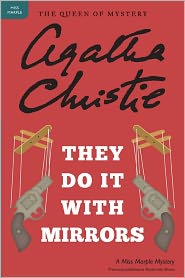
They Do It With Mirrors

They Do It With Mirrors. (Miss Marple). Agatha Christie. 1952/2011. HarperCollins 224 pages.

Mrs. Van Rydock moved a little back from the mirror and sighed. 

Ruth Van Rydock wants her good friend, Jane Marple, to do her a favor. She's worried about their mutual friend Carrie Louise Serrocold. She has a feeling that Carrie Louise is in trouble or in danger. And so she's arranged a visit for Miss Marple. After a few small lies are told to smooth the way, Carrie Louise is happy to welcome her old friend into her home. Miss Marple is introduced to the STRANGE, STRANGE bunch of folks living or working on the estate. Her husband, Lewis. Her daughter, Mildred. Her granddaughter, Gina, and her husband, Walter. Her stepsons from her second marriage, Stephen and Alex Restarick. Her companion-caretaker, Juliet Bellever. Her husband's assistant, Edgar Lawson. (Carrie Louise has been married three times--and it shows. She's carried over wealth and property, but, also children and grandchildren, etc.) Her husband's pet project has him working with juvenile delinquents with part of the estate being converted into a school of sorts. I won't lie, it was a bit confusing at first to see how these characters connect to one another--if they connect to one another. It helps that almost every character seeks out Miss Marple in the days after her arrival. One by one they "unburden" themselves and complain freely about anything and everything.

Of course, it turns out that Ruth had VERY good reason to worry about her friend. And Miss Marple it seems arrived just in time for the drama. Soon there's a murder to be solved...can she solve it in time before more lives are lost?

I enjoy Miss Marple. I do. There is just something satisfying about reading Agatha Christie. While They Do It With Murders isn't my new favorite or anything, it is an enjoyable mystery. Not perfect. But definitely enjoyable enough to recommend.

Ruth to Miss Marple:
"You've always been a sweet innocent looking creature, Jane, and all the time underneath nothing has ever surprised you, you always believe the worst."
"The worst is so often true," murmured Miss Marple.
"Why you have such a poor idea of human nature, I can't think--living in that sweet peaceful village of yours, so old world and pure."
"You have never lived in a village, Ruth. The things that go on in a pure peaceful village would probably surprise you."
"Oh I daresay. My point is that they don't surprise you." (9)

Inspector Curry and Miss Marple:
"This is all very distressing I know. But we've just got to get the facts clear. Get it all clear."
"Oh yes, I know," said Miss Marple. "So difficult, isn't it? To be clear about anything, I mean. Because if you're looking at one thing, you can't be looking at another. And one so often looks at the wrong thing, though whether because one happens to do so or because you're meant to, it's very hard to say. Misdirection, the conjurers call it. So clever, aren't they?" (90)

© 2011 Becky Laney of Becky's Book Reviews


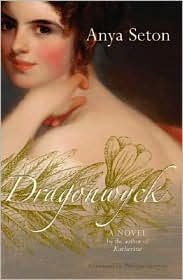
Dragonwyck

Dragonwyck. Anya Seton. 1944/2005. Chicago Review Press. 352 pages.

It was on an afternoon in May of 1844 that the letter came from Dragonwyck. 

Miranda Wells is the foolish heroine of Anya Seton's Dragonwyck. This farm girl has much to learn, and her trusting nature combined with her restlessness is just asking for trouble. The novel opens with Miranda being invited to visit her cousin, Nicholas, and his wife, Johanna, and their daughter, Katrine, in their home, Dragonwyck. Though cousins, the two have never met. For the Van Ryn's are quite wealthy, and the Wells are at best poor relations. But the couple appears--at first--to be looking for a companion for their daughter. Someone not quite a servant, but not quite a real guest either. The wealth and luxury of their lifestyle--especially in comparison to the only lifestyle she's ever known--life on a farm has Miranda thoroughly charmed. Everything that Nicholas says and does just wows her. He seems to be so perfectly, perfect. She just can't help herself, she finds herself falling for him. On her part, I do feel it's just silliness, with more innocence to it than real intent to break up a marriage. But the wife, well, she is unhappy and uncomfortable with Miranda being there. She didn't expect her to be so young, so beautiful, so ready to be charmed by her husband.

How does Nicholas feel about Miranda? How does Nicholas feel about his wife? his daughter? How does Nicholas feel about anyone else? Well. Readers can draw their own conclusions, perhaps. But needless to say, this reader was NOT charmed by Nicholas. He didn't seem all that swoon-worthy to me. And AFTER his wife's oh-so-convenient-death, well, my impressions changed even more--but not in his favor. A true romantic hero, in my opinion, would NEVER EVER propose marriage to a young woman while his dead wife was still in the room.

So do you think Miranda lives happily ever after with Nicholas?!

It's true I was never bored with Dragonwyck. But I also never found true satisfaction with it. Miranda was a frustrating heroine, to me, because she was just too stupid immature. She wasn't all that smart, and she wasn't all that good. (With goodness being a virtue.) There was very little to love in Miranda. That being said, I definitely felt something for her. I pitied her. Miranda's choices weren't all that smart. But NO WOMAN deserves to be treated the way she was treated. And I definitely wanted Miranda to be saved--to either save herself or to be rescued by some good soul. Nicholas. Well, what can I really say about him?! I didn't find him appealing at all. It was just so easy for me to hate him. His flaws are too many to even begin to list. And his strengths? Well, I can't think of any!

Have you read Dragonwyck? What did you think of it? Did you like it? love it? hate it? Do you think it's fair to compare it to Jane Eyre and Rebecca? I definitely see how Dragonwyck is a gothic romance.

Here's how Philippa Gregory's afterword begins, "At the very opening of this far-fetched, romantic novel, Anya Seton takes a great risk with her readers: she shows a foolish young woman reading a far-fetched, romantic novel and gently mocks both the genre and the readers."

Here's the part where I disagree with her:
Johanna is a wonderful thumbnail portrait of a woman whose death we are not going to mourn. Her greed, illustrated in the first moment we meet her when she demands to know if her husband has brought her pastries from town, is wonderfully described. Seeing Johanna, with crumbs on her gown and half-eaten dishes in her room, puts us neatly on the side of Nicholas and the guilty lovers. We are prepared for Johanna's death, and we don't mind when it happens.
By the time Nicholas comes to marry Miranda, Seton has so arranged our sympathies that we are as keen for the marriage to proceed as is Miranda. And so we forgive Nicholas for our suspicion of murder and Miranda for her desire for Nicholas and cupidity for his life. In addition, we agree with Miranda that the farm is a poor place. We forgive both Nicholas and Miranda because we are as bad as they. We don't mind that Johanna is dead, and we want to see Miranda live the high life. (339-340)
It is Nicholas who dominates the book, of course, and it is he who lingers in the mind after the book is finished. What a wonderfully gothic, nightmarish hero-villain he is! He is handsome and beautifully dressed; he is stylish and wealthy. He is absolutely exceptional, and we know this before he even enters the pages of the novel because Seton has the crowd murmur his name before he arrives. He delights us at once. He circumvents Miranda's father, which pleases us since we want to see her freed. He sweeps her away to his home, and his home is a wonder. We think, like Miranda, that he could be saved by true love. We despise his fat wife; we have hopes for his future. (341)
I don't only disagree with her a little, I disagree a LOT. (I might have exchanged a few words with the book.)

© 2011 Becky Laney of Becky's Book Reviews


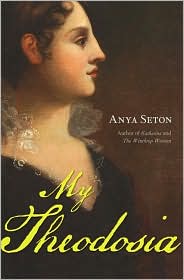
My Theodosia

My Theodosia. Anya Seton. 1941/2007. Chicago Review Press. 432 pages.

At six o'clock on the morning of Midsummer Day, 1800, Aaron Burr's estate, Richmond Hill, was already well into the day's bustle of preparation for the gala dinner to be given that evening in honor of Theodosia's birthday.

My Theodosia was Anya Seton's first novel. When possible I like to begin at the beginning with a new-to-me author. Saving the first book for the end, well, it can end in disappointment. Because if an author keeps improving, then each book will show it.

The heroine, Theodosia Burr, is the daughter of Aaron Burr. At his greatest, her father was Vice President of the United States of America. At his worst, he was a wanted man accused of murder and treason, etc. His greatest fan, by far, was always his daughter. I think he could have done anything, said anything, and she still would have been there standing by him, supporting him with every breath in her body.

I think it is important for readers to know exactly what to expect from My Theodosia. It is NOT historical romance. That is while the novel focuses on Theodosia and the men in her life--her first kiss which came from Washington Irving on her seventeenth birthday, her husband, Joseph Alston, her 'true love', Meriweather Lewis, the novel isn't love and romance and passion. And it most certainly is not about happily ever afters.

My Theodosia is historical fiction. Some who have read it might even call it "historical" FICTION. I'm not one to judge the historical accuracy--or historical inaccuracy--of a novel when I haven't read any nonfiction at all about the subject. I don't have a clue if Anya Seton's characters resemble the people they're supposed to faithfully represent. I do know that in the author's note she claims that the novel is "historically accurate in every detail." And she claims to have read all the Burr biographies, and the published letters of Aaron Burr, and some of the unpublished letters of Aaron Burr. And she claims to have had three sources for the romance between Meriwether Lewis. There are certainly plenty of reviews that say differently. That claim this novel is 100% fiction with no truth in it at all.

The historical time period covered is 1800 to 1812. And for those interested in this period in American history, the novel may prove interesting. I certainly found it fascinating. I read it in two days. And I wasn't bored at any point during the narrative. I can't say that I loved the characters exactly--they were too flawed for that. Aaron Burr being very charismatic and manipulative. But I can say that I found the story compelling and tragic. Maybe I found it fascinating because I didn't know that much. Yes, I knew about the duel. But I didn't know much else. And I certainly didn't know about Mexico. So it definitely held my attention.

© 2011 Becky Laney of Becky's Book Reviews


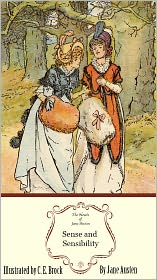
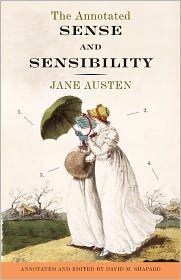
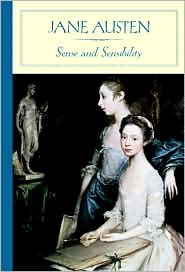
Sense and Sensibility

Sense and Sensibility. Jane Austen. 1811. (The Complete Novels) Random House. p. 3-175.

The family of Dashwood had been long settled in Sussex. Their estate was large, and their residence was at Norland Park, in the centre of their property, where for many generations they had lived in so respectable a manner as to engage the general good opinion of their surrounding acquaintances.

I don't know why I didn't love Sense and Sensibility the first time I read it. I really don't. Because it's just as good as all the other Austen I've read--or reread as the case may be. Could it be that some Austen novels just need to be read twice to be appreciated? Or could it be that this novel was just in the right place at the right time for me to love it? Mood does factor into my experience after all! Could me loving Colonel Brandon's Diary by Amanda Grange have something to do with it? And I couldn't help making comparisons between Sense and Sensibility with Anthony Trollope's The Small House of Allington. Couldn't help concluding that if Austen had been writing it, readers would have had a FULLY, FULLY satisfying ending! (And if Trollope had been writing Sense and Sensibility, well, Marianne might not have given up some of her notions.) Let's just be thankful that Thomas Hardy did not write Sense and Sensibility or The Small House of Allington!

I almost feel silly not including a summary, but it also feels silly to include a summary. I feel so many people will already be familiar with the basics of the story. So here it goes.

Soon after the novel opens, Mr. Dashwood dies. The second Mrs Dashwood has three daughters and not much money. For most everything went to Mr. John Dashwood, the eldest son, the son of the first Mrs. Dashwood. He promised his father--promised--that he would provide for his half-sisters and step-mother. (For the father was very distraught about his family and how they would be able to live.) To borrow from Dr. Seuss, he said and said and said those words, he said them but he lied them*. Is that exactly fair? Yes and no. He just didn't remember that he's not allowed to have thoughts and opinions of his own. He forgot to take into account his wife, Fanny Dashwood. He forgot that she would most definitely have an opinion on his her their newly inherited money. The scene between the two is quite remarkable and clever. If you can view them as villains providing comic relief. If you consider them as human beings, well, their actions can't be justified so don't even try.

So after many uncomfortable months sharing a home with John and Fanny Dashwood (and their son), Mrs. Dashwood decides she's had enough. She agrees to move with her three daughters to a small cottage (on the estate of Barton Park) where they can afford the rent. It isn't a perfect situation because it brings them into the company of Sir John Middleton, Lady Middleton, and Mrs. Jennings, just to name a few. (A little of their company goes a long, long way). But they are happy enough in their own way.

So Elinor is the oldest daughter, Marianne is the middle daughter, and Margaret is the youngest daughter. Marianne is the one most like her mother. And Marianne and Mrs. Dashwood can clash quite a bit with Elinor. Not in a needing Dr. Phil way. Not in an outrageous way. Just that they have different ideas about love and life and the finer things in life like art, music, poetry, novels, etc. To be quite honest, I found myself taking Elinor's side for many of these conversations. Marianne's strong opinions, well, they irritated me in many ways. And quite a few actually disgusted me. I had to keep telling myself, she's seventeen, she's seventeen, she's seventeen. She just hasn't experienced enough of life, of love, to know any better. Not that I believe she needed to outgrow her spirit. For her passionate spirit, her love of life, isn't a bad thing.

So Sense and Sensibility is a romance. Readers meet the men in Marianne and Elinor's lives. We meet Edward Ferrars, the brother of Fanny. Perhaps because she is already connected--for better or worse--with Fanny, Elinor doesn't hold that against him. It helps that he's not really anything like his sister. We meet John Willoughby, Marianne's ideal romantic hero. He wins Marianne and Mrs. Dashwood over with very little effort. They're just convinced that he's the best thing ever. The problem may just be that he knows it. He knows the effect he has on women--the more romantic, the more passionate, the sillier, the easier it is for him to make them swoon. And then there is Colonel Brandon. The man that perhaps only Elinor can fully appreciate--at least at the beginning. Marianne being too silly, going "he's so old, he's so ancient, who could ever love someone so old and decrepit?" Never considering that he is close to her mother's age--give or take a few years. How old is old? Well, he's 35. (Not so old in my opinion! Definitely not so old that he should just give up living life.)

I loved Sense and Sensibility. I did. I wouldn't say it was like I was reading it for the first time. Because goodness knows that when I read it the first time I was obviously not paying attention to the little things or even the not-so-little things. I suppose I was reading with a limited attention span? Or maybe I just wanted to get done quickly? I read with attention and appreciation this time. I read for pleasure. I read at my own pace. I took in each scene without rushing, without pushing. I saw just how much there was to see.

For example, I noticed that sometimes it wasn't always what was being said that mattered. That sometimes it was all about what was NOT being said. There were many, many times when the words that were being said, weren't meant at all. There were conversations veiled in polite words that were actually quite mean-spirited, full of insult, and revealing some jealousy. The text actually has quite a bit of sarcasm and humor or wit to it. That Elinor might say all the right things--at times--but that doesn't mean she's always sincere. "It was impossible for [Marianne] to say what she did not feel, however trivial the occasion; and upon Elinor, therefore, the whole task of telling lies when politeness required it always fell" (57). And so I was able to "see" more of Elinor this time through, perhaps, in her conversations with the Middletons and Palmers and Steeles and Mrs. Jennings. Like this little gem:
"I have a notion," said Lucy, "you think the little Middletons rather too much indulged; perhaps they may be the outside of enough; but it is so natural in Lady Middleton; and for my part, I love to see children full of life and spirits; I cannot bear them if they are tame and quiet."
"I confess," replied Elinor, "that while I am at Barton Park, I never think of tame and quiet children with any abhorrence." (58)
Almost from start to finish, I thought about each conversation, each relationship. Was it all pretense and politeness? Was it sincere or genuine? What wasn't being said? Was what being said the truth and nothing but the truth? Who did Elinor feel comfortable with? Who was she real with?

So there was much to think about this time through. And I wasn't solely thinking of Elinor throughout. I was trying my best to appreciate all the characters--even the ones I didn't especially like....like Willoughby. What I noticed was that Austen created plenty of flawed characters. That there are characters that have a few quirks, a few flaws, a few weaknesses, but that also have their good qualities too.

So I definitely LOVED this one and would recommend it. I would suggest that you go at your own pace, that you don't read it in a hurry. That you let yourself enjoy it in the moment, enjoying each scene as part of the whole, instead of trying to rush to the happily ever after ending.

*Adapted from "What Was I Scared Of?"

© 2011 Becky Laney of Becky's Book Reviews


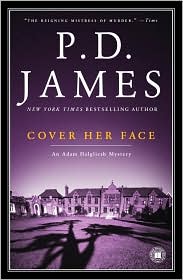
Cover Her Face

Cover Her Face. P.D. James. 1962. 254 pages.

Exactly three months before the killing at Martingale Mrs Maxie gave a dinner party. Years later, when the trial was a half-forgotten scandal and the headlines were yellowing on the newspaper lining of cupboard drawers, Eleanor Maxie looked back on that spring evening as the opening scene of tragedy. Memory, selective and perverse, invested what had been a perfectly ordinary dinner party with an aura of foreboding and unease. It became, in retrospect, a ritual gathering under one roof of victim and suspects, a staged preliminary to murder. 

I enjoyed P.D. James' Cover Her Face. This mystery is the first novel starring detective Adam Dalgliesh. I'm guessing that I'll love other titles in the series even more.

As is the case in any mystery series, I think readers only grow in appreciation as they read on. There's a big difference, in my opinion, between reading your first Miss Marple or your first Rex Stout, and reading your sixth. You just grow to appreciate the little things more and more as you go on. So I do have high hopes for the series. I enjoyed it enough that I'd WANT to read more in the series.

I never know quite how much to say about any murder mystery I review. I could tell you a little bit about the victim, a little bit about the suspects, a little bit about the detectives on the case. But when it comes down to it, it's not those elements that will "sell" you on the novel itself. You either like mysteries or you don't.

Cover Her Face is a nice cozy mystery set in England. The Maxie family is at the center of this mystery. For it is their somewhat-newly-hired-maid, Sally Jupp, that is the victim. The opening chapters show just how many within the family, within the community, disliked her. Some thought this single mom had a bad attitude, an inappropriate smugness perhaps. The Maxie family definitely isn't perfect--it doesn't take the detective, Adam Dalgliesh, long to figure that one out! So many people within the family--or connected to the family--are lying! But what are they lying about? what are they concealing?

For me, what makes ANY mystery novel enjoyable is the investigative process. I LOVE to witness the suspects being interviewed and interrogated. I love to hear the detectives talk about their theories as to who did it and why. And I did enjoy Adam Dalgliesh, I did.

While I wouldn't say this novel is my favorite mystery that I've read this year, it was a good read, very enjoyable, a nice beginning.

© 2011 Becky Laney of Becky's Book Reviews


Elephants Can Remember

Elephants Can Remember. Agatha Christie. (Hercule Poirot). 1972. 212 pages.
Mrs. Oliver looked at herself in the glass. 

While I tend to prefer Miss Marple to Hercule Poirot most of the time, when Christie's Poirot novels feature Ariadne Oliver, it becomes trickier to play favorites. For Ariadne Oliver is a writer, a writer of detective fiction or mysteries. And her perspective on the genre--and on writing in general--which is shared with readers is just fun. In Elephants Can Remember, Mrs. Oliver is approached by a woman who is memorable for all the wrong reasons:
 A large woman. Ample proportions, large white champing teeth. What in French could have been called une femme formidable, but who definitely had not only the French variety of being formidable, but the English one of being supremely bossy. Obviously she either knew Mrs. Oliver, or was intent on making her acquaintance there and then. The last was how it happened to go. (8)
 Mrs. Burton-Cox is "concerned" about her son who is contemplating marrying Mrs. Oliver's goddaughter. Now, Mrs. Oliver has had many goddaughters through the decades, and this particular one has slipped her mind completely. Well, until forced to remember by Burton-Cox's persistence. Celia Ravenscroft is the goddaughter in question, the "inappropriate" young woman, that Burton-Cox does not want for her daughter-in-law. Why? Well, there was a family tragedy when Celia was just a girl. Her parents died in an apparent suicide. No one knows if her father shot her mother or if her mother shot her father. No one knows what provoked this murder-suicide. Was her mother involved with another man? Was her father involved with another woman? And though it seems almost everyone has forgotten this tragedy except Mrs. Burton-Cox, she's convinced that Celia is not good for her son.

Mrs. Oliver is annoyed by Mrs. Burton-Cox. But she is also curious. She was out of the country when the tragedy happened all those years ago, and, well, part of her wants to know the truth--or as much of the truth can be discerned or concluded--herself. So she decides that if Celia will give her blessing, she'll begin to snoop around. And she'll even call her old friend, Hercule Poirot. He may be able to connect the dots and solve this one.


I enjoyed this one. I did. I don't know that it is my favorite Agatha Christie, but it is a good read.


Favorite quote:
"Human curiosity," said Poirot. "Such a very interesting thing." He sighed. "To think that we owe to it throughout history. Curiosity. I don't know who invented curiosity. It is said to be usually associated with the cat. Curiosity killed the cat. But I should say really that the Greeks were the inventors of curiosity. They wanted to know. Before them, as far as I can see, nobody wanted to know much. They just wanted to know what the rules of the country they were living in were, and how they could avoid having their heads cut off or being impaled on spikes or something disagreeable happening to them. But they either obeyed or disobeyed. They didn't want to know why. But since then a lot of people have wanted to know why and all sorts of things have happened because of that. Boats, trains, flying machines and atom bombs and penicillin and cures for various illnesses. A little boy watches his mother's kettle raising its lid because of the steam. And the next thing we know is we have railway trains, leading on in due course to railway strikes and all that. And so on and so on." (25)
"As one journeys through life," said Poirot, "one finds more and more that people are often interested in things that are none of their business. Even more so than they are in things that could be considered their business." (117)


© 2011 Becky Laney of Becky's Book Reviews


Twitter Delicious Facebook Digg Favorites More