Showing posts with label Horror. Show all posts

Thirteen Years Later

A while back I was given my first exposure to Jasper Kent's TWELVE. In short, TWELVE completely blew my mind. A mixture of Horror and Russian historical fiction, Kent's first novel, in my opinion, was nothing short of brilliant. I'm still extremely upset that it didn't end up on the Hugo ballot. If you haven't read TWELVE, stop reading this review of the sequel. There are some unavoidable spoilers for book one in this review. Do yourself a favor and go buy the first book. You will love Jasper Kent for all eternity. I sure do. My wife may or may not be jealous.

Seriously, this is your last warning.

When I took a vacation to England earlier this year it won't come as a shock to most of you that one of the first things I did was find a bookstore. I don't think I passed a bookstore without going inside to browse over the course of the entire trip. One of the many books on my shopping list was Kent's THIRTEEN YEARS LATER. The novel takes place--wait for it--thirteen years after the first novel in the midst of the Russian Revolution. Aleksei Danilov is older, but he is still a spy. He has put himself in position to out the entire network of people who wish to overthrow the current tsar, Aleksandr the First.

And then Aleksei comes across a message from his long dead friend Maks. His friend who died at the hands of the vampires in the prior novel. The suspense and mystery that made the prior novel so good are both injected into the novel right away. The vampires from the prior novel were of the non-sparkling variety, and were freaking terrifying. So the instant they were reintroduced in THIRTEEN YEARS LATER, my heart started beating just a bit faster.

What makes this novel great isn't just the promise of Horror elements being mixed with Historical Fiction. The skill with which Kent writes his characters and handles the historical information is the key to the success of this novel. Aleksei is brilliant. To see how much he has changed from that character we were all introduced to in TWELVE is exactly what we like to see in a series. It is an odd sort of progression. He is more hardened from his experiences with the vampires (much more cold-blooded in some ways), yet at the same time he is much more soft-hearted due to his children. Speaking of, his son, Dmitry, is a welcome character. The inexperience of his youth is so well portrayed.

What I appreciate the most about THIRTEEN YEARS LATER is Kent's ability to make me enjoy the history of the setting. He doesn't the reader over the head with unimportant details. Even better than that? This made me want to pick up some history books and brush up on some Russian history. Not only that, but Kent's ability to lend some much needed freshness to the vampires themselves is so refreshing.

In my mind, TWELVE scores an easy 9.8 on my "Books Completely Filled with Awesome" scale. THIRTEEN YEARS LATER didn't quite capture the lofty score of its predecessor. In only scores a 9.7. I know. How can Jasper Kent live with himself?

THE THIRD SECTION is the next novel in the series. I honestly can't think of any novel I'm more excited for.

Recommended Age: 17 and up.
Language: Some fairly strong language at times
Violence: Some of the creepy stuff Kent pulls off is simply astounding.
Sex: Talked about, but never graphically.


A Matter Of Blood

What was the last book you read that completely blew you away? It shouldn't be too hard to remember, especially given the astounding levels of mediocrity present in most genres. Being book reviewers--and this may shock you--we read a TON of books. Horror novels fall apart in the end. Thrillers can almost always be predicted. Dan Brown is, well, Dan Brown. Fantasy gets bogged down in the cliché. SF makes you feel like you need an advanced physics degree. Every genre has its downfalls. We read so much that for a novel to really stand out, it has to be special.

Have we piqued your curiosity yet?

A MATTER OF BLOOD, by Sarah Pinborough, is special. A lot of horror and mystery with some paranormal and SF thrown in--it pushes all our buttons in all the right ways. The novel takes place in a near-future London...only this London isn't the vacationers dream as we know it. Corruption on all levels has very nearly brought the city to its knees, and it is in the midst of a mini-apocalypse of sorts...only no one seems to notice or really care. Our main PoV is Detective Inspector Cass Jones. He is investigating a high-profile, public shooting of two boys when he is assigned an additional case dealing with a serial killer. Things are "calm" at this point in the novel, and soon go completely off-the-scale crazy.

The very first thing that jumps out in A MATTER OF BLOOD is Cass Jones. He has serious issues. Guilt. Attitude. Drug addiction. Family problems. He doesn't try to be witty. His life sucks too much to even attempt it. But he is also extremely good at his job. His skill helps the reader initially overcome the "dirt-bag" vibe he exudes early in the novel. Don't worry, by the end of the novel you'll love Cass in spite of his problems...or perhaps because of them. We wouldn't even really call Cass an antihero. Though that is all the rage, Cass Jones never wears that particular hat. The attraction to this particular Inspector is that he comes across as a seriously flawed, yet hard working guy. That "human" aspect is the key.

Pinborough's description in this novel is awesome. From describing the dingy streets of London, to the macabre crime-scenes, to the way the whole police business now works is all top-notch. Hazy flashbacks come at the perfect time. It all sets the ambiance and the mood just right. There is a palpable Raymond Chandler, noir/hardboiled feel to it all. That alone should be enough to get you salivating.

The pacing in A MATTER OF BLOOD is fantastic. Right when you start to worry that things are slowing down too much, Pinborough twists the story a little more through whatever means she feels necessary. She doesn't ever seem to be afraid to genre-mix, and she never pulls punches. Ever.

Perhaps the best descriptor we can give is that A MATTER OF BLOOD is everything we hoped R. Scott Bakker's thrillers would be. Where his thrillers have ultimately fallen completely flat in our opinion, Pinborough's novel succeeds and excels in every way.

Now like we said, the endings of 90% of all Horror novels unravel and completely ruin the rest of the novel. Not so in this case. The ending to A MATTER OF BLOOD made it better. It was completely perfect, awesome and shocking. When everything starts coming together, and the Cass puts the pieces together, it is SOOOOOO GOOD. We couldn't turn the pages quick enough. While a bit of it was kinda predictable, it was the sinister and horrific tiny twists that made it frakking awesome.

Sarah Pinborough's A MATTER OF BLOOD is horrific and gripping. It immediately vaults into our top novels not just in the Horror genre, but in any genre. It perfectly encapsulates all the great qualities of Crime Fiction, Horror and Urban Fantasy with a little SF thrown in for kicks. EVERYONE should read this novel.

Currently A MATTER OF BLOOD is only available in the UK, though Sarah hinted at a US release through Tor later this year. We don't care if you import it now or wait for the US release. We've already bought the UK edition, and we'll buy copies of the US version too. Yeah, for us it was THAT GOOD. Her second novel has just been released in the UK, and we will probably put our lives completely on hold to read it.

Recommended Age: 18+
Language: Gritty Crime/Horror. Tons of swearing, but it never actually feels overused somehow.
Violence: Our good buddy James Barclay (we owe you one, James) pointed us in Sarah's direction with the promise of awesomely described violence. He's never led us astray before, and he didn't this time. Crazy, crazy stuff.
Sex: Talked about very, very openly and often, but never actually shown in explicit detail.


Down the Road

DOWN THE ROAD is one more entry into Zombie-genre novels that we wound up reading, even after we swore off of them. Gallery Books has been good to us, and for the most part we like what they give us, so we couldn't deny this little guy a read. This is Bowie Ibarra's debut (and only, so far) novel.

It's pretty obvious right from the start that this book isn't reinventing the wheel, and that Ibarra is an extreme amateur at writing. Transitions are rushed, descriptions (except for the gore...holy crap) were minimal, and character development was only nominal. All of this can be somewhat expected though when you see the page count total at just over 200, and then see that the print is very large. This book took a whole 40 minutes to read. Seriously.

It is our highly-respected, ultimately-important opinion that if you are going to write a "zombie-flick" book in a market this saturated, you have to at least make an effort to do something different. DOWN THE ROAD is exactly what you would expect from a zombie book, with every twist and turn telegraphed pages and pages before it comes. Especially if you have even watched just one movie. To the author's credit he actually wrote the book some years ago through a publisher that didn't care to have him revise or edit the book. What this means is that we have an M. Night Shyamalan situation. Little-to-no outside opinion or oversight can be a bad thing. DOWN THE ROAD is basically every zombie movie you have seen, put on paper. It's like Ibarra didn't even try to be original, and instead just focused on being as gruesome as possible.

Everything you would expect from a zombie story is here. We have the fascist government trying to contain the outbreak and even the clichéd guy who gets bitten and for some reason doesn't tell anyone. It was kind of annoying reading a story we have all read or seen about 100 times before. Even in a novel this short we found that our patience wearing extremely thin.

The books succeeds in its aim, but sadly the aim wasn't very high. If the book were any longer we probably would have gotten bored and put it down. Though to be honest, we kinda wished the book actually was shorter in places. There were a few very explicit sex scenes that really didn't need to be there. They were strictly shock-value, gratuitous and fantastical. After reading the "Director's Commentary" at the end of the novel, we have to wonder if--no offense to him--Ibarra wasn't just putting some of his own fantasies down on paper. It was kind of creepy.

That's a lot of negative stuff about the book. Why did it warrant Mediocre instead of Hate? Well...we didn't hate it. Duh! OK for real, there were some things Ibarra did completely right.

While there was tons of zombie-centered gore and action, at its heart DOWN THE ROAD is a decent character study of a man losing his grip on humanity. Ibarra was brilliant in how he focused the narrative on something extremely simple. It is basically the main character's attempt to get home. He has to traverse a normally very easy, very enjoyable trip "down the road" to his hometown. On the way he encounters all sorts of horror and it certainly takes its toll on him. The rest of the characters don't have enough to evolve at all, but each reaction to the zompocalypse is unique and gives a feeling of depth to the rest of the cast.

The narrative does have a large hiccup early on in the book. George (Why does every zombie book HAVE to have a character named George!? C'mon people...the homage to Romero is getting old) decides to totally murder two people. This type of degeneracy should have come after some experiences that led him to it. Instead it comes out of nowhere and immediately makes us dislike the main character. Even with this hiccup, something pretty cool happened as we read the book. The more degenerate he became, the more we hated the guy. Then oddly we rooted for him even more and hoped he would succeed and redeem himself.

Aside from that early misstep George's experiences and reactions were interesting enough and pretty well executed...though unoriginal. Another great thing was that Ibarra didn't feel the need to evolve his zombies, or give them some gimmick/flavor-of-the-month (probably because it was originally written a while ago), in order for them to be interesting. We all love 28 Days Later, but we all kind-of/sort-of wish, inside, that the zombies were a bit more classical. DOWN THE ROAD features the absolutely relentless, shambling, slow-yet-terrifying, zombies that started the genre. The zombie scenes are intense, and not just for the graphically described gore and violence. Ibarra gives these meat-eaters a real sense of malevolence that many Horror books lack from even the most horrific creatures.

We are going to use our cop-out summary for this book, yet again. If you are a Zomb-fan, you'll probably love it. If you aren't a Zomb-fan, and looking for something in the Horror genre, it will probably be better to look elsewhere.

Recommended Age: 18+. Adults only.
Language: Ridiculous amounts of every curse word. Overused.
Violence: Lots and lots and described in disgusting gruesome detail. Zomb-fans will not be disappointed. Most people will wonder why so much description was on this and so little on setting.
Sex: Multiple extremely explicit scenes. They are so graphic and unnecessary that this scores huge marks against the book for us.


The King of Plagues

In case there was any ambiguity before, we want to set the record straight regarding Jonathan Maberry. He is freaking awesome. On every freaking level. Maberry's THE KING OF PLAGUES was just released, giving us our much needed Joe Ledger fix.

In this latest novel, Joe Ledger is drawn back into the world of horror and terrorism when the Royal London Hospital is leveled by bombs without any warning. As the death toll rises, Ledger realizes he can't watch from the sidelines--regardless of his life being left in shambles following the climatic events of THE DRAGON FACTORY. Ledger faces off against old enemies and new as a secret group weaponizes the Ten Plagues of Egypt.

It's easy to point at Maberry's ability to write action as the best part of his work. It IS fantastic. While unashamedly being over-the-top at times (not a bad thing--we love it in this series), the action scenes in THE KING OF PLAGUES are always crisp, brutal and easily pictured. No, as well as Maberry does action, he does character better.

We absolutely love the characters in the Joe Ledger series, and their progression in THE KING OF PLAGUES is top-notch. One thing that Maberry always manages to do is have his characters behave in realistic ways. Joe Ledger for example has faced terrorists, zombies, Nazi-clones, genetic monsters and now plagues. Many other authors would say, "Oh, well, my character is freaking awesome. Nothing phases him." Not Maberry. His characters are continually hammered emotionally and psychologically. The horrors they face actually affect the characters. Remember, one of the characters is the shrink for the DMS (more on him later). What this does is create a very real sense of danger for the characters Maberry is writing. He has no qualms about killing main characters (we're still feeling one in particular), but Maberry also seems keenly aware that killing a character isn't the worst thing you can do. No, scaring them psychologically can be FAR worse. If only more authors could find this delicate balance...

The great thing is that Maberry does a perfect job of showing just how damaged Joe Ledger really is. With every new person he meets, Joe can't quite hide all of his emotional scarring. Joe tries to cover his issues with jokes and sarcasm--always perfectly timed and written--but it becomes more and more apparent that Joe barely keeping his head above water.

There are a few things we should point out that took away slightly from the overall experience. None of them are huge issues, but in a book this good the little things have a way of standing out. First is the passage of time. For the readers, it has been a few years reading these novels. For Joe, it has been several months. It becomes difficult for the reader to remember that all of this is happening all in a really short amount of time. It magnifies the stress Joe has been under, but because of the time between novels the reader won't necessarily get that full impact. The solution? Heck if we know. Just keep the time-line in mind, we guess.

One of the other issues has to do with the PoVs. The Joe Ledger PoV is in first person while the others are in 3rd Limited. Nothing wrong with this. Our small problem is that it seems like Joe is featured less than what he deserves. It was Joe Ledger that made us instantly love PATIENT ZERO. Like THE DRAGON FACTORY before it, THE KING OF PLAGUES focuses a bit too much on the secondary characters. This is more of a subjective thing, but we like Joe Ledger a lot, and want to see more of his exploits. We want him right at the center of the action.

Almost in direct opposition to the previous issue, we felt Rudy was under used. He is a great character, and in desperate need of some more PoV time. Again, a very minor problem we had.

Yeah, that's it. We didn't have any other problems, and those small issues we had are so ridiculously minor. The novel was THAT good. We get big, stupid grins on our faces every time we even think of this series.

THE KING OF PLAGUES is a freaking thrill-ride of a novel. The pace is fast and furious. the action gripping. The terror and horror described and executed perfectly. The humor spot-on. Is it any wonder that Jonathan Maberry is on of our absolute favorite authors?

If you haven't started this series, you are missing out on one of the most fun series in print.

Recommended Age: 17 and up.
Language: All sorts, and really strong.
Violence: Weaponized Ten Biblical Plagues. Assassins. Cults. Joe Ledger. Yeah, there is a TON of awesome violence. There aren't many who do it better than Maberry.
Sex: It's talked about, and there are a few scenes that Maberry cuts away from before getting at all graphic.


I Don't Want to Kill You

One of the lessons we have learned during our time reading and reviewing novels is that it is hard just to get a book published. Making that first novel solid? Even harder. But you know what’s even MORE difficult than that? Writing a series where every novel gets better and better.

Dan Wells’ horror series staring John Cleaver—a teenager who has all the early tendencies of a serial killer—comes to a conclusion (just for now hopefully) with I DON’T WANT TO KILL YOU. The novel is fantastic, even better than last year’s terrific MR. MONSTER.

So what makes this novel so good? We’ll start with the character, John Wayne Cleaver. If you’ve read the previous two novels in the series (which hopefully you have, otherwise why the heck are you even reading this review?), you know that John is an odd sort of fellow. He obsesses over serial killers; their methods, their psychology and their motives. John also worries that he will become one, so he sets rules for himself. He also works (secretly from his classmates at school and the rest of the town) in the family mortuary. The great thing about John is that for every instance where he scares the reader with his macabre thoughts and actions, he also makes the reader laugh. The balance here is perfect, and even better than the previous novels. At the same time, however, Wells has made this character grow. Remember, the events of the three novels all take place collectively over a very short amount of time. John has seen and experienced a lot since he first faced off against the killer from I AM NOT A SERIAL KILLER, and it shows in I DON’T WANT TO KILL YOU. There are moments where the realizations of what he has done both harden and simultaneously soften John. It is such an interesting and unique dynamic that we couldn’t help but love completely.

I DON’T WANT TO KILL you follows John as he attempts to track another killer in town. This time though, the Killer is in town because John issued a challenge. He also finds himself in a relationship of sorts. Nothing having to do with emotions is ever clear-cut with John, and Wells’ writing really showed just how out of his element John really is when “dating.”

The pacing of the novel is smooth as butter 99% of the time. Wells’ writing is perfectly accessible while not feeling dumbed-down. We’ve read this novel twice now, and it was just as good, and fast-paced the second time as it was the first. Don’t expect to set the novel down once you get going. Give yourself a few free hours and down it one sitting—it’s what we do.

There are a few things we do feel like we should mention. First, it would have been nice to have been reminded of John’s physical appearance. It’s super minor, but would have been helpful all the same. There was really only one moment where the pacing, story and dialogue lagged. There is a moment later in the novel where John is talking on the phone to a Pastor. You’ll know it when you get to it, but for us it was really flat compared to the rest of the novel. Essentially the dialogue is wooden, and the Pastor acts like he’s under a compulsion spell. It’s a small section that is over quick, but it could have used a revision.

One of the main things that certain people complained about with Dan’s last novel, MR MONSTER, was about the continued supernatural angle. They complained that John was never really facing off against true humans, and that he only killed so-called “demons.” I DON’T WANT TO KILL YOU follows the same method. There is a strong supernatural element. Deal with it. It’s what sets this series apart from simply being “Young Dexter.” There are some fantastic lines towards the end of this novel where Wells sets this series apart, and makes it far better than the Jeff Lindsay series it is inevitably compared to.

I DON’T WANT TO KILL YOU is a terrifying and absolutely thrilling novel. John Cleaver is a believable teenager who readers instantly love, and who’s story readers will be sad to see come to an end (for now). This novel—and this series—is one of the best we have read, and is a must read for EVERYONE. Easily one of the best novels of the year.

Recommended Age: 14 and up.
Language: Like two words.
Violence: Yeppers. Dan deals with suicides, murders and monsters. He also has his requisite embalming scenes.
Sex: Nope.


Dan's Website:
http://www.fearfulsymmetry.net/

Writing Excuses:
http://www.writingexcuses.com/

Dan's series in order:
I AM NOT A SERIAL KILLER
MR. MONSTER
I DON’T WANT TO KILL YOU


Can You Survive the Zombie Apocalypse?

CAN YOU SURVIVE THE ZOMBIE APOCALYPSE? by Max Brallier has managed to break us out of our staunch anti-zombie book stance. It is a choose-your-own-adventure book for an adult, with a setting of...you guessed it, a zombie apocalypse. We figured it was different enough we could relent on our anti-zombie attitude for one more book.

We are glad we did. This book is a riot!

There is remarkably little to actually review about this book. You'll know whether it is something you're interested in or not just after reading that it is a Zombie Choose-Your-Own-Adventure. You don't expect great writing, storytelling, plot, character development, etc from this thing.

To clear something up right away so that your expectations are set it in the right place. This isn't like those Facebook quizzes about how long (or if) you would survive the Zompocalypse. We expected it to be a little more of a "test your knowledge" kind of thing. It wasn't. The scenarios set up in the book are beyond ridiculous and set up a more humorous exploration of the idea.

There were some real missed opportunities because of this. Mainly to make it a little more serious, on the note of World War Z and the like. We thought that if Max had taken the subject matter a little more seriously (Yeah yeah...taking zombies seriously? You don't have to say it...) we could have been treated to something a little more entertaining or involving. Instead we get various escapades that run the gamut from bunkering in a B&N to read zombie books (PATIENT ZERO, THE NEW DEAD, THE WALKING DEAD, WORLD WAR Z, etc) to getting our face peed on by a Hell's Angel, to watching Zombie Overlord George Romero direct his zombie underlings. We understand that B-Movie zombie styles definitely are what some people are after, and that's fair. We just wished it was a little darker, a little more serious (Big surprise, right?).

There are a few dozen different endings, but from what we could tell none of them were really..."endings". Except the ones where you died of course, and believe us, those were spectacularly gruesome. You will die in just about every fashion imaginable. Some of them are downright horrific and others and brilliantly hilarious.

Another thing that sort of bugged us was that the choices were often too stupid. We feel like anyone reading this is going to be a zombie aficionado, and be frustrated by the stupidity of choices. When Nick sent an email saying the title of the book, Steve originally thought Nick was asking him the question "Can you survive the zombie apocalypse?". He involuntarily started thinking about what he would do. This is the kind of book we feel it should have been. Instead we get things like this particular example in one of the early divergent paths where you can choose to go home to your apartment. While there you have the choice to get drunk or leave for somewhere else. Who is going to choose the Xanax and Coors!? If you choose to leave, the supplies you take with you are a Nintendo DS and a few copies of Hustler. That will throw you completely out of the immersion aspect of a CYOA book. Our bet is that Zombie Fans are going to like the book because of its pulp and fun factor, but be frustrated and quickly bored by the inanity of many of its segments.

Honestly, the book is pretty silly, but hilariously entertaining. A brilliant idea with a fairly lack-luster execution. However, some of the opportunities it DIDN'T miss however are the multitude of homages to Zombie Culture, as well as Americana references. Those little things were almost always good for a chuckle. Whether or not you liked Seinfeld, just the image of George Castanza running at the kid's birthday party and knocking them all over referenced as your character flees from zombies, will be enough to warrant caution about drinking anything while reading, lest you spurt it from your nostrils in laughter.

Bottom line: It's not an award-winning, reality-altering, genre-bending book. It is a riotous throwback to our time as kids when CYOA books were a complete craze, and it certainly delivers on that front. We aren't going to recommend this book to everyone, but if you think, at all, it sounds fun, you will want to check it out. The price-tag of $16.00 bucks is pretty steep for what will keep you occupied for 45-60 minutes tops, but hey...that's never stopped you dorky Zombie-Freaks before has it?

Recommended Age: 18 +
Language: Yeah. It doesn't take long for the F bombs to start flying and then they don't stop.
Violence: Wow, lots of it, in comedic amounts, and extremely bloody and graphic.
Sex: Some. Nothing graphic.


Pariah

Bob Fingerman's PARIAH has been sitting on our to-review list for a while now. We were just so thoroughly bummed out by it that after finishing it we were just too depressed to get any momentum going on a review.

Let's get the introduction out of the way. PARIAH is a zombie book. Another one. Now that alone should tell you that there were conflicting opinions on the book. Steve loves zombies and Nick thinks they have been played out. However the book didn't really satisfy either of us.

PARIAH, initially, had a lot going for it. After the initial, obligatory, "outbreak" scene we are treated to more of an examination of humanity in the worst of conditions than an actual zombie book. In fact there were really only two good "zombie" scenes in its entirety. While we know that zombie stories are only told so that we can examine the enemy in ourselves, and quit spending so much energy hating and fearing the enemy without, there still needs to be some Horror aspect. So it didn't fulfill the desire for a good Horror book for Steve. Not only that, but the examination of humanity wasn't very deep or thought provoking so it didn't fulfill that aspect for Nick. The book was more about starvation, masturbation, sex, boredom, and porn than anything else.

Oh yeah, don't forget the copious amounts of vulgarity.

One thing the book DID succeed with, was being just chock-full of twisted humor. But when this is the best thing we can say about a book you know it's got to be one you steer clear of. It also did an extremely good job of painting a very bleak picture for what a zombie apocalypse could be like. It wasn't a popcorn zombie bashing novel where resources are abundant. PARIAH's world would be a very frightening one.

An extremely common thread that ties zombie stories together is a very close examination of human nature and social issues. PARIAH makes it seem like it Bob was intending to do just that, but lost himself and the plot in the midst of all the depravity. It could be THAT is actually the idea he wanted to explore, but it never came through.

We spend a lot of time with these characters and, so, get to know them very well. This is another strength of PARIAH. These characters aren't the type you forget when you close the book. They are all unique, very well characterized, and with the lack of (with a couple exceptions) cliches the characters are all pretty original. Put a tally mark, for this category, in the painfully lonely "Win" column for PARIAH.

Most of the book is an exploration of these characters doing...well...nothing. OK maybe not nothing. They starve. Look at porn. Have sex. Want to have sex. Think about having sex. Look out the window. Think about sex some more. Cry. Get naked. You get the idea. There is no plot. At a certain point of the book some random chick is seen meandering her way through the zombies, without being noticed. When she starts interacting with the characters...let's just say she doesn't bring much to the table. For us anyway. She brings lots of food to the table for the characters, which is nice. At least they have something to do now instead of whine of about food and sex. At least we can read about them eating now instead of lamenting about sex.

This random chick is called Mona, and gets zero character development, and only serves an impetus for the group to leave the confines of their safe haven. We get no explanations or anything.

PARIAH's story, for us, is one of boredom and disappointment. At no point was the book thought-provoking, as it should have been. At no point was it an examination of social issues, or the Horror genre. The book had no real depth, or plot. It was less of a zombie book (with only 2 real zombie scenes) and more of a plot-bereft study of as we said before "...well nothing".

Recommended Age: Honestly? None. OK, in the interest of being helpful...still none. OK fine. Adults...if anyone...
Language: As we said earlier. Copious Amounts. Enough to be distracting. Of course...it didn't distract from much as there wasn't much to be distracted from.
Violence: There are a couple zombie-style violent scenes and a couple other less graphic scenes. Not much here.
Sex: TONS. The characters are either being eaten by zombies, having sex, thinking about sex, wishing they could have sex, talking about sex, looking at porn and masturbating. Etc...


Other Kingdoms

If you are an occasional or obsessive reader of the Horror genre, you know the name Richard Matheson. To say the guy is a legend and and icon doesn't even begin to scratch the surface. He is one of our favorite authors, and the author of our favorite works of fiction ever, I AM LEGEND. When we realized Matheson had a new novel being released this year, OTHER KINGDOMS, we contacted the lovely people at Tor and begged them for a review copy. We aren't exaggerating. We groveled, offered bribes in the form of cookies, and even promised our undying love. We aren't quite sure which one was the clincher, but a copy of OTHER KINGDOMS came as did an accompanying chorus of angels.

Even on his worst day, Matheson is amazing, and OTHER KINGDOMS is one of Matheson's better days. The story plays out as an "honest" memoir of one Alexander White. As an 82-year-old man, White relates his personal story of surviving the WWI at the age of 18. He is injured in the trenches, and upon his discharge moves to a small town in England rather than going home to the US. It is here in the small English town of Gatford that White tells of his encounters with the strange and horrific that eventually lead him to becoming the author he is "today".

There are many layers to this story which could have completely ruined it. We have an 82-year-old Alex telling us about his days as an 18-year-old. The simple difference in age and experience is enough to potentially make the novel unreadable. Not so for Matheson. Matheson recently celebrated his birthday (Happy Birthday, Sir!), and is able to perfectly capture the voice of an old, wise, rambling Alex White. He also manages to hit perfectly the tone of an immature, self-pitying 18-year-old. The blend of the two is near flawless.

What OTHER KINGDOMS comes down to is a love story. "What?" you say. "A love story? I thought this was Horror?" Don't worry, it is. Matheson illustrates how perhaps nothing can be more horrific than love itself--especially to a young man. Matheson simultaneously shows how beautiful it can be. It is incredible how easily this literary legend (A. Black would be proud! You readers will understand the reference when you read the novel) juggles several opposing views throughout the entire work.

The pacing and flow of OTHER KINGDOMS moves along effortlessly. So effortlessly, in fact, that we read the novel in just a few hours. We didn't want to put it down, and when we did, the story occupied our thoughts until we were compelled to pick it back up and finished it.

Now to be fair, we need to point out some of the things that bothered us, and that may bother you. This novel gets fairly sexual in a couple of places. It isn't as graphic as, say, Richard K. Morgan, but the sections may shock you nonetheless. To us, some of them were a little much. For most of the novel, there is no language whatsoever. But then when it happens, it is very strong and therefore even more shocking--we assume this was the intent of it. Maybe this all will bother you, maybe not--like any book, it isn't for everyone. Regardless, it is hard to dwell on it due to how quickly the novel pulls you along.

Matheson's OTHER KINGDOMS is a unique experience. It contains Matheson's amazing writing and the horror he is know for while also containing love and tragedy. It is the type of novel that grows more enjoyable the more you think upon it. Should you read it? Without question. Happy Birthday, Richard Matheson, and thank you for giving you readers a new novel to devour. May you have many, many more years.


Recommended Age: 18+
Language: When it comes, it is strong and shocking. It contrasts dramatically with the rest of the novel where the narrator intentionally avoids swearing.
Violence: From descriptions of the trenches in WWI to the young Alex White's adventures in England, things can get violent, horrific and descriptive. Matheson has been doing this for longer most, so he knows exactly how to do it.
Sex: Uh, yeah. Telling you exactly what happens would kill the story for you, but suffice it to say that things get fairly graphic for a spell.


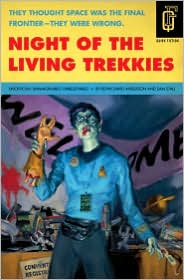
Night of the Living Trekkies

Night of the Living Trekkies. Kevin David Anderson & Sam Stall. 2010. July 2010. Quirk Publishing. 256 pages.

It was late winter of 2009, and Jim Pike was in Afghanistan.

Jim Pike, our narrator and a war veteran, is working security for a Houston hotel hosting GulfCon, a Star Trek Convention. But this convention will soon be unlike any other--for the convention--and eventually Houston itself--will be overrun with zombies. Pike teams up with an assorted crew of survivors--many Trekkies--their mission is to survive long enough to escape Houston, for they fear that when help comes, it will not be a distinguishing help. It's dramatic; it's violent; it's funny.

I am not a fan of zombie novels. I'm not. I am not a big fan of violence--blood, guts, etc. But I am a Star Trek fan. And I can appreciate a good, quirky read. So while this one may not be for everyone, I enjoyed spending an afternoon with this one.

© 2011 Becky Laney of Becky's Book Reviews


And Then There Were None

And Then There Were None. Agatha Christie. 1939/2000. Buccaneer Books. 192 pages.

In the corner of a first-class smoking carriage, Mr. Justice Wargrave, lately retired from the bench, puffed at a cigar and ran an interesting eye through the political news in the Times. He laid the paper down and glanced out of the window. They were running now through Somerset. He glanced at his watch--another two hours to go.

Ten men and women arrive on Indian island never suspecting the dangers and thrills that are to come. None will leave the island alive. Mr. Justice Wargrave, Vera Claythorne, Captain Philip Lombard, Emily Brent, General MacArthur, Dr. Armstrong, Anthony Marston, Mr. Blore, Mr. and Mrs. Rogers. It seems each has been lured to the island without really knowing their host or hostess. Mr. and Mrs. Rogers being engaged as servants. Miss Vera Claythorne being engaged as a temporary secretary. The others all received letters of invitation. It soon becomes clear that not everything is as it appears.

There are some not-so-hidden clues embodied within a nursery rhyme poem, "Ten Little Indians" (found on pages 21-22 of my edition; you can get an idea of it from this site, though it's not an easy read, it seems it's a combination of two poems, one from 1868 and the other from 1869).  There are also ten little figurines--as each guest dies, a figurine from the table vanishes as well.

Readers get a chance to learn a little about each character. Especially the ones that survive the first few deadly days. None of the characters are particularly likable--none so delightful that you'd want to know them--especially not under these circumstances.

I would say this Christie novel comes the closest to inspiring fear and horror in its readers. There isn't anything particularly cozy or delightful or charming about this one. There are no clever detectives--arrogant or not--to counterbalance the violence. Almost everything that I love about Christie's mysteries seems to be missing in this one. But even though I don't especially "like" this one, I can't deny that it was cleverly written.

© 2011 Becky Laney of Becky's Book Reviews


Twelve

We apologize for the delay of this review. It somehow fell through the cracks, and no one is more upset about this than us. Why? Because TWELVE is an amazing, amazing novel. Jasper Kent, the author, has given us in the US (all you UK readers have known this forever) one of the best books of the year.

Call it Alternate History, Alternate Historical Fantasy, Fantasy, Horror or Alternate Historical Horror...it doesn't really matter. All you need to do is read it and enjoy it for what it is:

Completely awesome.

TWELVE is set during Bonaparte's invasion of Russia in 1812. That's your historical context. The story itself follows Alexei Danilov, a spy for the Russian army, as he and his fellow spies attempt to disrupt Bonaparte's incursion. The group of spies turn to a group of twelve mercenaries whom they call the Oprichniki to wage a covert and bloody war against the French. Obviously they have their own agenda, and Alexei has little trust for them.

The story is told in a first person narrative from Alexei's PoV. The style of storytelling is immediately engaging and reminiscent both of a memoir and a translated work. This serves both to put readers in a Stoker state of mind as well as help the reader more easily buy-in to the story. Kent is quick to show the flaws of every character--something you readers know is extremely important to us. Alexei isn't a white knight, and much of the novel revolves around his involvement with his mistress/prostitute.

The twist involving the Oprichniki is not a twist at all. It shouldn't be surprising to anyone that they are vampires--no this isn't spoiling anything for you. Kent does an exceptional job at helping the reader suspend his/her disbelief, and helps the reader accept that it isn't our discovery of the monsters that is important, but Alexei’s discovery. This element is handled extremely well, and we truly feel his growing horror as it plays out.

We love Kent’s use of description from Alexei and his team, to the Oprichniki, to Russia itself. The historical events are told without feeling like we are being kicked in the face by historical detail. Kent’s pacing is smooth the entire novel. The actions of the characters are believable.

But here is what this book does best. Towards the end of the novel, a point is made about how having ALL the information means you really have nothing. Having all the information means you have the lies as well, thus crippling your ability to discern what is true. Throughout the novel, Kent saturates the reader with differing opinions and takes on the transpiring events putting you in the exact same position of the narrator, Alexei. This was executed impeccably, and sets it above nearly every other novel we read during 2010.

A few nitpicks? Yeah we have them. Once it becomes clear to Alexei who/what the Oprichniki are, we couldn’t help but wonder why Alexei didn’t alter the way he hunted them. Also the dialogue grew a bit melodramatic at times. But that’s it.

The ending of the novel with its corresponding twist and final showdown is fantastic. It caused us to forgive and (nearly) forget the few issues we had. It is a deeply personal ending that perfectly fits the tone of the novel.

TWELVE is one of the better novels we have read in years. Characters in shades of gray mixed with well-described Russian history and darkly-violent Oprichniki…what more can anyone ask for? With the sequel, THIRTEEN YEARS LATER, coming out soon, now is a good time to grab your copy of this tremendous first novel.

Recommended Age: 16 and up.
Language: Very, very infrequent, but strong when it occurs.
Violence: Yep. Described perfectly and brutally.
Sex: Alexei has taken up with a prostitute. Noting is ever described in detail, but it is insinuated and mentioned very frequently.


The Walking Dead - Book 1

It is natural that various art mediums look to each other for inspiration. The movie industry has been looking to novels for, well, ever. TV looks to movies and novels. Graphic novels, lately, has become to go-to source for new visual material. While watching AMC’s Mad Men and Breaking Bad, new ads began showing for a new show. A show about zombies. The Walking Dead. It looked fantastic.

The first season of the show came and went in a six episode spurt. On the whole it was quite good, though it was lacking fairly heavily in the pacing department. That’s not what this review is going to talk about (though you absolutely should watch the series!). What this TV series did was direct all sorts of attention to the comic series that inspired the TV show. There was a blog post on Jonathan Maberry’s blog back in November talking about zombies (THE NEW DEAD Zombie Authors Speak Out). In it, there were several mentions of the Robert Kirkman comic series THE WALKING DEAD. If all those authors in that blog post like it, then it needs to be read.

This series has been going on for a while now, and it is easy to see why. After reading THE WALKING DEAD: BOOK ONE (a hardback collection of the first 12 issues of the series), we were struck by the very human element in it. After all, what are zombies if not a reminder to what we become without our humanity?

The art in the first 6 issues is tremendous. We follow Rick Grimes as he wakes from a coma into a world that has suffered a zombie apocalypse. Just the surface detail there is very 28 Days Later, but it diverges from there quickly. Rick is looking for his family. He is trying to grasp his new reality. He encounters fellow survivors and makes his way through zombie infested Atlanta. The story and art are gripping.

One of the main reasons we don’t read too many comics or graphic novels is due to the poor dialogue. Typically you get panel after panel of people looking shocked and amazed while they repeat over and over, “What?!” It gets old. Or the characters will say and do completely ridiculous things—things that stand out because of the art medium used and because there are so few words. Even the great graphic novels have these issues (WATCHMEN, for example). THE WALKING DEAD isn’t immune to these issues. It has them in abundance. But even with them, the story and the characters help overcome the shortcomings.

A brief comparison to the TV show: the show does a great job of taking the important parts of the comic series and using them effectively. The sections where Rick & Co. cover themselves in zombie guts are terrific. There are dozens of little things that make the comic series great that were used by the TV series (many of which we can’t get detailed about without spoilers). However, as graphic as the TV show can get due to their amazing make-up skills (seriously…they need an award), the comic still manages to be even more shocking. The end of the first 6-issue arc is fantastic and shocking while the TV series covering the same material isn’t quite as good, but shocking in a different way.

With that comparison out of the way, we were left with all new (to us) material to read—namely the second half of BOOK ONE.

The first thing that jumped out was the change in art. Chris Adlard took over for Tony Moore starting at issue #7, and the difference is jarring. Mainly the problems come about with character recognition. Since the entire series in is black-and-white, it is extremely important for characters to look very different—otherwise they start blending together. This is the case frequently in the last 6 issues compiled in this hardback collection. As the pages go by we became more accustomed to the change in style, but we still had problems. These art clarity problems begin a domino effect. It becomes harder to keep track of the large cast (a cast that grows and shrinks dramatically with the casual flip of a page), as well as their races. Dialogue becomes harder to follow. But again, this all becomes manageable as the reader grows used to the new art style.

As for the story itself? It is slow. Much of the danger present in the first six issues of the collection dissipates in the in the last six. This isn’t to say it didn’t hold our attention, but it WAS slow. Really it isn’t until the final events on the farm they encounter, and the last two pages of the collection that things suddenly are thrust back into chaos. Awesomeness indeed.

What struck us was the bleakness of this first volume. Everything is harsh. No character can truly stay happy of free of sorrow for long. Characters die with no regard or how important they were up until their demise.

THE WALKING DEAD: BOOK ONE is a fantastic read. It clocks in at over 300 pages, and contains a bonus short story as well as a ton of other extras. We aren’t gonna lie, it’s pricey. $35 for the hardback. Is it work getting? We think so (as evidenced by the subsequent purchases we made of the following two hardback volumes). Look, we don’t read comics ever. They just don’t interest us. However THE WALKING DEAD has become an exception. The strength of the story has us hooked.

In the coming months we’ll be reading and reviewing each of the hardback collections (currently numbered at six). There may be spoilers from prior issues in our reviews. We want to treat these as almost more of a discussion beginner rather than just a straight review. We encourage you to read along with us. If the hardback is slightly too pricey, you can also pick up trade paperback editions that come in six-issue collections (Links: Vol. 1 and Vol. 2). Obviously this review covered the first two trade publications. We don’t plan of reviewing graphic novels with any frequency. THE WALKING DEAD is our exception.

Recommended Age: 17 and up.
Language: Tons. Not to mention a liberal does of sexism mixed with the profanity by certain limited characters.
Violence: Zombies eat people.
Sex: Mentioned fairly frequently as survivors begin pairing off. No nudity is ever shown.


Deadman's Road

We like supernatural stuff. We like the Old West. It doesn't take a genius to see that we really like supernatural stuff in the Old West. DEADMAN'S ROAD, by Joe Lansdale, nicely fills that niche. In short, this collection of short stories and a novella make for pure entertainment.

The stories in this collection star Reverend Jebidiah Mercer. He's your typical Old West Reverend...well apart from his alcohol addiction, gunslinger skills, and his penchant for violence. You see, he sees himself as the Lord's Messenger in the Old Testament sense. Wrathful and all that. He is a compelling character that, despite his faults (or perhaps because of them), you love to root for him.

DEADMAN'S ROAD contains the following stories: "Dead in the West", "Deadman's Road", "The Gentleman's Hotel", "The Crawling Sky", and "The Dark Down There".

"Dead in the West" is the novella that introduced the world to the good Reverend, but we hadn't read it before. It all has to do with an Indian Curse that leads to a zombie infestation. This story takes up over half the 271 pages of the collection, and it is easily the strongest of all the Reverend's adventures. It is in this story that we see the most character development, and the best story and plot progression. Really, the collection is defined by this story, and it manages to have that pulp quality while not feeling cheap like many pulp novels often do.

The remaining short stories are all...uh, short. "Deadman's Road" deals with a ghoul of sorts. "The Gentleman's Hotel" has ghosts and werewolves. "The Crawling Sky" deals with some bizarre creature thing that wants to kill the Reverend dead. Lastly, "The Dark Down There" is about a pack of kobolds killing miners with the Reverend teaming up with a 300-pound woman named Flower. While all the stories are solid, none of them match the strength of the novella "Dead in the West". That being said, "Deadman's Road" and "The Gentleman's Hotel" were our favorites of the shorts.

The overall positive this collection brings is Lansdale's pure ability to give the readers an uncompromisable, visceral description of the horrors the Reverend is facing. He describes the grotesque in a way we have rarely ever seen. Amidst all the horror and supernatural, Lansdale never loses site of the western flavor of the stories. The Reverend is put into intense, horrific situations that grab you by the head and force your eye-lids open so you get every gut-wrenching detail. It is this near perfect blend of western horror that makes this collection one that should be read by every horror-lover out there.

As usual, this being published though our favorite Subterranean Press, there is a lovely introduction by the author. We love hearing where authors got their starts, or where their original inspiration came from. It's a personal touch that really puts Sub. Press above the rest because it lets the readers see through a window into the author's usually-disturbed mind. It just doesn't get old. The production quality of the book itself is perfect. The cover art by Timothy Truman, the pen-and-ink interior illustrations by Glenn Chadbourne and (naturally) the awesome stories by Joe Lansdale make us completely giddy.

What a great collection...

Recommended Age: 18 and up.
Language: All sorts.
Violence: This is a seriously grim and grisly collection.
Sex: Mentioned quite a bit.


The Fall

Is there a worse feeling than when you've just finished a novel, and the time you spent reading feels completely wasted? You sit back, your face becoming red with hatred for a book that just kept you from reading something else that was potentially awesome. You vilify the "novel" you hold in an ever tightening grip. This so-called novel is the cause of all your problems, and is the evil force reason for war, world hunger, American Idol, and your failing Fantasy Football team (The Aints).

Take a deep breath. Everything will be fine (except your Fantasy team).

THE FALL is Guillermo Del Toro and Chuck Hogan's follow-up to last year's, THE STRAIN. This story is about the ongoing vampire apocalypse (including a newly thrown-in almost-prophesy...*cough*lame*cough*), and the cover of THE FALL has a little blurb pimping it out as a "High-Tech Vampire Epic." This couldn't possibly be further from the truth, as last time we checked silver swords and mirrors weren't high-tech. Yeah. This is a terrible, terrible novel.

We'll start with what it does right...
...
...
...

OK, now that we are done with that, what is wrong with this novel? In short, everything. The first chapters consist of attempts to explain issues pretty much everyone had with the first novel, THE STRAIN. While it is nice to see that there are some real (if eye-roll-inducing) explanations behind many of the problems, they should have been included in book 1. Beyond that, no other effort is made to explain anything else. Look, if you are going to set a precedent for scientifically explaining away vampire myths, then you better be able to do it to all of them. Additionally, this is one of the worst novels we have ever read in terms of PoV problems. The PoV will often switch mid-paragraph. Twice. Inexcusable.

THE FALL reads a lot like a novel based on a movie. Everything is bare-minimum. Details. Character. Plot. Setting. We couldn't picture the city at all. Telling us the city looks destroyed and smokey isn't enough. It was like our characters were floating in a blank white void. When THE FALL isn't reading like a bad novel, it reads like a bad TV script. One of the characters--an ex-lucha libre and Mexican Cinema star who goes as far as to wear the typical mask that all the stars wear--even says as much towards the end by comparing the current story to one of his ridiculous movies. We aren't making this up.

Let's talk about the characters for a bit. They are all awful. THIS is the group that is supposed to save humanity? We are so screwed. Hardened military types are getting killed in mere seconds, yet the old man, the pest control guy, and two CDC members are like Spartacus in the arena. Riiiiight. All the characters expertly use silver swords and knives (they are high-tech like that) to cut a path to...uh...something yet introduced. They are all now professional sword and knife fighters (who never freeze in the face of horror) against vampires that are at least twice as fast as they are. And twice as strong. Even the kid, Zack. He cleans house with his spontaneous knife skills. In the dark. That sound you hear is us banging our heads against the wall.

The first half of the novel essentially boils down to the main characters saying, "We need to get out of here, this city is falling apart." Instead they sit around doing absolutely nothing while they wait for a magical solution to appear. And it does. Suddenly there is a book for auction that has the history, name, weakness and origin of the Master Vampire. How convenient. But it will have an enormous price associated with it! How will our heroes afford this 30+ million-dollar book? Coincidence and convenience come into play to save the day.

Eph, the main PoV, is terribly written. He says he (and everyone) needs to fight, and how this isn't about him, it's about everyone else. Yet his actions prove the direct opposite. This IS all about him. His sections can be summarized by him saying, "I hate everything. I'm going to save the world." Look, if a character is written in a way that makes the reader want to skip over his entire PoV, its a bad character. Don't tell us the "Oh, the author(s) made you FEEL, so it was done perfectly. You're just ignorant." If it looks like crap, and smells like crap, do we really need to do a taste-test to make sure?

Interspersed between sparse sections of story are flashbacks to Setrakian's days as a spry vampire hunter. They essentially repeat themselves and the ones from the prior novel. We get it, he hates vampires for all the harm they have done him. We also get blog entries (seriously) from the Fet, the pest control guy. It's all pointless filler. The novel barely clocks-in at 300 pages, 100 of which could have been cut for their pointlessness.

The writing just doesn't lend any sense of believability to these characters. For example, the gang aspect with Gus is just stupid. Man, if all gangs were completely brain-dead like the ones in this novel, the USA would have been cleaned up a long time ago. Again, THESE are the people we are relying on?

However, it was the ending itself that really ruined this novel for us. You know things are bad when you want to throw the book away, unfinished, only 30 pages from the end. We have considerable willpower--remember, we read Terry Goodkind--but THE FALL nearly killed us. It had an ending full of cliché, coincidence, predictability and soap-opera dialogue/scenarios.

If you want a good monster novel, read Larry Correia's MONSTER HUNTER INTERNATIONAL. His monsters are scarier, his science better (we know right?), his fighting more realistic, and his characters act in believable ways.

THE STRAIN and THE FALL set themselves on a pedestal as a new evolution in the vampire mythology, yet there is nothing new here. These are not the droids you are looking for, move along.

Recommended Age: Give this to teenagers as punishment. They'll never disobey you again.
Language: Swearing for the sake of swearing. Swearing without any real force behind the words.
Violence: Poorly described when the characters actually get off their butts and quit whining.
Sex: Alluded to.


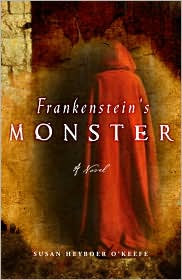
Frankenstein's Monster

Frankenstein's Monster. Susan Heyboer O'Keefe. 2010. October 2010. Crown Publishing. 352 pages. 

I killed my father again last night.

I'm not sure I can say I loved this one. At least not love, love, love. But. I really liked this one. There were places that I just LOVED it--and other places where I began to have doubts. Frankenstein's Monster is a sequel to Mary Shelley's Frankenstein. For the most part, it is set ten years after the original novel.

Time has not treated Robert Walton well. For his brief friendship with Victor Frankenstein has led to madness. After Walton speaks with the monster--the creature--he has no choice (or he claims to have no choice) but to follow in Frankenstein's footsteps. He must see to the destruction of the creature. He must make sure the earth is rid of such a monstrous beast. For better or worse, Walton gives himself over to this one path, one obsession. (It doesn't help that his first 'battle' with the creature lost him a finger.)

But while this is a story of madness, of obsession, of the consequences of extremes, it isn't Walton's story. It is the story of the ever-hunted monster. A monster who is still pondering philosophy--does he have a soul; is he a man, monster, or beast--and dealing (sometimes surprisingly well) with his anger, his frustrations. (After all, he could kill Walton at any time. Why let this mad man chase him all over the world?)

In Frankenstein's Monster we meet the Winterbournes. Margaret, Robert Walton's sister, her husband, who becomes (for a brief time) a father-figure to the monster (now calling himself Victor Hartman), and their daughter, Lily, whose madness is already evident. Lily teases and provokes him like no other woman has ever done. He's drawn to her beauty. And there are times she seems to like him, to accept him, to treat him (almost) decently. But then there are times he sees hatred in her eyes, repulsion, anger, madness. Lily has her violent moments. Her rages. She's self-destructive. In a way, Lily 'reflects' some of his own weaknesses. Could Lily be the companion he's wanted for years? 

Frankenstein's Monster is about the monster coming to terms with who he is. He's learning to accept the fact that he can make his own decisions, his own choices, that he doesn't have to be the 'monster' Frankenstein created him to be. He can choose to be better than that. He can choose to live with hope.

The writing was good. I thought it was a compelling story. I thought O'Keefe did a good job with Victor Hartman--showing his strengths and weaknesses, balancing his good and bad impulses. Lily was an interesting character--as were her parents and uncle. I thought the relationship--complicated as it was, complicated as it would have to be--added depth to this one. It took Victor finding a Lily for him to realize some things about himself. And though O'Keefe made a few decisions that I'm not completely happy with--I still enjoyed this one. (There was one scene that I could have done without completely. One of Victor's lowest moments.)

I did like the ending. I would recommend this one to fans of the original. To any reader who has had a little sympathy (or perhaps compassion is the better word?) with 'the monster' Shelley created. It is definitely my favorite sequel/retelling of this classic.


© Becky Laney of Becky's Book Reviews


Horns

You know that kid that you grew up with? The one that dressed like he lived in an abandoned trailer park, who was always talking about death and fire and explosions? He’d creep out your parents, and always get away with the worst things, and the girls you wanted all seemed to go ga-ga every time he walked by?

Well this story is not about that guy.

But he's in it. And what with this being a horror novel and all, you KNOW that can't be good for him.

HORNS is Joe Hill’s second novel. I read his first one, HEART-SHAPED BOX, mostly because his dad looked familiar and afterward thought, Hey, this one’s probably worth a shot. It most certainly was.

This time around, Joe’s changed gears on us, completely, and not just by writing a different kind of book. In HORNS, instead of having the psycho devil-man play the bad guy, he’s made him the protagonist. Seriously? Is there any way that I might like this guy? To a certain extent it worked like crackerjacks, and regardless of how everything came out in the end, I'm giving him props for taking such a big risk. High five, Joe!

Ignatius Martin Perrish, affectionately known as Ig to his family and friends, wakes up one morning with a huge hangover, having some vague sense that he has spent the previous night drunk off his rocker and doing horrible, horrible things. He walks into the bathroom, scrubs his face, and notices the pair of sharp red horns sticking up from top of his head.

Well those weren’t there yesterday...

For the next fifty pages or so we get a good idea of just what these things do for Iggy. For one, they make everyone he talks to go glassy-eyed and pretty much forget he’s ever been around. Second, they make them all spill their guts about what they want, what they think, and pretty much brings out the worst of what they’re capable of. They’re also all sorts of impressionable and for the most part willing to do exactly what Iggy tells them to. This makes for some absolutely hilarious scenes as well has some horribly creepy ones.

Then he runs into someone that blithely tells him exactly what he's wanted to know for the last year, and suddenly the story pulls a one-eighty. Because, you see, Iggy’s girlfriend got killed last year, and everyone (yes, everyone, even his own family for crying out loud) thinks he was the one that did it. Since then, his life has gone straight down the crapper, and no matter what he does it's all he can think about each and every day.

But now things are different.

And it’s time for a little payback.

The single idea behind this novel, I thought, was really great. Essentially, give a brow-beaten, down-on-life, shot-to-Hades nobody the power of the devil and see what he does with it. The problem is that the main story line develops so fast that in order to keep the book from being finished in fewer than a hundred pages, Mr. Hill has to pull the e-brake on things and give us the back story.

I actually quite liked the deviation though. We get to see Mr. Perrish as a kid, his older brother Terry, Iggy’s friends--Merrin Williams and Lee Tourneau--and a bit from a girl that both Iggy and Lee have liked at various times, Glenna Nicholson. Not to mention the pack of typical local hoodlums, which you can all remember quite well from the good-old days of grade school. The way it all plays out is picture perfect to the one I have in my head of those years. The author does a great job of characterization here for all the main players. There’s also a good sense of progression, as he always gives us something to look forward to: meeting Merrin for the first time at church, riding a shopping cart down a massive hill, setting off the last cherry bomb of the summer...ah, the good life. Piece by piece, the author leads us along and makes us like Iggy Perrish more and more.

Stacking up that Sympathy for the Devil.

There were a number breaking points for me though. The first would be having the same stuff being explained a number of times. There’s one whole section that could easily have been cut and I doubt I would have noticed in the slightest. It did nothing for the story. Nothing. There was also a scene in the middle of the book that makes absolutely no sense. Preaching to snakes? Yeah, whatever. Then, we have the details. Don't get me wrong, there are lots of them here and like every good story they all attempt to tie everything together into one, big, cohesive whole. The problem is that most of them have little impact other than eliciting an, “Oh, so that’s how that worked,” moment for the reader. Last, reading this book has made me want to find a novel that does memory loss well. Having critical details just show up at the climax pretty much annoys the Hell out of me (going with the theme here, people).

In the end, lots o’ good, lots o’ meh; enough of the latter unfortunate to garner a mediocre vote this time through, but I'll probably still give him another go next time around. Before I sign off though, a note. We had a few observations from readers a while ago that there were sooooooo many books in the Books We Like category and "Where should one start when tackling such a list?". I think you'll find that, as opposed to the others here, most of my reviews fall into the Books That Are Mediocre category. Know though that this book, although garnering a mediocre rating, is one of the much better ones on the pile. Yes, this is a mediocre book, but it is one that I think is well worth reading for those aficionados of horror.

In the end, if you’re looking for a story that’s enough like Stephen King to be good, but enough different from him to make a difference, pick something up from Joe Hill.

BookInTenWords: When you're the devil, life gets simpler. Wash. Rinse. Repeat.

Recommended age: 18+, as for content, it has everything his father would have included.
Language: Loads.
Violence: Yeah, things gets pretty dicey at points.
Sex: Two scenes with a low-level of detail (one violent in nature), and pervasive references throughout.

Joe Hill's Website


Dexter is Delicious

What a piece of garbage.

Sorry, usually we begin with a thought provoking introduction that has you pondering the world around you in a completely different light. Jeff Lindsay's latest novel, DEXTER IS DELICIOUS, is just awful. It really is as simple as that. Seriously, is there even any sense to this series of novels anymore? Rhetorical question. No.

Just so you understand how we feel about this series of novels, here are a couple Dexter-isms:

Dexter the Decidedly Dreadful
Dull-as-Dishwater Dexter

Yeah. That about sums up the whole novel. Oh, and we didn't make those up. That's how Dexter is described in the first chapter of the novel. No, we aren't joking in the least. This Dexter novel is not Delicious as the title would have the reader believe, it is effing boring and pointless.

Jeff Lindsay's creation, Dexter Morgan, begins this novel by becoming a father. He suddenly has feelings, and has decided to no longer give in to the murderous urgings of his Dark Passenger. Yeah, Dexter no longer wants to be the killer we root for. Well, I suppose we haven't really cheered him on since part way through book 2, but still, you get the point. The issue with all of this is that you know Dexter is going to break his new resolution. You don't buy his new persona, because it isn't believable in the context of the story. You know that Dexter, predictably, is going to somehow rationalize his killing as protecting his new child. From cannibals! Get it? Delicious? Cannibals? Yeah, lame. Just like the whole novel.

Keep an eye out for that word "predictable" later on in this review. It becomes a theme.

Lindsay has a major problem with this series. The main one is that this series is now just a shallow parody of its early incarnations. Books 1 and 2 are where the magic happened. After that, Lindsay has been lost with what direction he wants to take. He tried supernatural, shock-value, and now parenting. And you know what makes these novels--especially this last one--worse? The brilliance of the TV series. You know how movies end up having a novel released that says "Based on the Motion Picture"? They are typically terrible. That is how this series of novels feels. It's like poor fan-fiction.

Lets get back to the predictability of this novel. Every freaking moment of the novel is telegraphed. From the obvious “Oh no, I’ve been trapped” moment, to the WHOLE FREAKING ENDING AND RESOLUTION, it is spelled out the whole time. This isn’t foreshadowing. It’s poor writing. Dexter's brother, Brian, shows up pretty early on in the novel. Gee, do you think he is going to play a major part in the investigations taking place in the novel? Literally our first thought when Brian showed up was, "Oh, so he will probably save the day after Dexter acts like a complete amateur." Yeah. Predictable.

Another thing that bothered us was the portrayal of the cops. We've been around law enforcement nearly our whole lives. Steve's dad is a high-ranking officer. So, when Lindsay makes every cop he writes stupid, we just can’s suspend our disbelief any more. Really? These people can actually catch killers? They don’t even know their own police procedures for Pete’s sake. Pro tip: if you have to rely on your main characters and supporting cast being completely idiotic to move your plot, you're doing it wrong. Along with ALL of the Brian moments, this all just screams laziness.

Our personal favorite was when Jeff Lindsay pokes fun at CSI: Miami by having Dexter imitate the main, pathetic character from that how. The thing is, by Lindsay putting that thought in our heads, all we could think was, "Man, this is like on of the REALLY bad episodes of that show."

The characters in DEXTER IS DELICIOUS are all idiots, and/or completely useless to the story. For example, why is Doakes still even around? He isn’t funny. He just takes up a couple thousand words of story for no reason. Rita? Yeah, the TV series did this right by getting rid of her. In the series we have to be subjected to her idiocy. Deb? Speaking of Deb, this novel is actually about her as Dexter watches her piss-poor detective skills. Even when she isn't "on screen" Dexter ponders her existence, and the way she wants a family. Blah. Blah. Blah. Go kill someone, already, we are bored.

Issue #9-bajillion: everyone knows Dexter's secret. The more people that know, the less interesting his dilemma becomes. It's like any costumed super hero. The fewer people that know the true identity, the more potential internal conflict we have.

Problem #86-bajillion & 2: Lindsay we get it, traffic in Miami is bad. But do you have to make a big deal about it in EVERY EFFING CHAPTER? How about you write an actual story that makes sense rather than telling us the traffic patterns of Miami?

There really isn’t any way for Lindsay to fix this series. He has made so many mistakes in these novels--particularly these last three, and specifically DELICIOUS--that there isn’t any redemption possible for the characters in these novels. No effort is made in this latest novel to push the series in a believable direction. No effort is made to get into the motivations of the main "villains" of the novel. What happened to the Dexter who was brilliant, and who was extremely proficient in martial arts? All prior character traits and development has been abandoned to make the characters of the series easy to manipulate through their new and improved stupidity. DEXTER IS(n't) DELICIOUS isn't worth anyone's time or money.

Move on to a new creation, Jeff.

No, we won't be reading the next novel in this series. We will stick to the REAL and superior Dexter series on TV, and reading truly excellent novels by Dan Wells.

What a piece of crap. We felt like we were in Billy Madison. "Mr. [Lindsay], what you've just said is one of the most insanely idiotic things [we] have ever heard. At no point in your rambling, incoherent response were you even close to anything that could be considered a rational thought. Everyone in this room is now dumber for having listened to it. [We] award you no points, and may God have mercy on your soul."

Recommended Age: We're sorry, but what part of "isn't worth anyone's time" wasn't understood?
Language: Yep. Swearing for the sake of swearing. This novel was written THAT well.
Violence: Oddly, considering the story was about canabalism, it was all fairly tame and boring (and predictable).
Sex: Yep, though not described. The one scene was so contrary to the unbelievable "progression" Dexter was making, that it almost made us throw the ARC we were reading away.


Lesser Demons

Since starting this review blog, we have noticed a huge increase in the amount of short fiction that has made its way onto our bookshelves. This is a good thing. We have held the opinion for a long time that short fiction was evil, and in many cases this is still true. However when Subterranean Press puts a collection together, the results are always (at least so far!) fantastic. We got our hands on the recent release of the collection LESSER DEMONS by Norman Partridge, and absolutely loved the Horror stories inside.

LESSER DEMONS collects some of Partridge’s stories from the past few years, as well as a brand new one. Here are a few of the highlights:

“Second Chance” is a doppelganger story, and the leading story of the collection. It was quite enjoyable, though if you are looking for a concrete explanation as to the “how” and the “what” at the end you’ll probably be disappointed. Stop thinking so hard. Geez.

“The Big Man” is a story about the after-effects of nuclear testing. Naturally from the title, the main point of the story is a giant man. Like a lot of Partridge’s short fiction, there is an Old West feel to them (regardless of the actual era when the stories take place). A solid story that feels like it belongs in an old pulp Horror magazine.

“Lessor Demons” is, obviously, the story the compilation the story was named after. It is also perhaps the best story of the collection, and one of our favorite entries into short Horror fiction. We’d kill for a full-length novel set in this world. It feels like a zombie novel, but these things aren’t zombies. They are WAAAY better. Completely awesome.

“The House Inside” feels like the Horror version of Toy Story, only where all humans are dead. It was one of the most fun stories in the collection.

“The Iron Dead” is a bizarre Horror/Diesel-Punk hybrid that had our imaginations racing. We wish we’d thought of it. We also wish there was a novel based on the ideas here. This story, along with “Lesser Demons”, were the A+ stories. Phenomenal.

Now, like all collections, there was one or stories that just didn’t click for us. “The Fourth Stair up from the Second Landing” was that story for us. It just didn’t work in our opinions. But neither was it enough to hurt the overall collection of works.

At the end of the collection is an explanation by Partridge about writing short stories, and a “where these stories came from” detail. It seems like Sub. Press includes these in a lot of their compilations, and we love them. They should be required in every short fiction publication.

Now, one thing you have to understand about LESSOR DEMONS is that many of the stories leave a lot of questions open. For Horror, we think this is important. We don’t want all the questions answered. We don’t want all the mysteries uncovered. Don’t show us the monster. Partridge does this extremely well. He wants the imagination of the reader to take hold. Just keep that in mind when you are reading; the mystery is a lot of enjoyment.

This was our first exposure to Partridge’s work, and we are impressed. At 280 pages, this collection is completely worth your time and money. You may want to head over to Subterranean Press and grab a copy before they are all gone.

Recommended Age: 16 and up.
Language: There is some, and it can be strong, but it doesn’t saturate any of the stories.
Violence: Yeah. It’s pretty well done too.
Sex: None shown, but some hinted at.


Necroscope: Harry and the Pirates

As you will all recall, our Fantasy 202 post involved a lot of Horror. It is an under-appreciated genre that contains one of (in our opinions) the best writers out there: Brian Lumley. His novels, over the years, have continually been able to impress our critical minds. With the paperback due out soon, Tor sent us a copy of Lumley’s NECROSCOPE: HARRY AND THE PIRATES.

Upon first taking the book in hand, the reader will first notice two things. First, the cover is done by the true Necroscope series artist, Bob Eggleton (one of our favorite artists)…and yet it seems almost YA. Second, PIRATES is very thin, only 189 pages. Suffice it to say, PIRATES is not YA. It contains two novellas, and a vignette (as Lumley calls it) that are set during the Lost Years of Harry Keogh’s life. For the uninitiated, the Lost Years mark the 8ish year period between books 2 and 3. We’ll say right here that if you haven’t read NECROSCOPE and VAMPHYRI! You shouldn’t read PIRATES yet. It just won’t make enough sense to you. If you find yourself in that camp, do yourself a favor and buy those novels yesterday.

Harry Keogh is the Necroscope, meaning that amongst his several ESP powers, he can talk to the dead. In the first of the novellas “For the Dead Travel Slowly” Harry has returned to the area of his youth in an attempt to find his missing son and wife. While there, he encounters an ancient evil in the forests that is responsible for hundreds of horrors over the centuries. It is a terrific tale in which we are shown a jaded and vulnerable Harry. His body has been destroyed (literally, he inhabits a new body at this point per the end of VAMPHYRI!), and his family his missing. His feelings of loss and frustration are palpable. The plot of the story itself, as well as its resolution, are executed in only the way Lumley can manage.

The second novella “Harry and the Pirates” continues with Harry looking for his family, but becoming sidetracked when a long dead pirate wishes to tell Harry a story. Who doesn’t like a good pirate tale? Of course Harry listens. As the reader would expect, the tale becomes more strange, and Harry begins to feel that something is wrong. Again, another fantastic novella, though the ending will throw some people off if they haven’t read beyond the first two novels in the series.

The final vignette “End Piece: Old Man with a Blade” is only a few pages, and follows the PoV of Death as it watches Harry. There are some clever insights here, but no real meat. The purpose of PIRATES is the first two novellas.

Lumley has a unique way of writing. His descriptions of horror are truly horrific, and yet he can still manage to inject witticisms when the situations are in need. PIRATES won’t win any new reads for Lumley, but it will give fans of his work (and there are many of them) some more Lost Years tales to enjoy. If you are a huge fan of Lumley, you probably wouldn’t have thought twice about paying the $24 for the 189 page hardback. We wouldn’t have (especially Steve, who is an extreme Lumley fan). However, if you are a more cost-conscious fan, then wait to pick up the paperback that comes out on July 20.

Recommended Age:
16 and up.
Language: Yup, but not a ton.
Violence: Oh yes. And it is always so well described.
Sex: Some mentions to it (especially in the first novella), but nothing like in you would find in Lumley’s other novels.


Brian Lumley's awesome website:

http://www.brianlumley.com/


Twitter Delicious Facebook Digg Favorites More